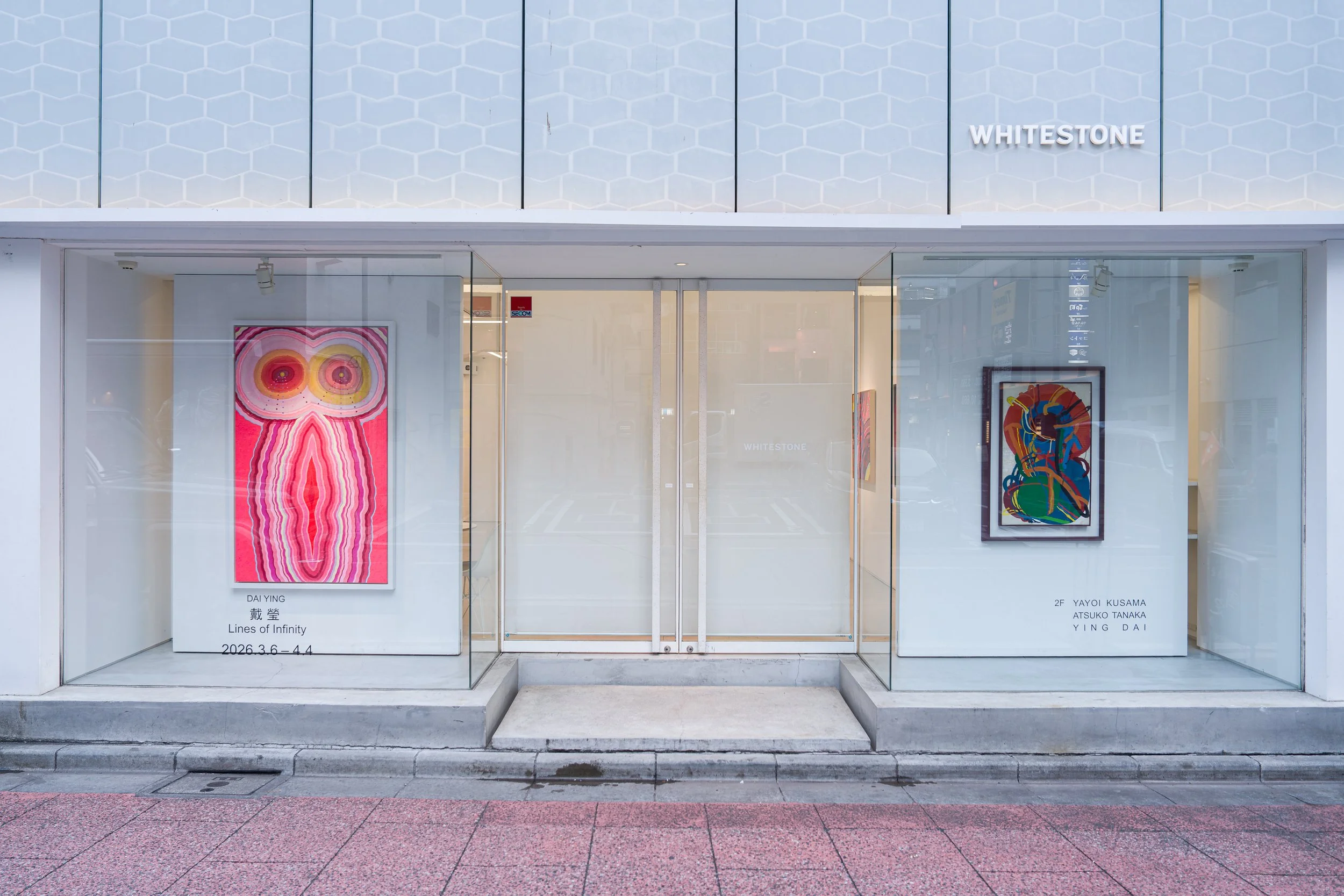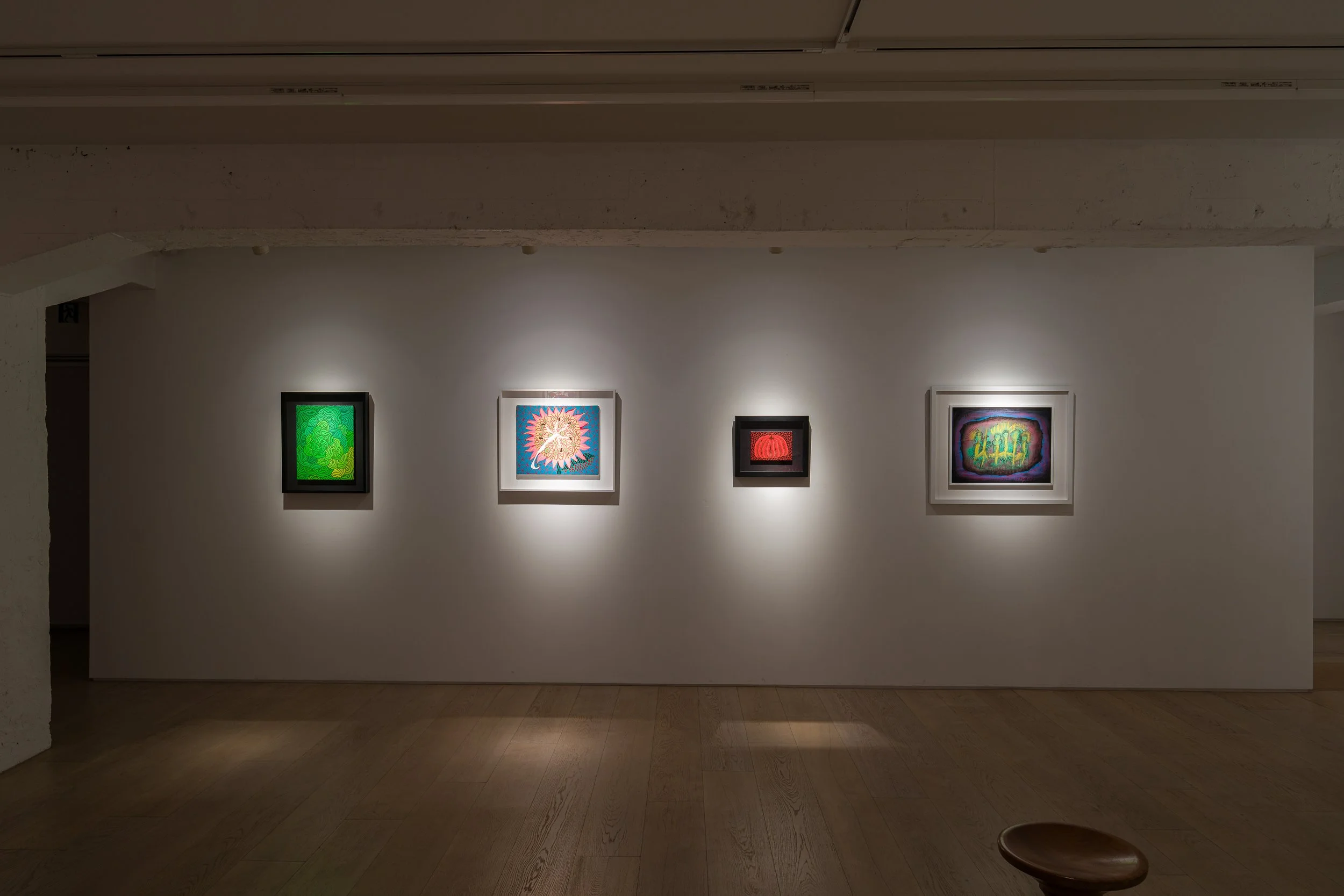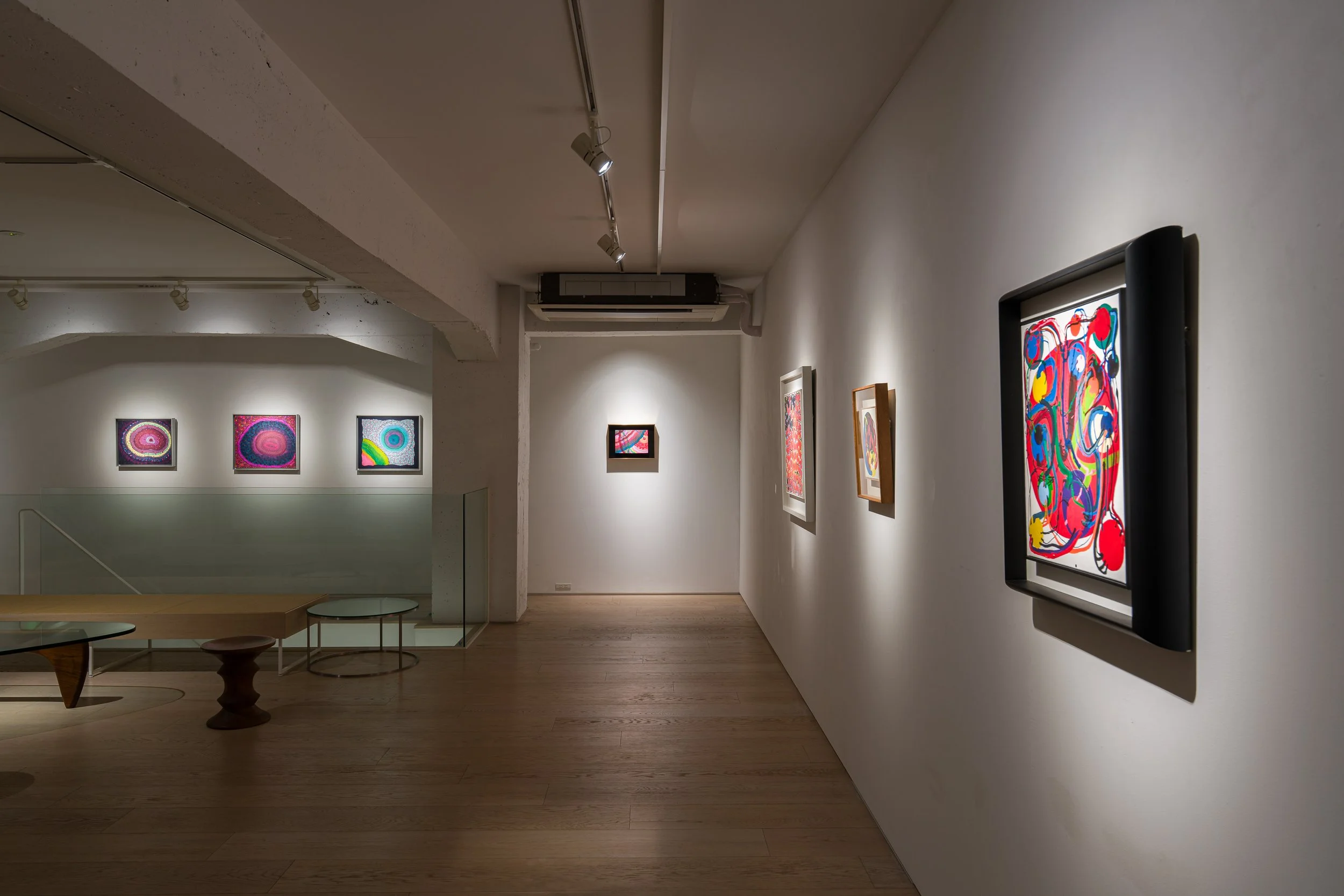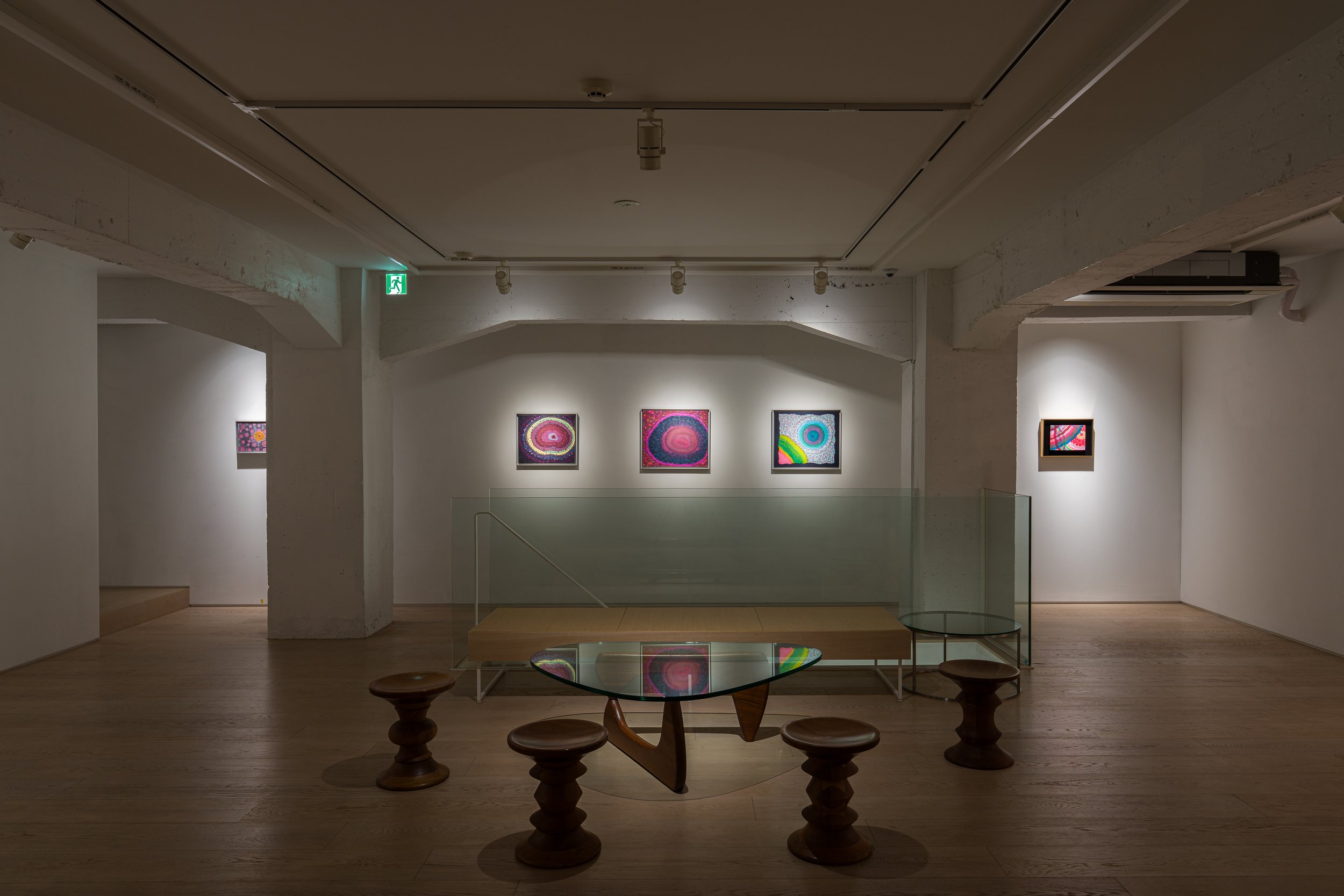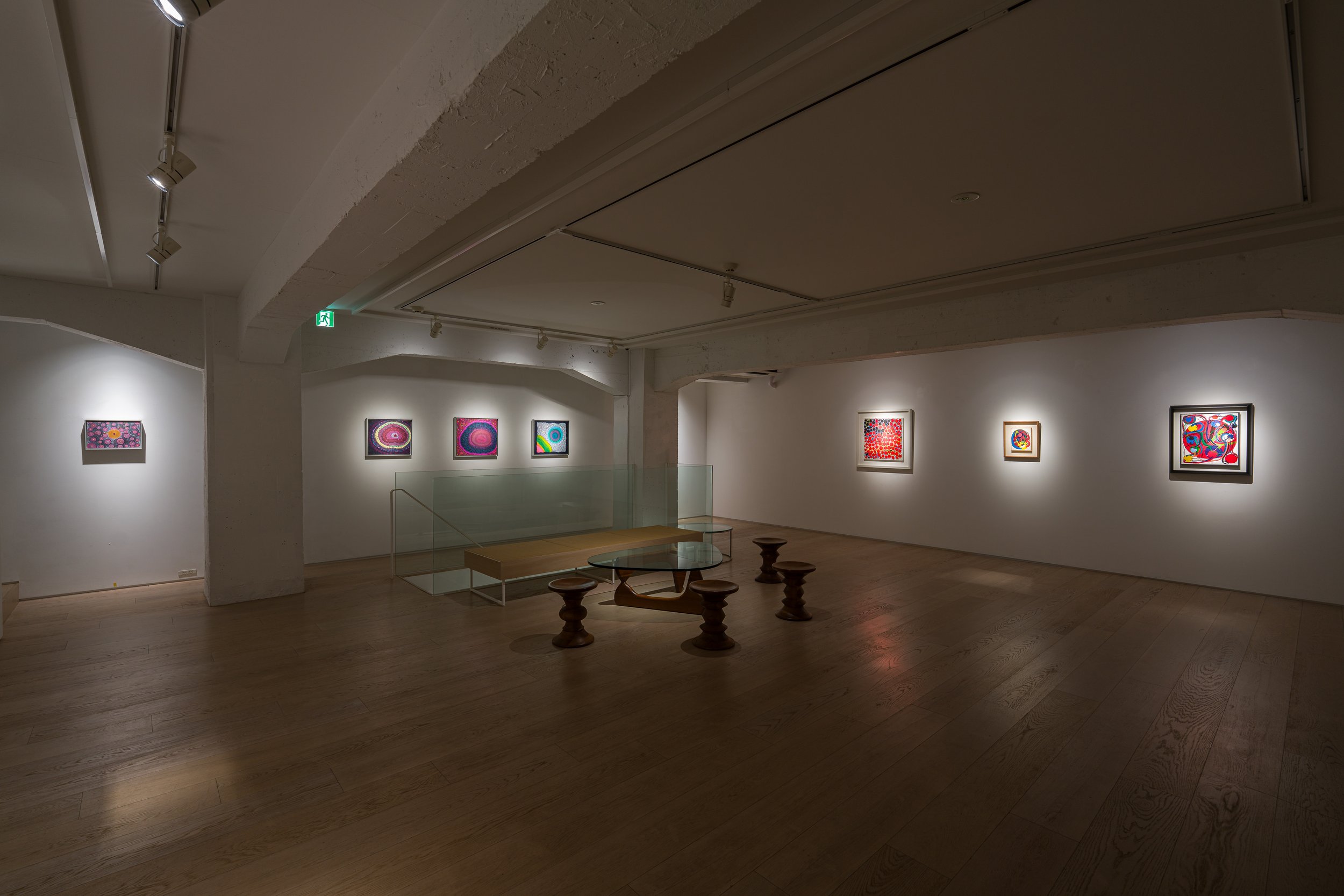
LINES OF INFINITY
2026.3.6 - 2026. 4.4
Whitestone Gallery
Tokyo, Japan
2026.03.19
INTERVIEW
This interview is part of a series in which Meiji Hijikata, Director of the Taro Okamoto Museum of Art in Kawasaki, explores artists’ practices through dialogue. This installment features Dai Ying, one of China’s most prominent contemporary artists, whose work is exhibited internationally.
Rooted in traditional Chinese calligraphy and ink painting, Dai Ying situates her practice within the context of Western contemporary art, developing a distinctive visual language through her use of brushwork, paper, and spatial composition. In the first half of this interview, she discusses her introduction to art, the differences between her bases in New York and Beijing, her expectations for Japanese audiences, and the role of gender in her practice.
The Foundation of Chinese Art: The Line
Hijikata: What first led you to become an artist?
Dai: My family collected art when I was growing up, and they encouraged my interest from an early age. I started learning Chinese calligraphy and painting at the age of five, which was the beginning of my journey in art.
Hijikata: Chinese calligraphy has long been regarded as the foundation of Chinese art. It holds a particularly revered place, and some even argue that other art forms grew out of it. Do you share this view?
Dai: In the tradition of Chinese art, particularly ink painting, the most fundamental lines originate in calligraphy. Without this calligraphic quality of line, a painting lacks both structure and spirit.
Hijikata: Both calligraphy and ink painting are generally associated with traditional art. Could you tell us about your transition to contemporary art?
Dai: I began to understand contemporary art while studying at the Academy of Arts and Design at Tsinghua University. Before that, I had mainly focused on calligraphy and traditional Chinese painting. What we call contemporary art is largely a system that developed in the West. Then, in 2011, I moved to New York, where I began developing my work within a contemporary art context.
From Traditional Art to Contemporary Practice: Moving to New York
Hijikata: Did you go to New York to study art? And how long did you stay in New York?
Dai: When I arrived in New York in 2011, I began working directly as a professional artist. My studio was in Manhattan, and I have remained based in New York since then. However, after my father passed away in China in 2017, I began spending more time there as well. So from 2011 to 2017 I was living primarily in New York, while since 2017 I have been dividing my time between New York and China.
Hijikata: When working between China and New York, do you feel that both places offer a similar degree of freedom for your artistic practice?
Dai: I wouldn’t say I feel restricted. My studio is in Manhattan, and I usually divide my time between New York and Beijing, spending roughly half the year in each. Since I began working with Whitestone, I may spend more time in China, as there are more projects planned in Asia. At the same time, I’m also represented by a gallery in New York. In that sense, my practice moves between the two places, and I don’t find it difficult.
Regional Differences and Universal Perception in Art
Hijikata: What differences do you see between the art scenes in New York and China?
Dai: They are quite different. Contemporary art as we know it today largely developed within a Western framework. China entered this global context later, and many artists there are still exploring ways to develop their own artistic languages within it. As a result, many practices remain strongly rooted in local cultural perspectives—whether in terms of visual expression, subject matter, or conceptual concerns. The Western system and its historical lineage still play a major role in shaping the global discourse around contemporary art.
For artists like myself, who were born in China and trained in traditional Chinese art from a young age, entering this global context can lead to two possible directions. One is to become fully absorbed into Western artistic frameworks; the other is to remain entirely within the sphere of Chinese tradition. This tension is something I have been thinking about constantly. As an artist—and also as a woman—I am interested in how to begin from my own identity and develop a distinctive artistic language within the global context of contemporary art.
Hijikata: So you want to pursue your own unique path as an artist?
Dai: I believe every artist needs to find their own path, not just me. As contemporary artists, we need to respond to society, while also developing a distinctive artistic language.
Hijikata: You’ve previously worked in both China and New York, and now you are beginning to exhibit more in Japan. What expectations do you have for Japan and Japanese audiences? What do you hope they might take away from your work?
Dai: I try to remain very open toward viewers. I’ve always believed that truly strong artworks speak most deeply to a relatively small group of people—not everyone will feel what the work is trying to convey. In a sense, the work attracts the people who resonate with it. For me, the work itself communicates more directly than words. Language has its limits, so in the end the work connects with the people who respond to it.
Whether I exhibit in Japan, Beijing, New York, or somewhere else in the world doesn’t make a fundamental difference to me. I don’t tend to distinguish between audiences based on national or cultural background. Although art can feel quite personal, I believe its language also carries something universal. Wherever I show my work, there are always people who respond to it. They exist in all places, all countries. It belongs to something global.
Gender as a Starting Point in Artistic Expression
Hijikata: When looking at much of the material on your work, one of the first things that stands out is the question of gender. This has become an important theme in contemporary art, particularly in discussions surrounding women artists, and it is also a perspective that largely developed within Western discourse.. However, in your work, while gender may serve as a starting point, it expands into something much broader. Your work seems to move beyond the framework of gender, reaching toward a more universal dimension.
Dai:Yes. Gender can be a starting point, but I don’t see it as the final framework. When women reach a certain stage in their practice, the questions they face are no longer only about gender, but about humanity more broadly. As I mentioned earlier today, I feel that humanity itself is entering a new stage of development. We need to move beyond our more instinctive nature and strive towards divinity. Only then will we be able to face the coming age of artificial intelligence and use these technologies wisely. Otherwise, it will be difficult for humanity to keep pace with the future.
In the second half of the interview, the conversation continues in front of Dai Ying’s works. They will also discuss the influence of pioneers of contemporary art, such as Yayoi Kusama and Atsuko Tanaka, on her practice.
Dai Ying X Meiji Hijikata|Following the Path of Pioneers, Expanding Deeper into the Inner Universe
2026.03.30
INTERVIEW
This interview is part of a series in which Meiji Hijikata, Director of the Taro Okamoto Museum of Art in Kawasaki, explores artists’ practices through dialogue. This installment features Dai Ying, one of China’s most prominent contemporary artists, whose work is exhibited internationally.
In the second half of this feature, we invite you to explore the world of her work through a live walk-and-talk between the two, as they discuss the pieces together in person. Dai Ying also shares the stories behind two artists who have profoundly influenced her — Yayoi Kusama and Atsuko Tanaka.
The Goddess Series: The Divinity That Exists Within Us
Hijikata: What was the inspiration behind this work?
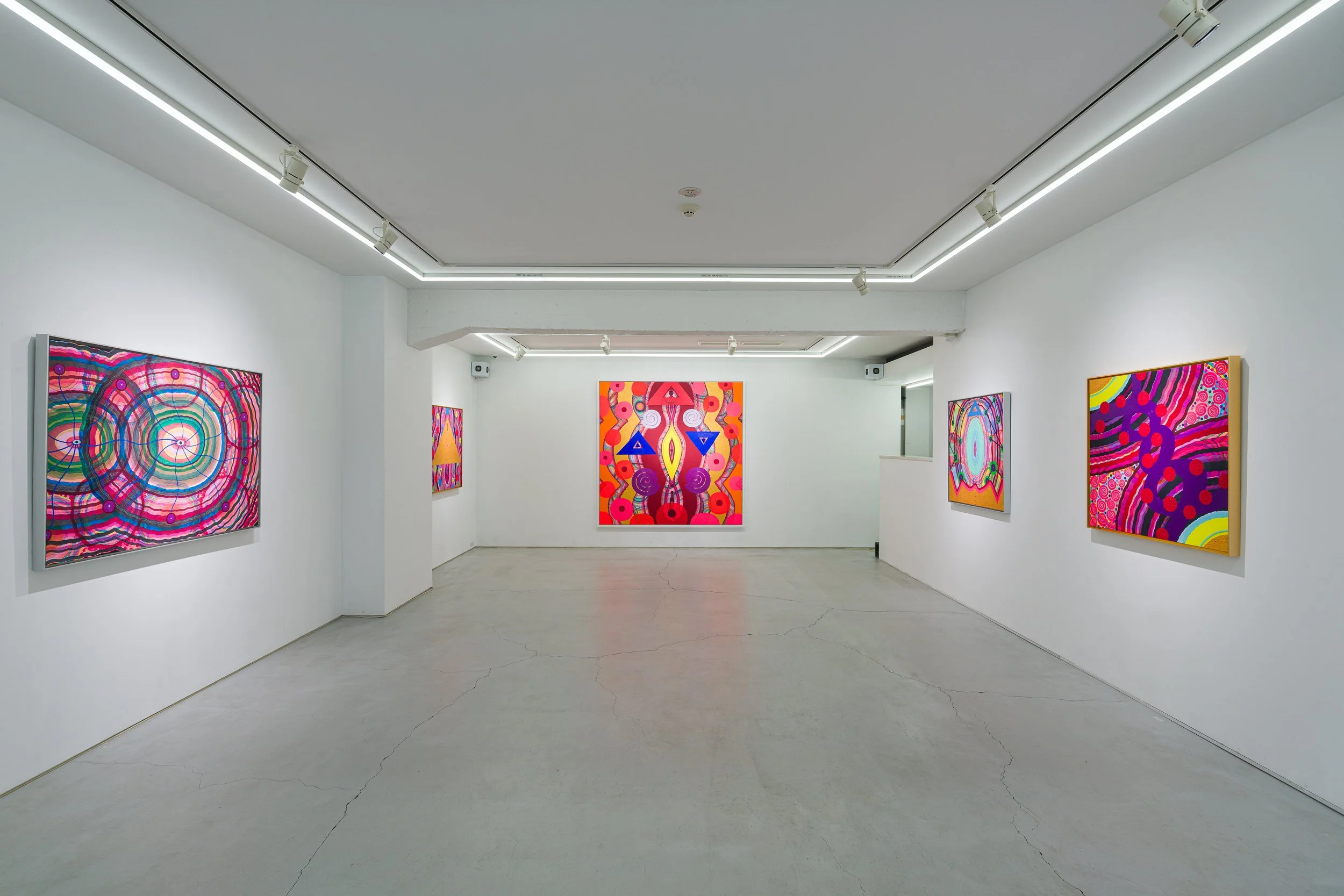
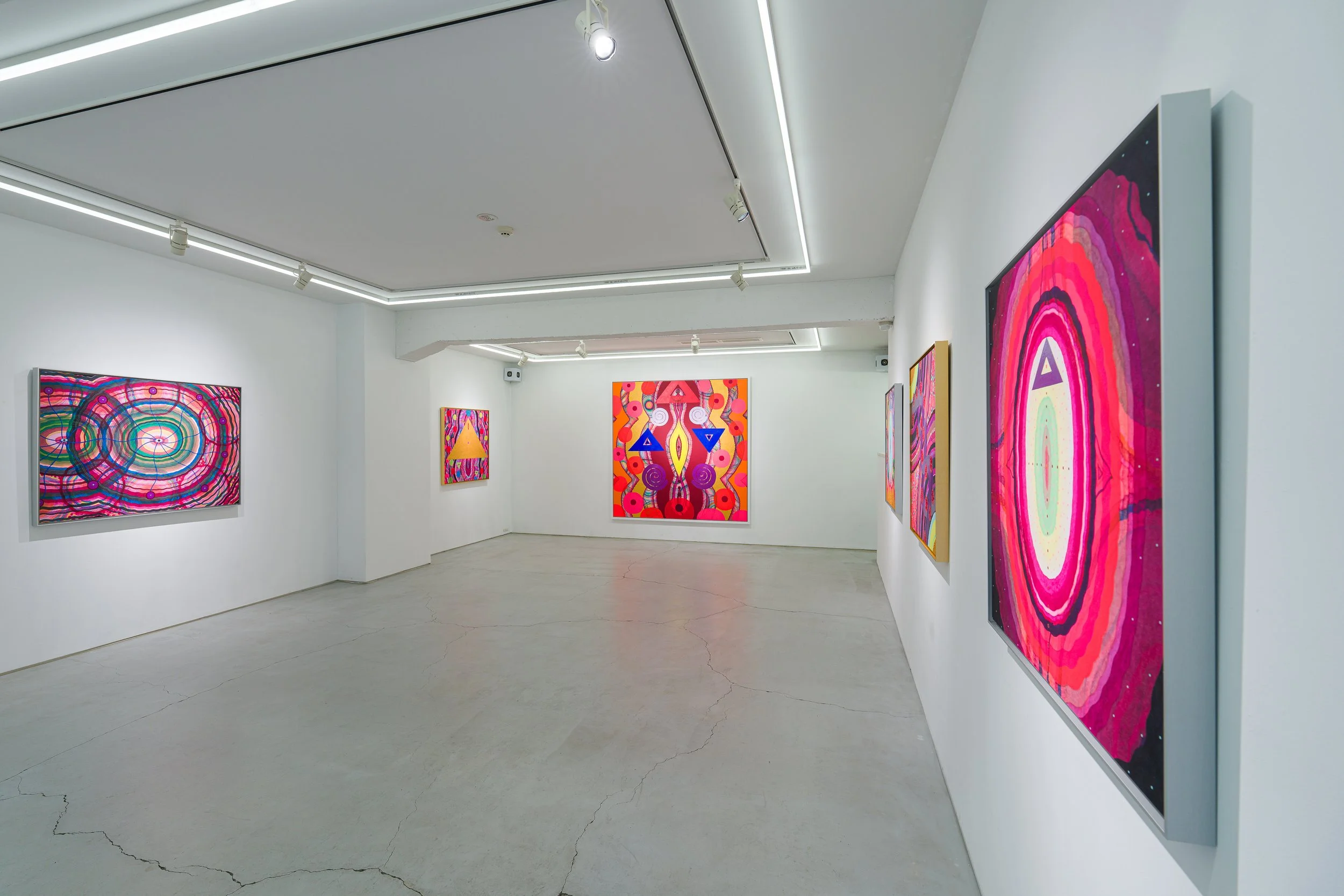
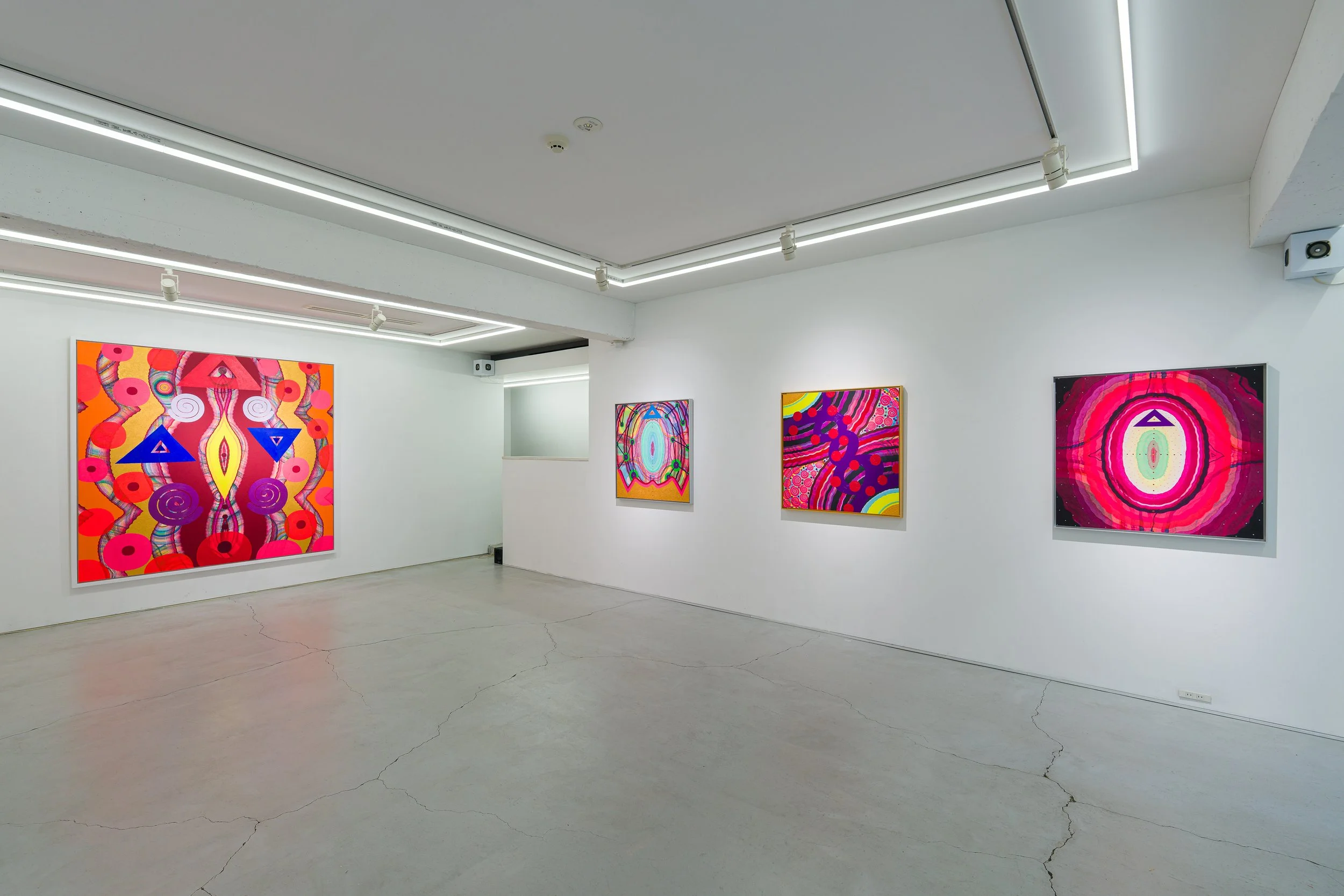
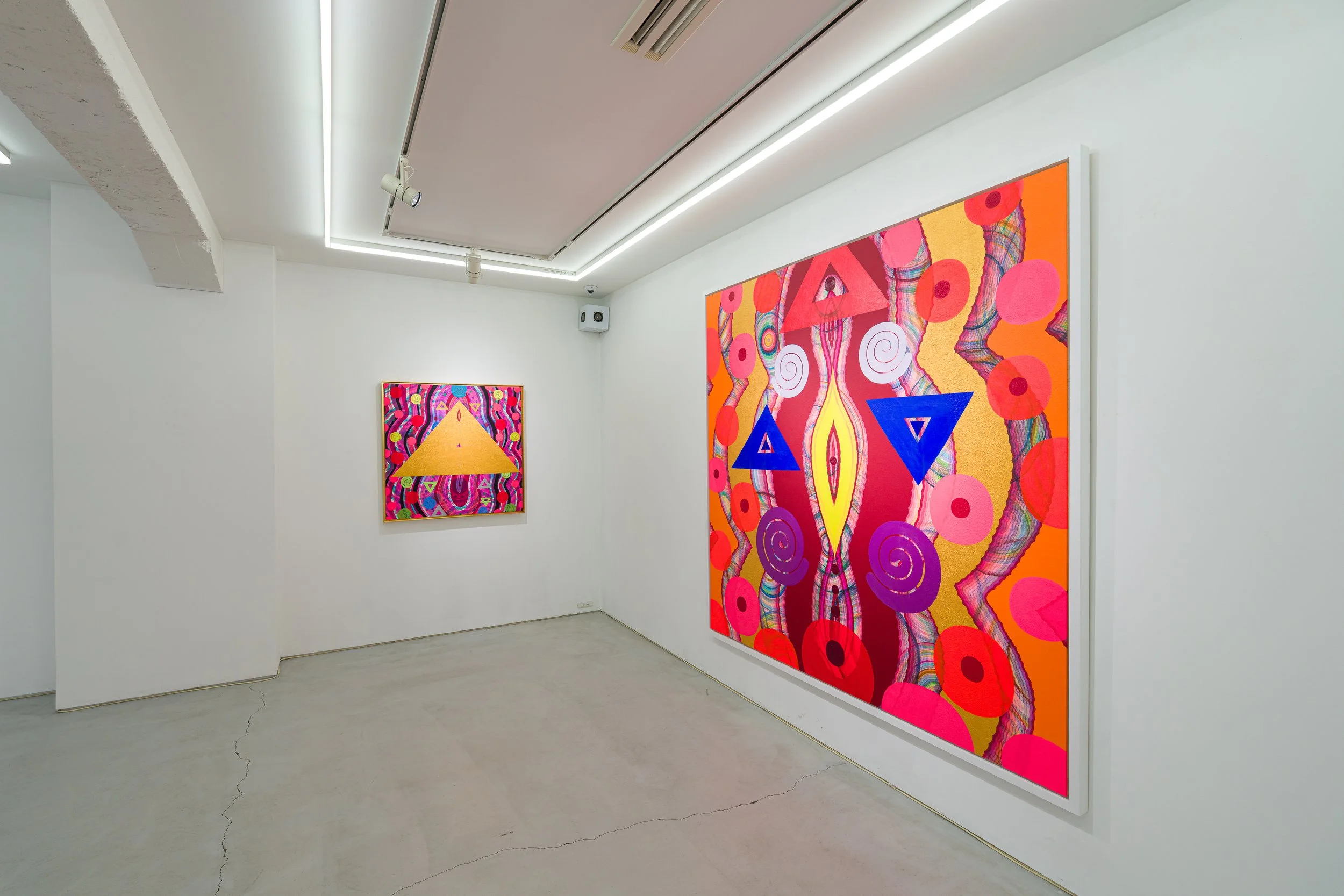
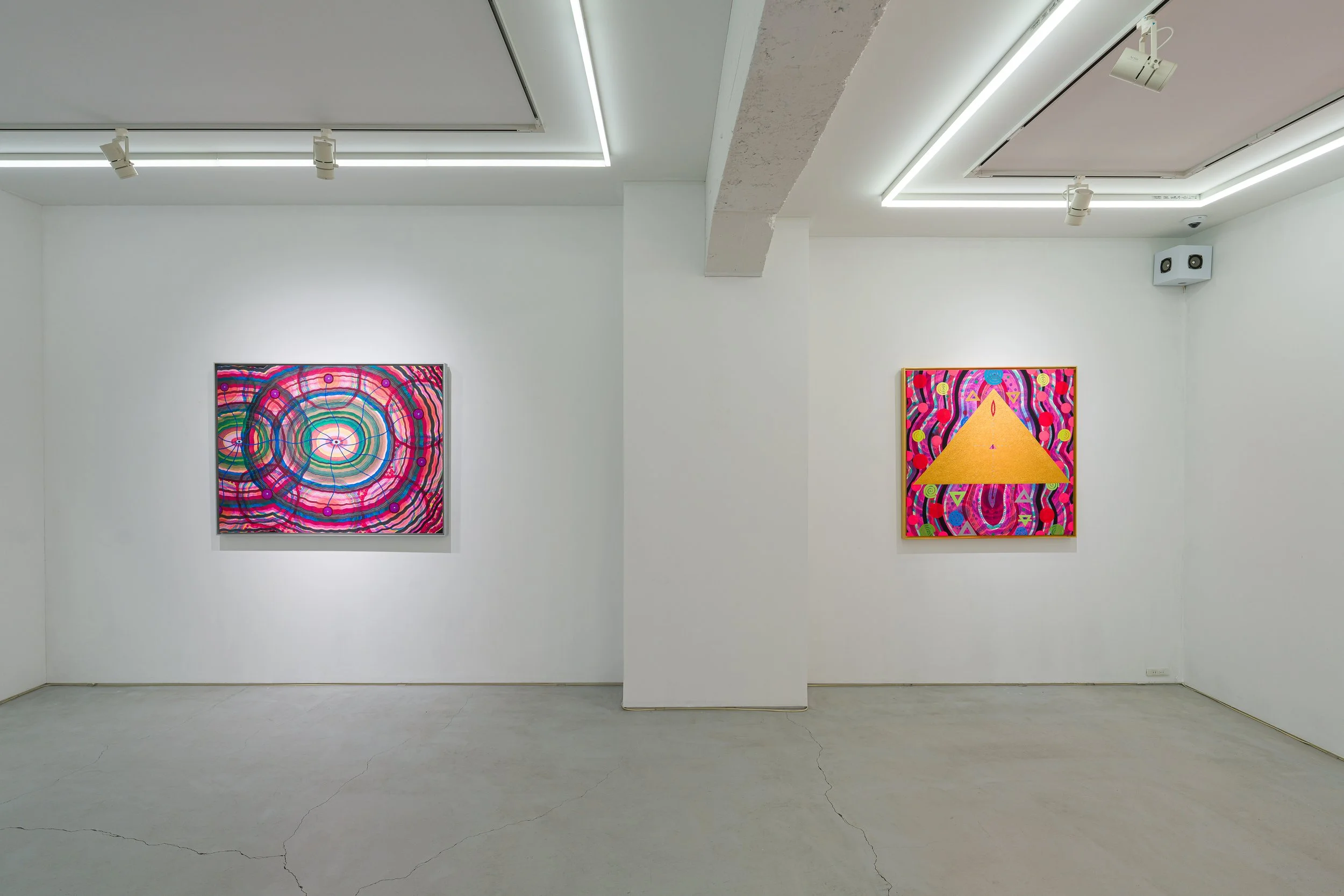
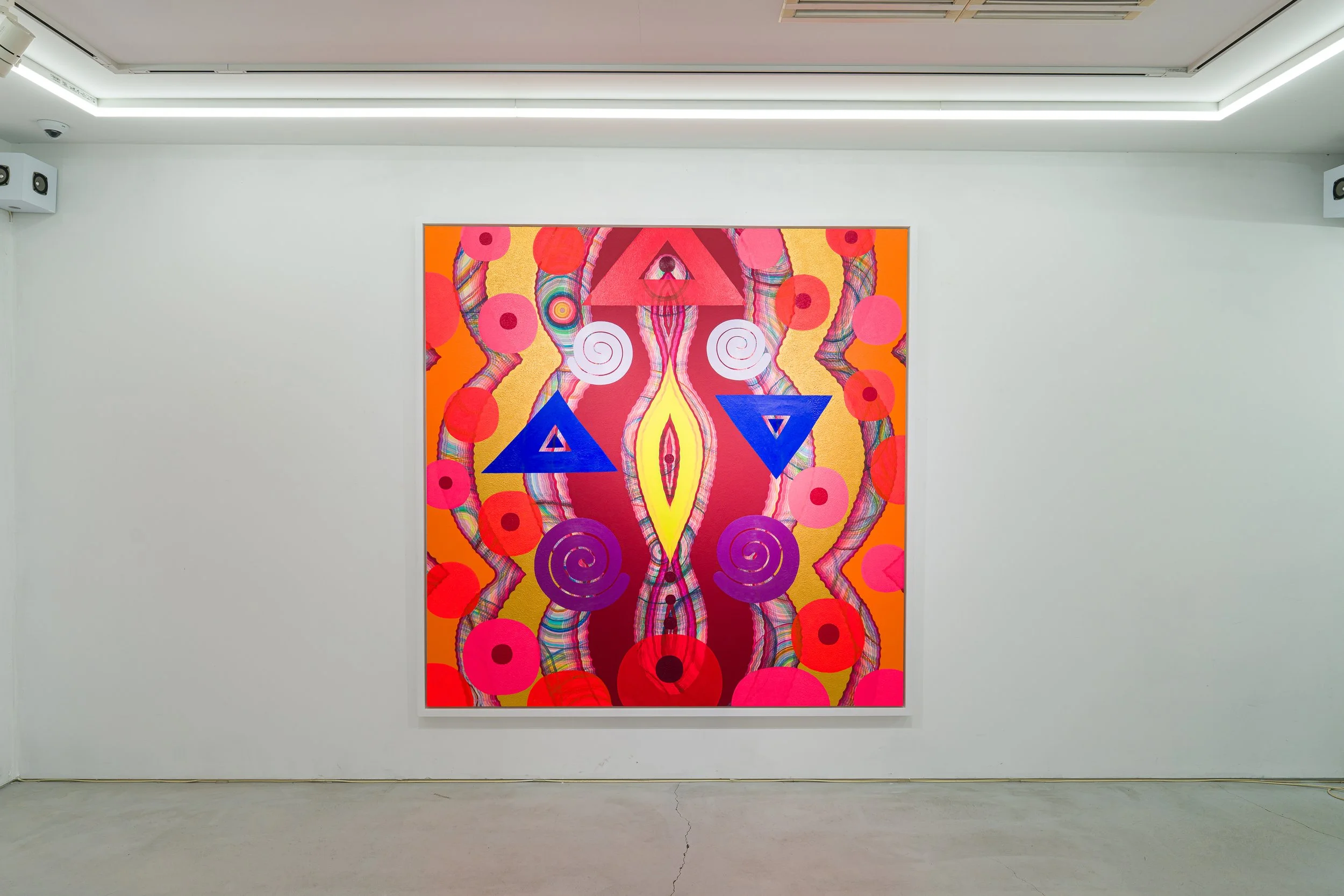
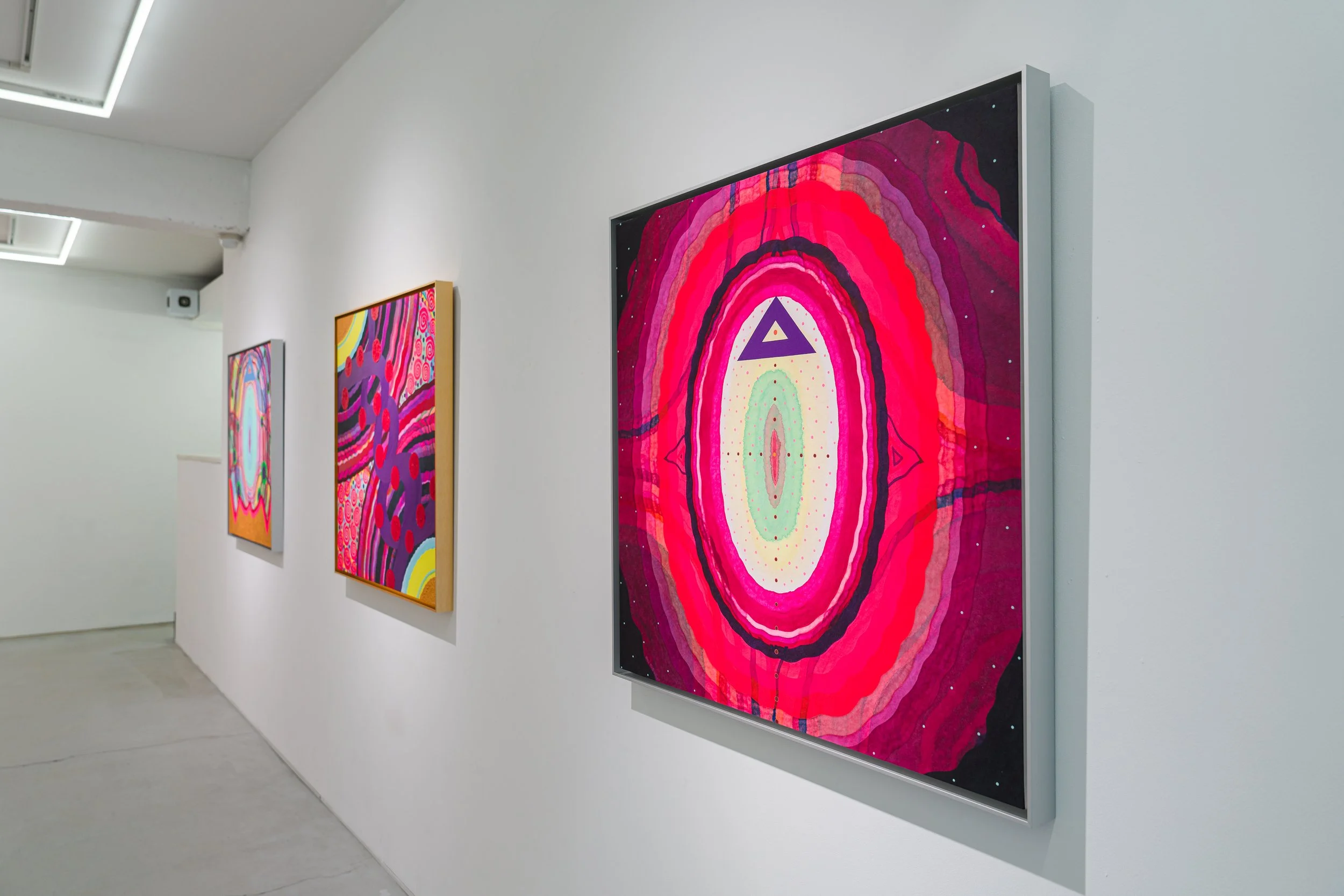
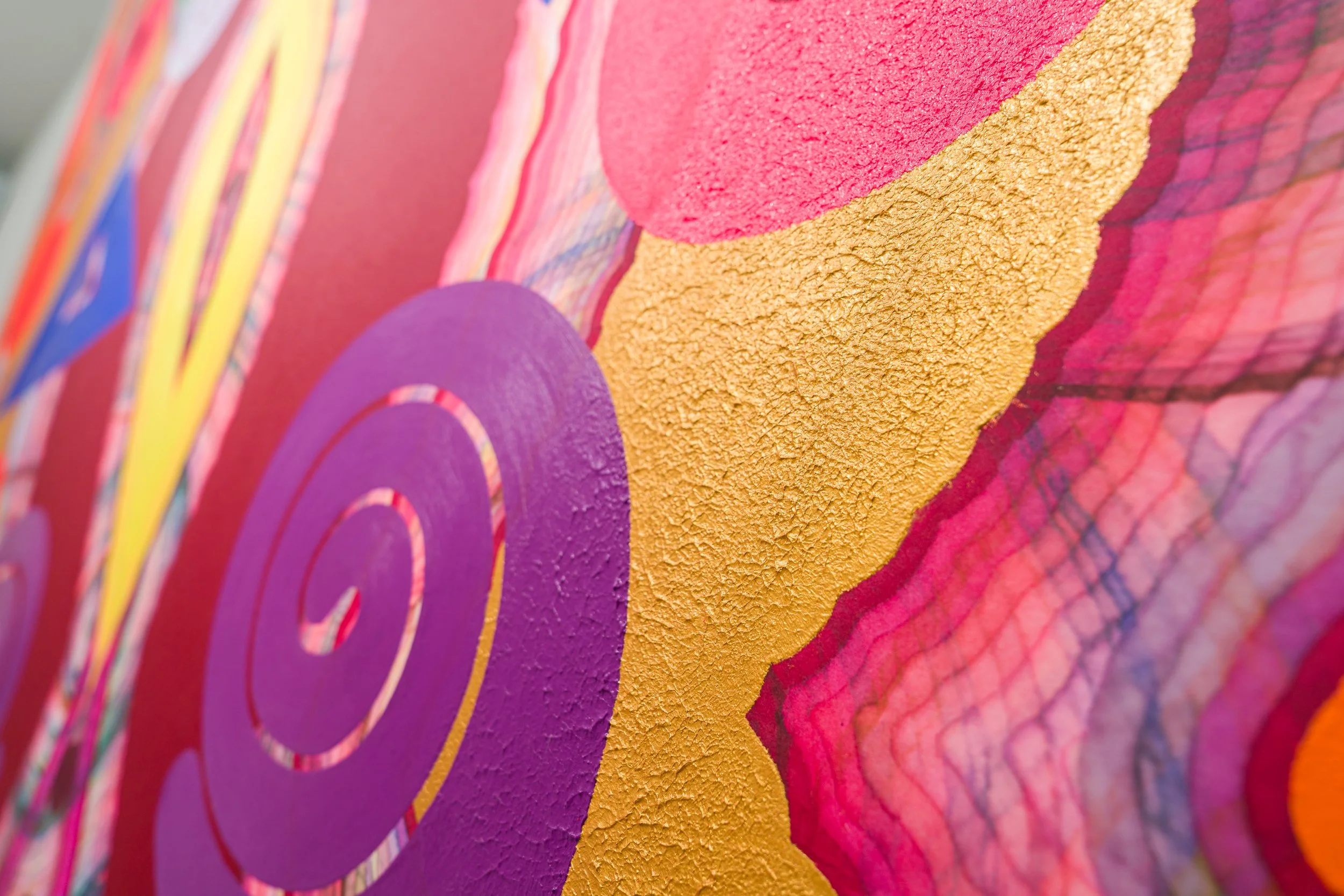
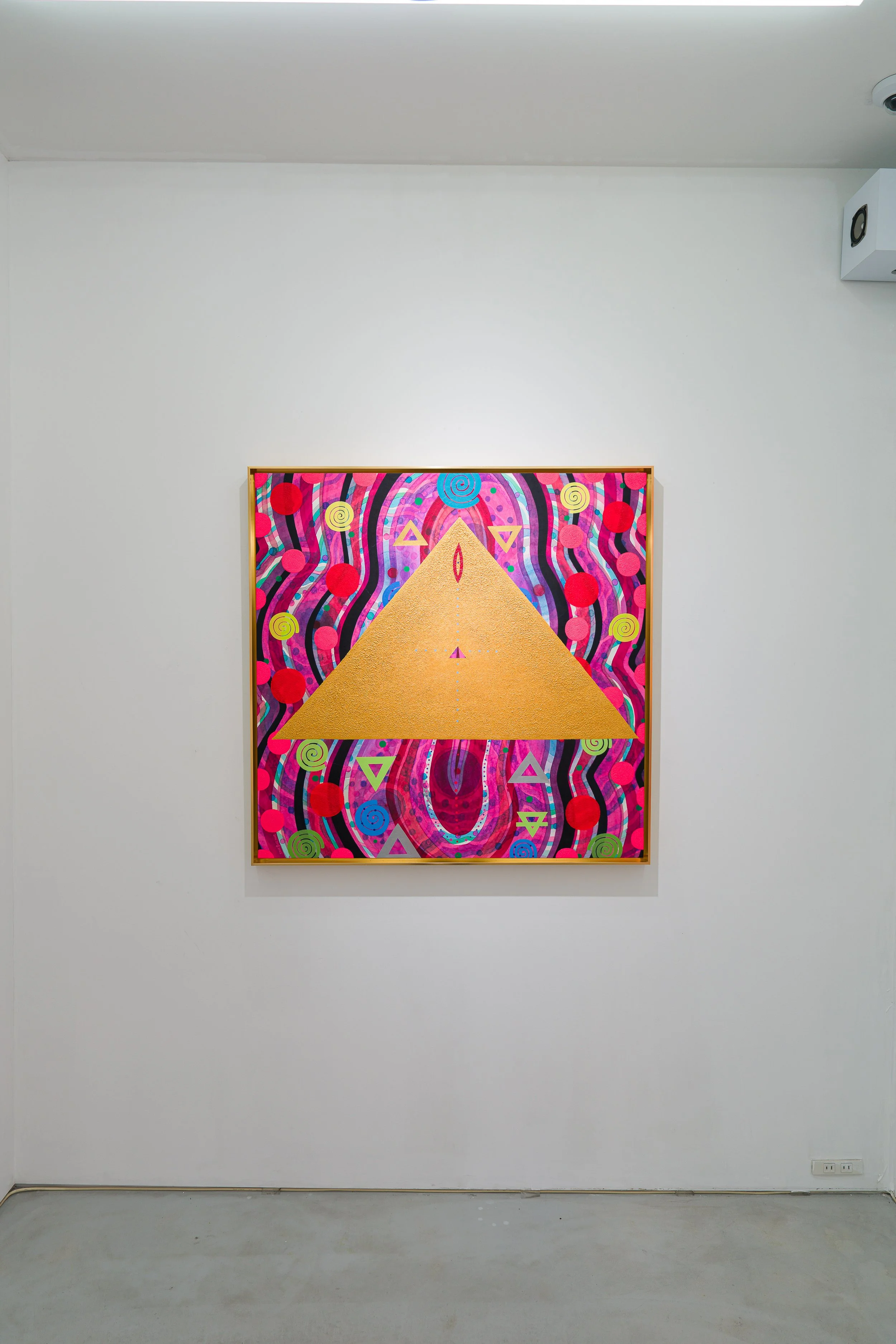
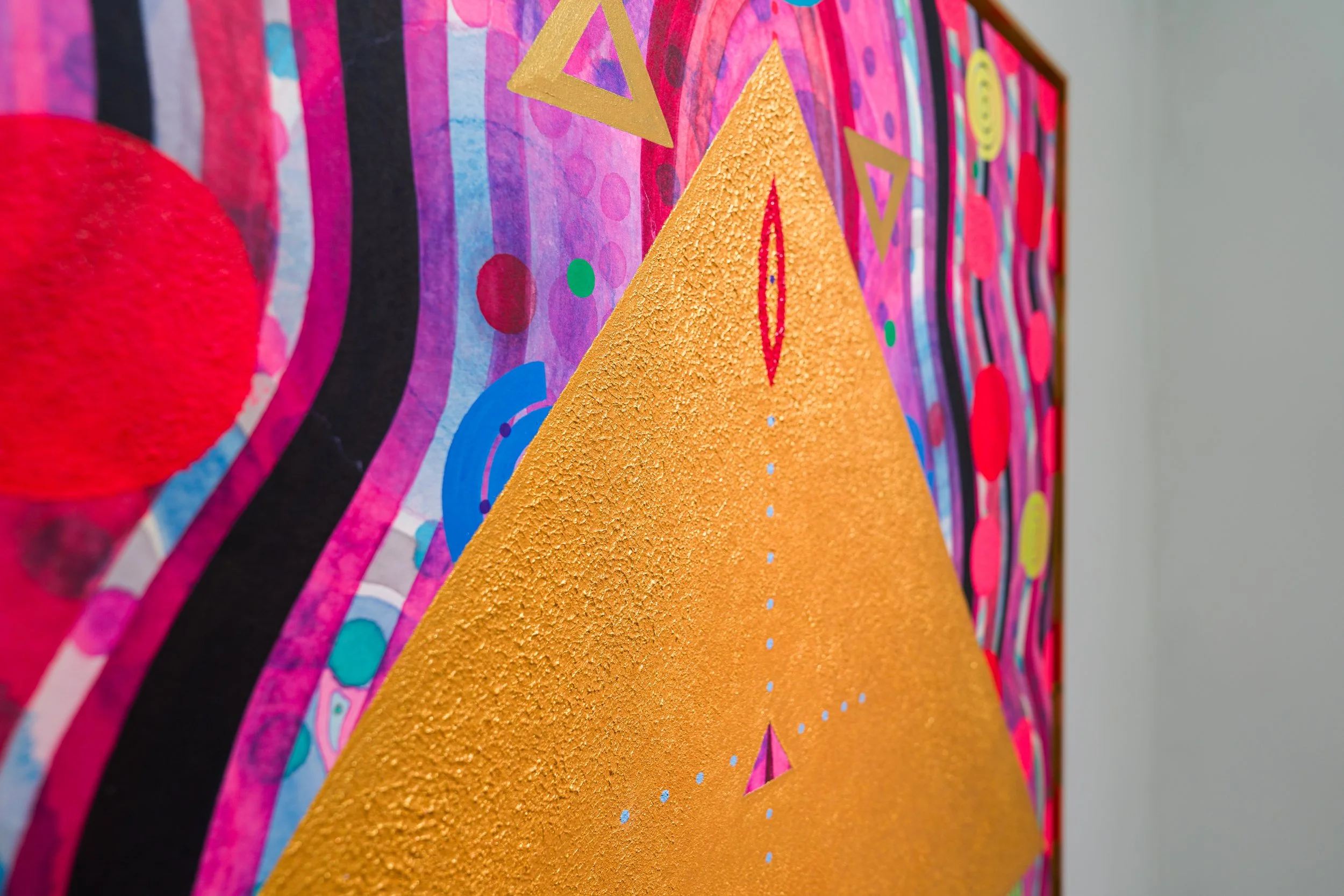
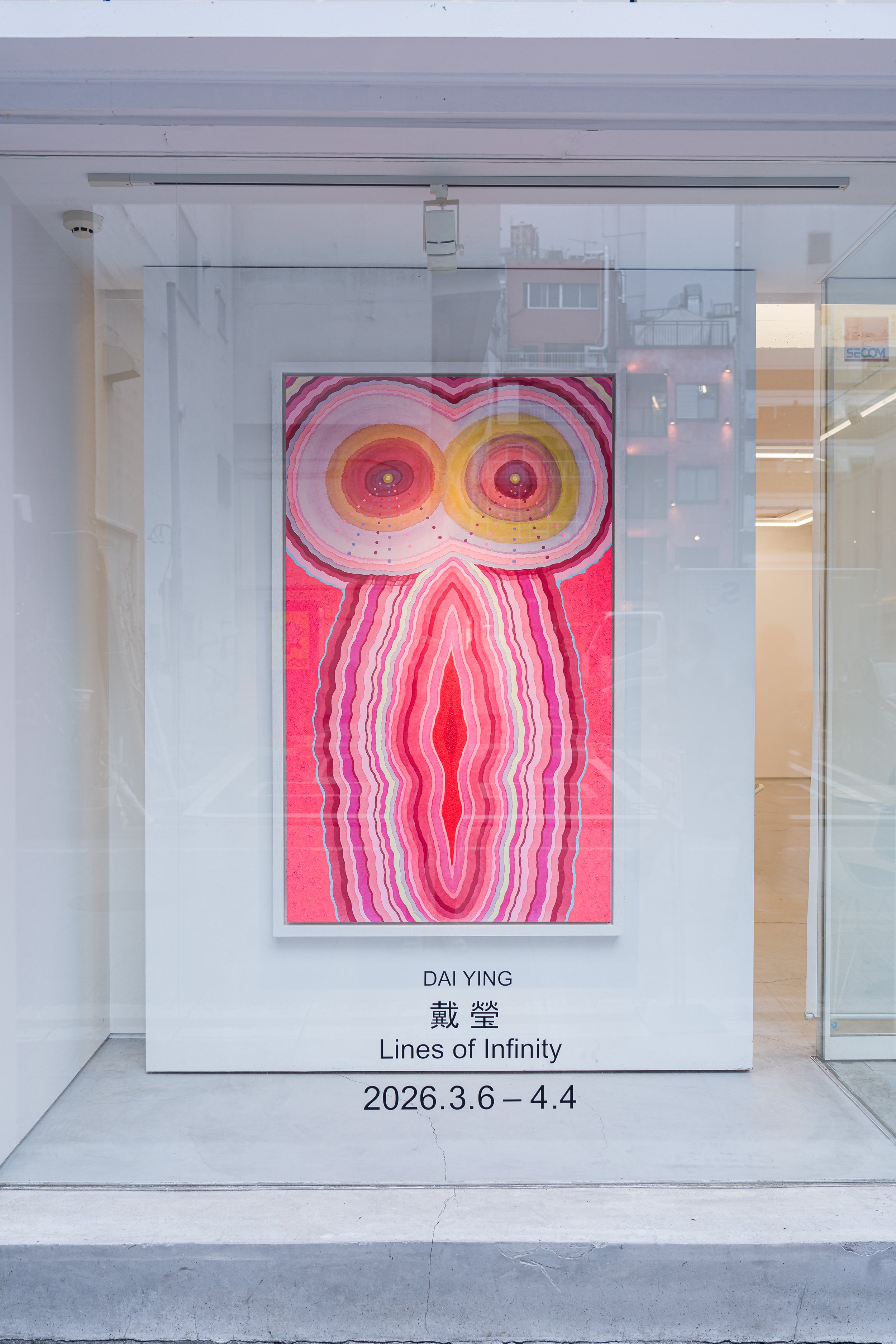
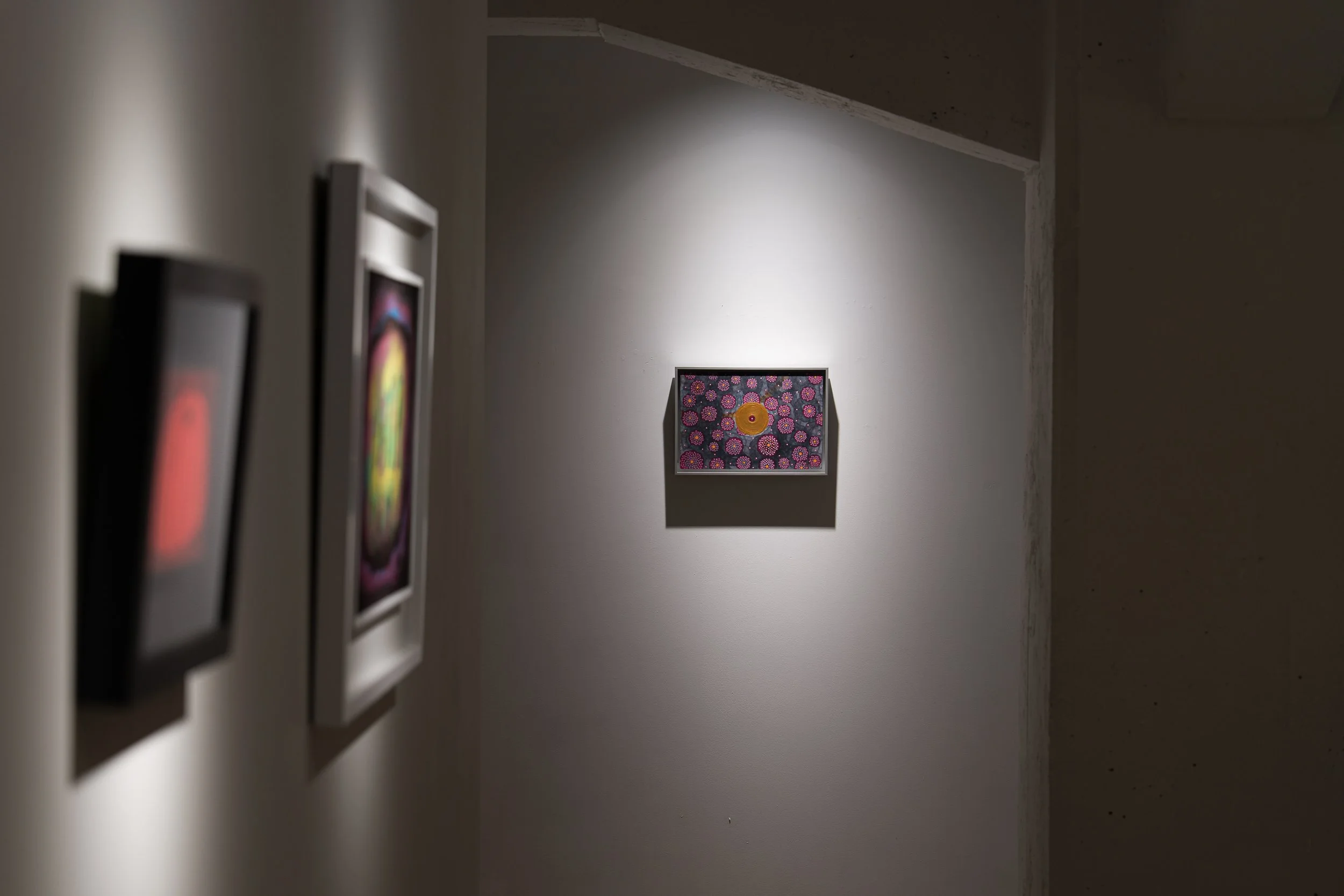
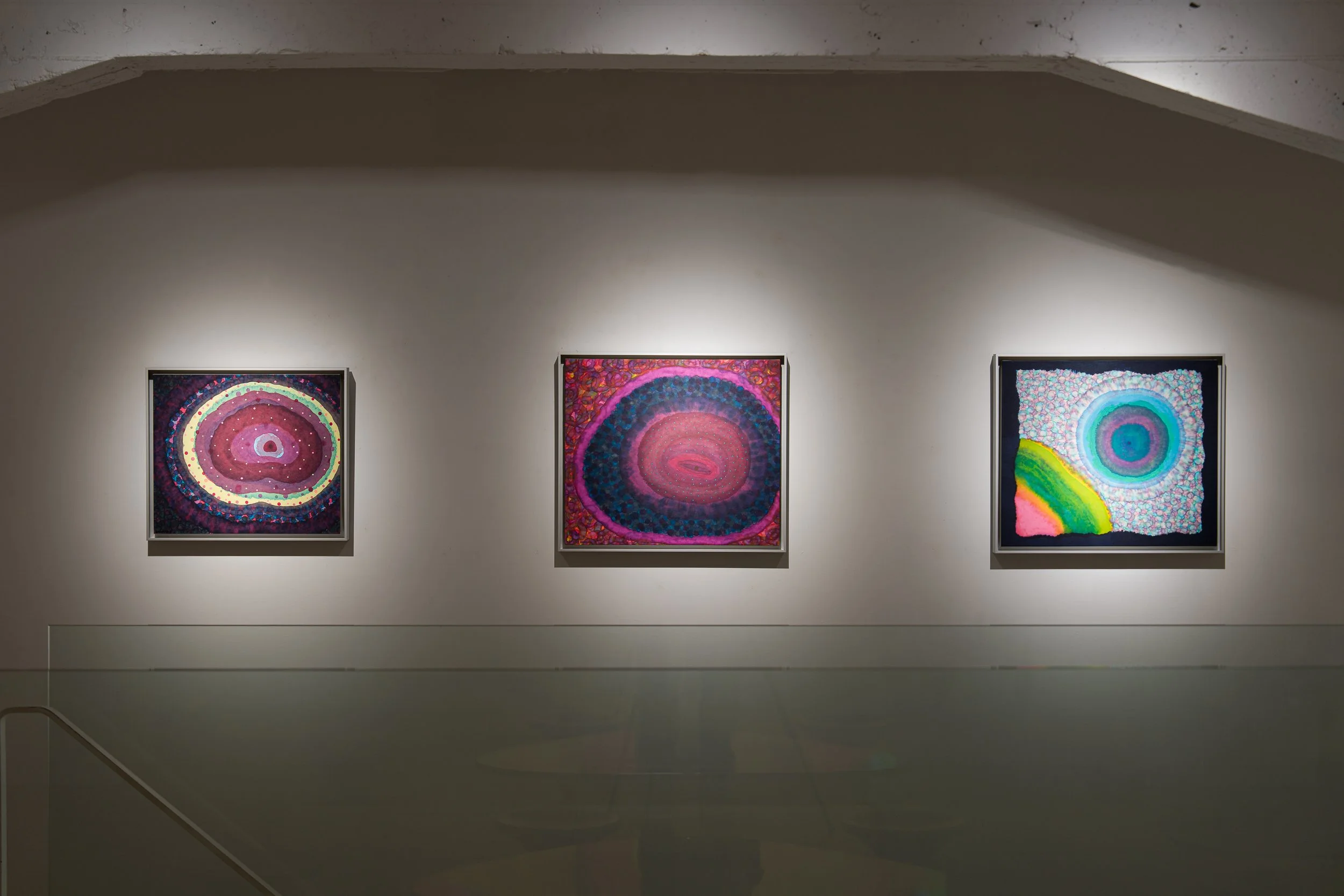
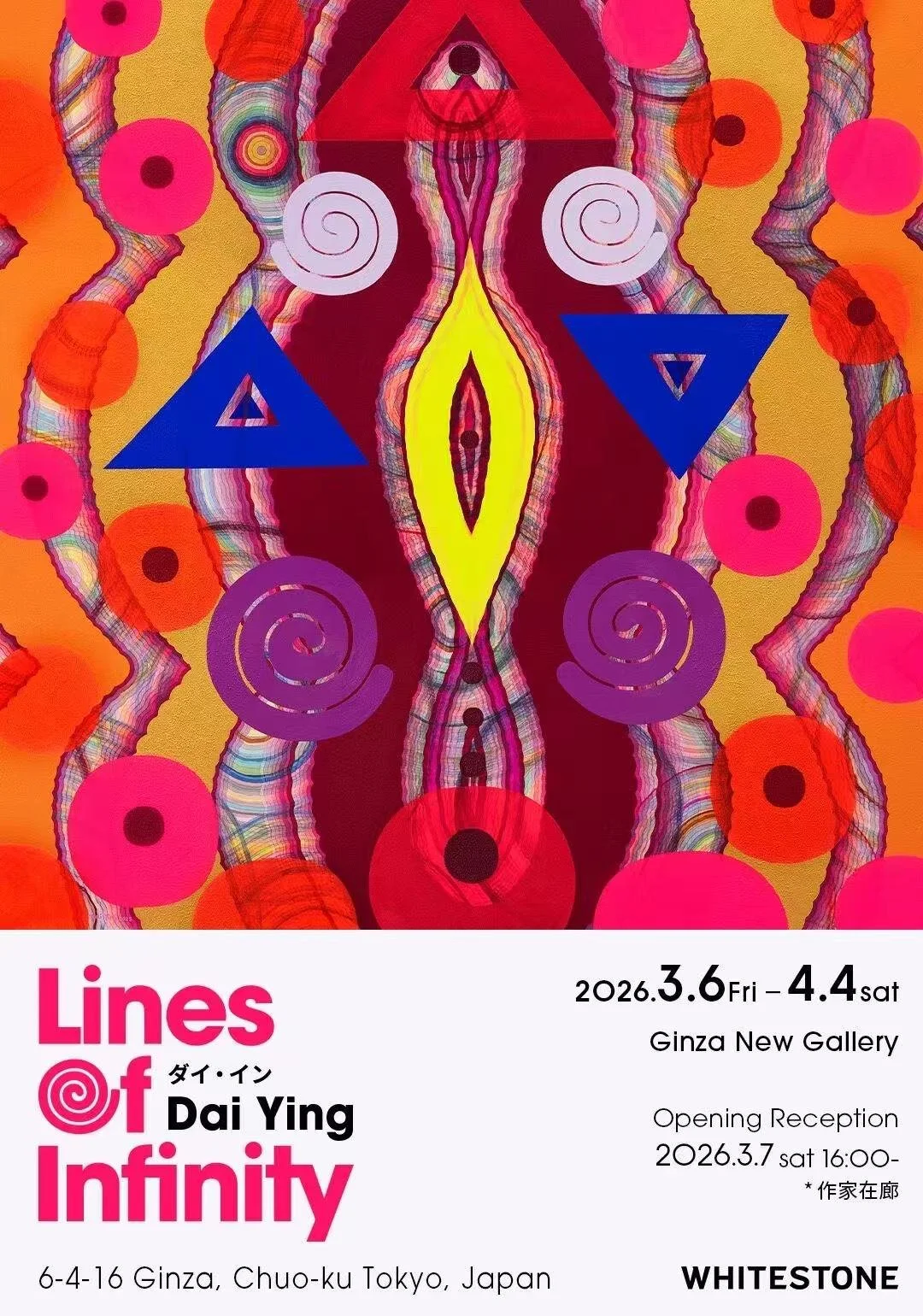
Dai: This is my Goddess series. The Goddess series is a fairly large-scale work. At the center of this piece is a vertical "gate of divinity," which can be read as an abstraction of the female body. I frequently take female organs or the female body as a whole and transform them into abstract forms, opening up a sense of symmetry across the entire composition. I work with strong contrasts in color, building up multiple layers and then expanding outward from that central axis.
Hijikata: Why did you choose to use symmetry in this way?
Dai: Symmetry speaks to a sense of order and relationship — and from that comes a symbolic feeling of solemnity. I actually don't want to frame this in terms of a god existing above us, as a higher being. Rather, that divinity is something that lives within our own bodies. They all carry with them a kind of connection between humanity and the divine — a sense of channeling that divinity into one's own body. That is where solemnity comes from, the expression of authority. The authority of women.
Hijikata: When I first saw this work, I had a number of immediate impressions. One of the first things that struck me was how much it resembled a mandala — in the sense of a diagram of the universe.
Dai: I actually prefer not to engage with it in those terms. For me, this is my body. It is an abstracted representation of my own body.
Hijikata: Hearing you say that, I can't help but think of the Garbhadhatu Mandala (Womb Realm Mandala). Mandalas are divided into two types: the Garbhadhatu, which represents the womb and the principle of the maternal, and the Vajradhatu (Diamond Realm), which represents the male principle.
Dai: And this triangular form — it is an extremely stable structure, one that conveys a sense of authority and power. So here I am standing before it, and you could imagine it, or describe it directly, as an expression of the female genitalia. In that sense, it is a force — an upward assertion of power. The left-turning wheel and the right-turning wheel that you see here each represent something different: one represents rebirth, and the other represents the cycle of reincarnation. Together, they represent the order of the entire universe.
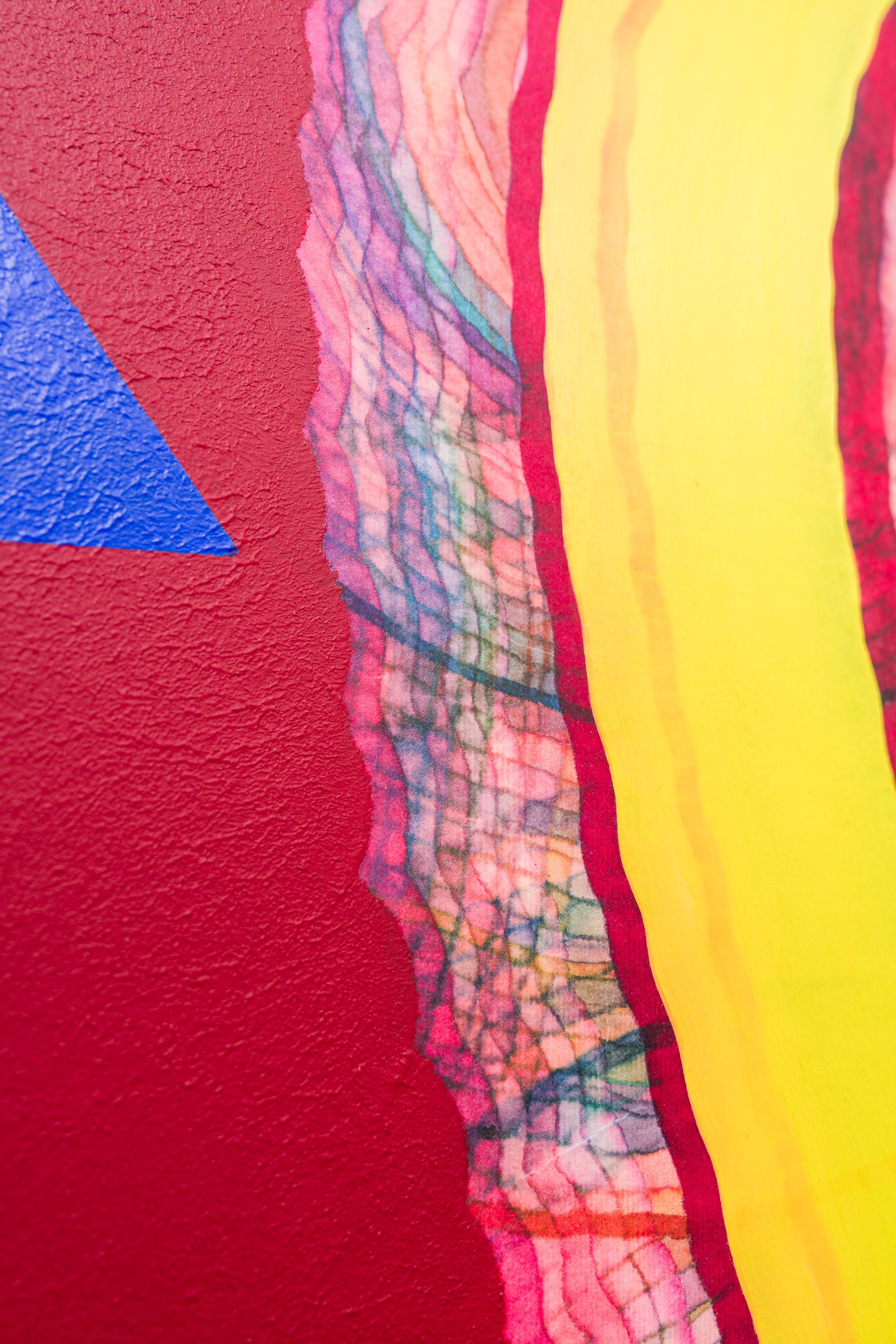
The material used here is Chinese xuanzhi (rice paper) — a fairly thick kind — which has been mounted onto canvas. So it still connects back to my earliest training in traditional painting.
Hijikata: Beyond what you've just described — the symbolism, the technique — there is an extraordinary density to both the visual execution and the conceptual framework. They feel very tightly integrated.
Dai: Yes, the density is very strong. And there is a reason why I use so much gold, for instance. Throughout the development of human culture, gold has often been used to symbolize royalty, power, and authority—dating back as far as ancient Egypt. By bringing gold into a visual language centered on the feminine, I am amplifying the power and authority of women even further.
The M Series: An Imagination of the Multidimensional Universe
Hijikata: This work presents a completely different atmosphere. Could you tell us about this one as well?
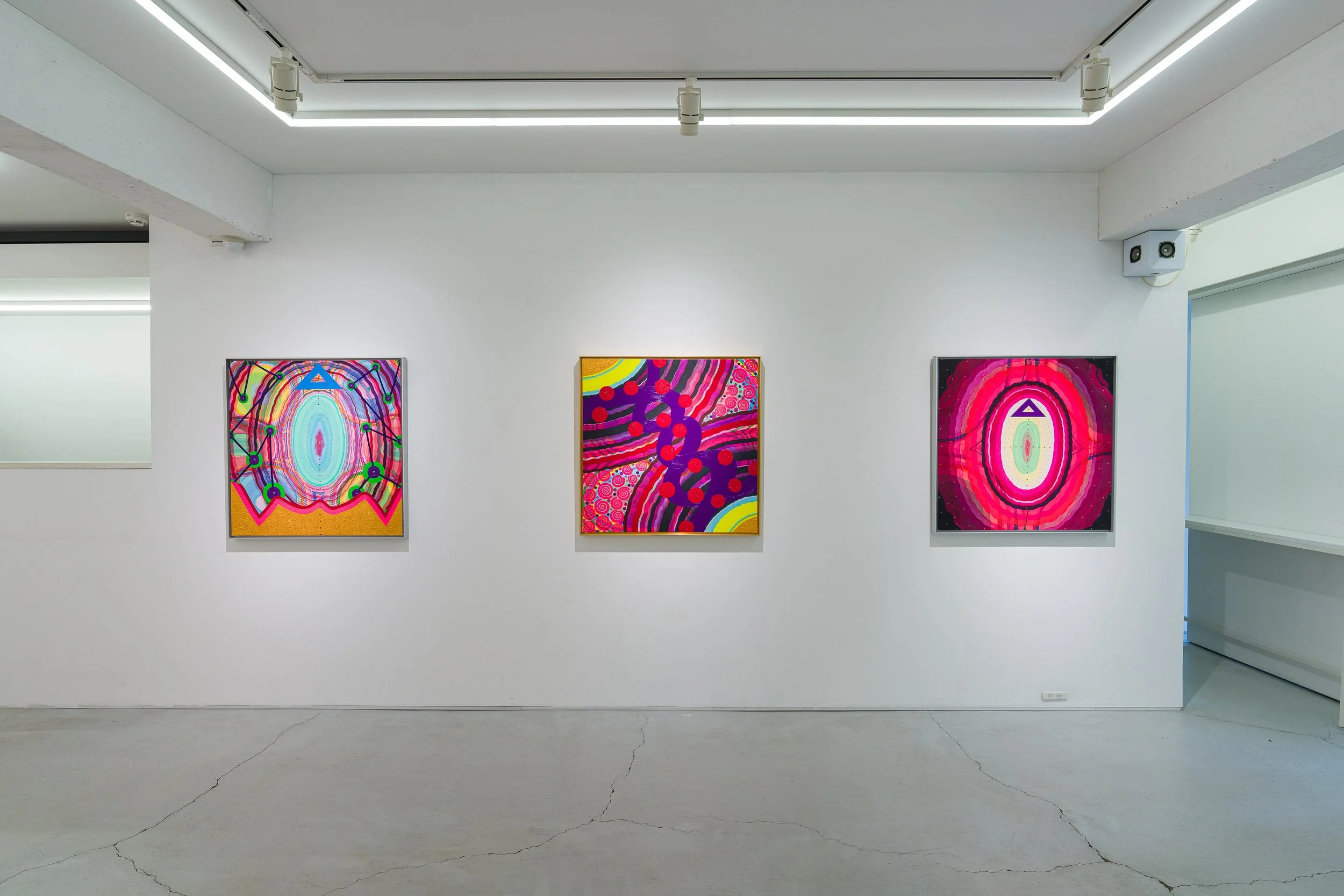
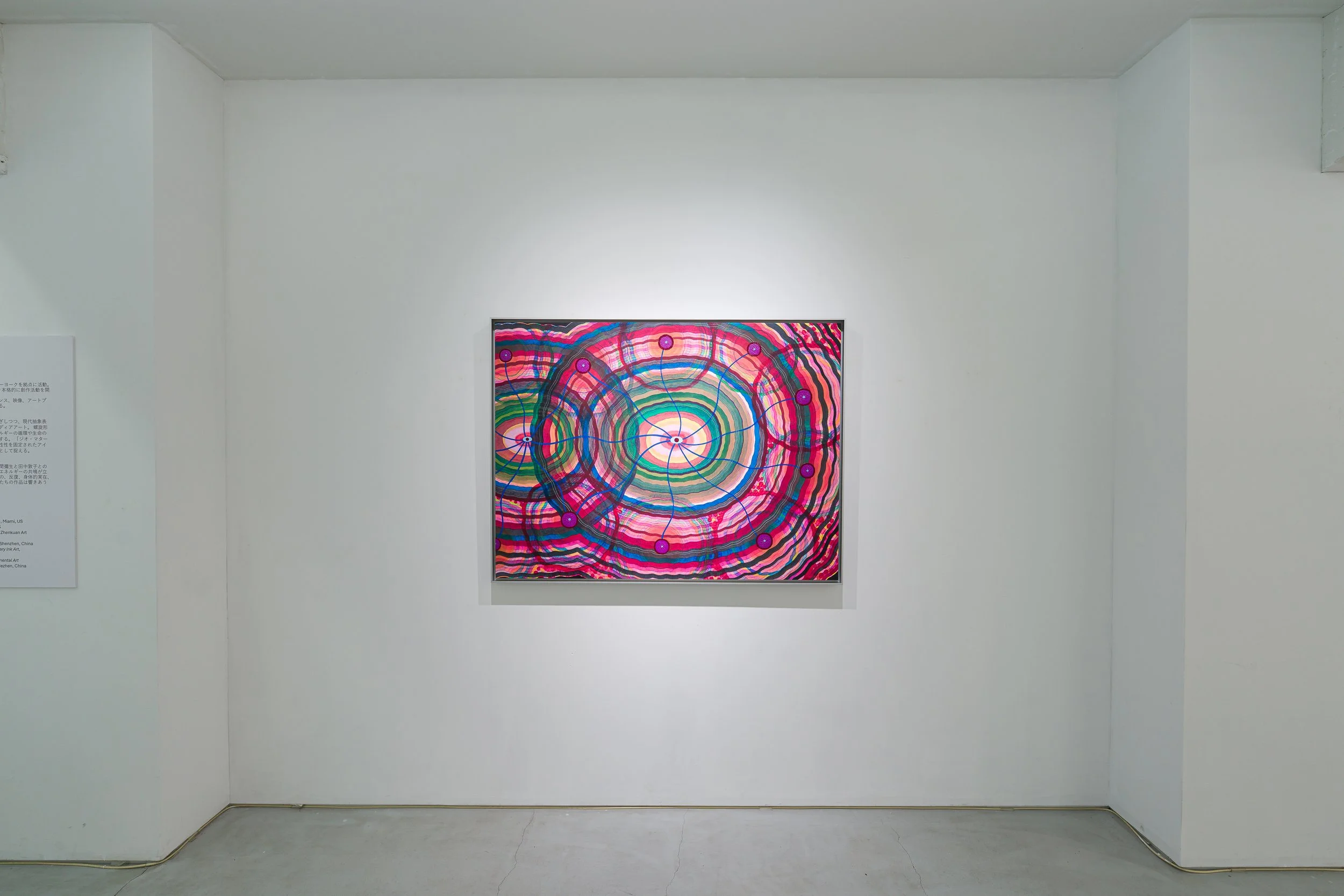
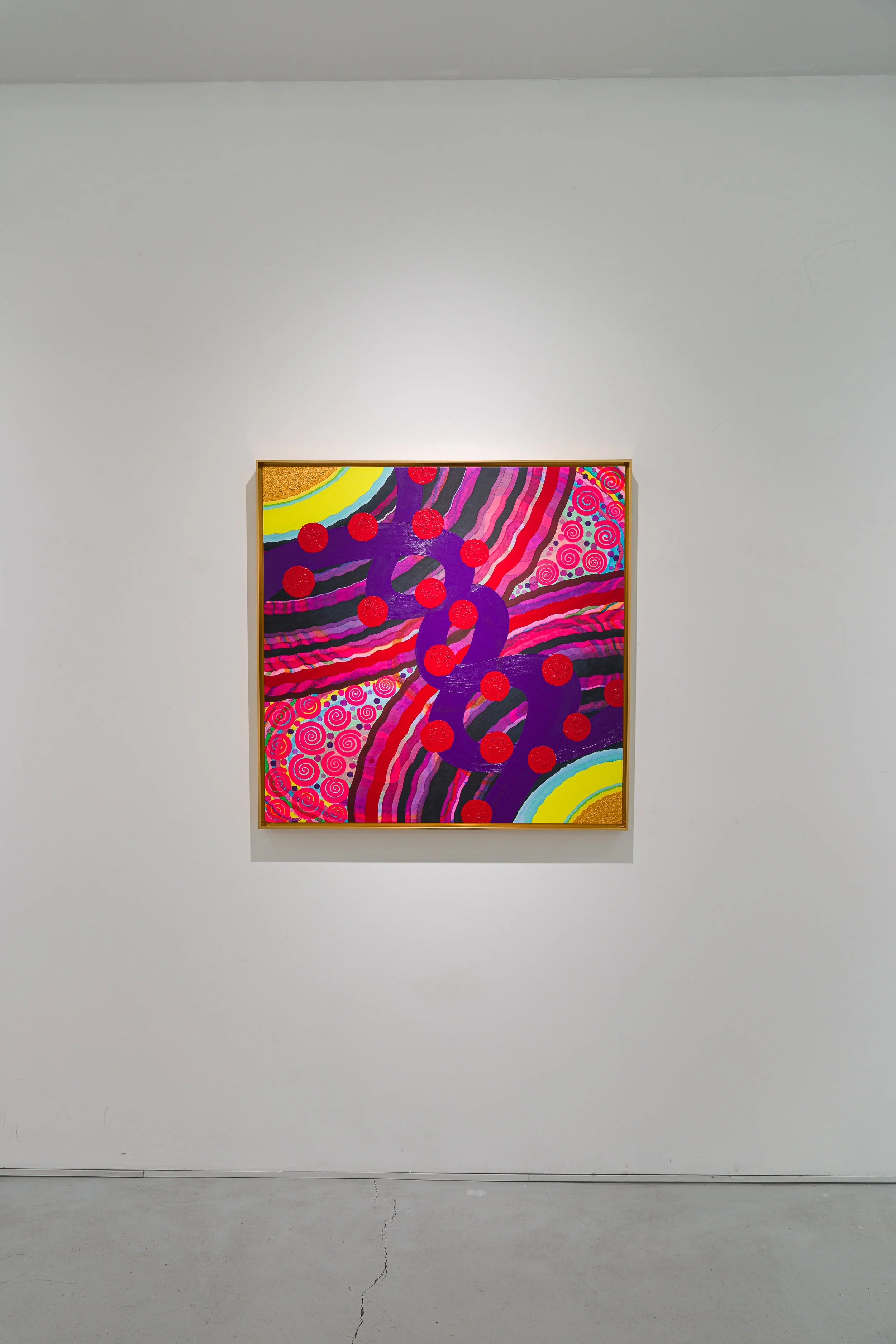
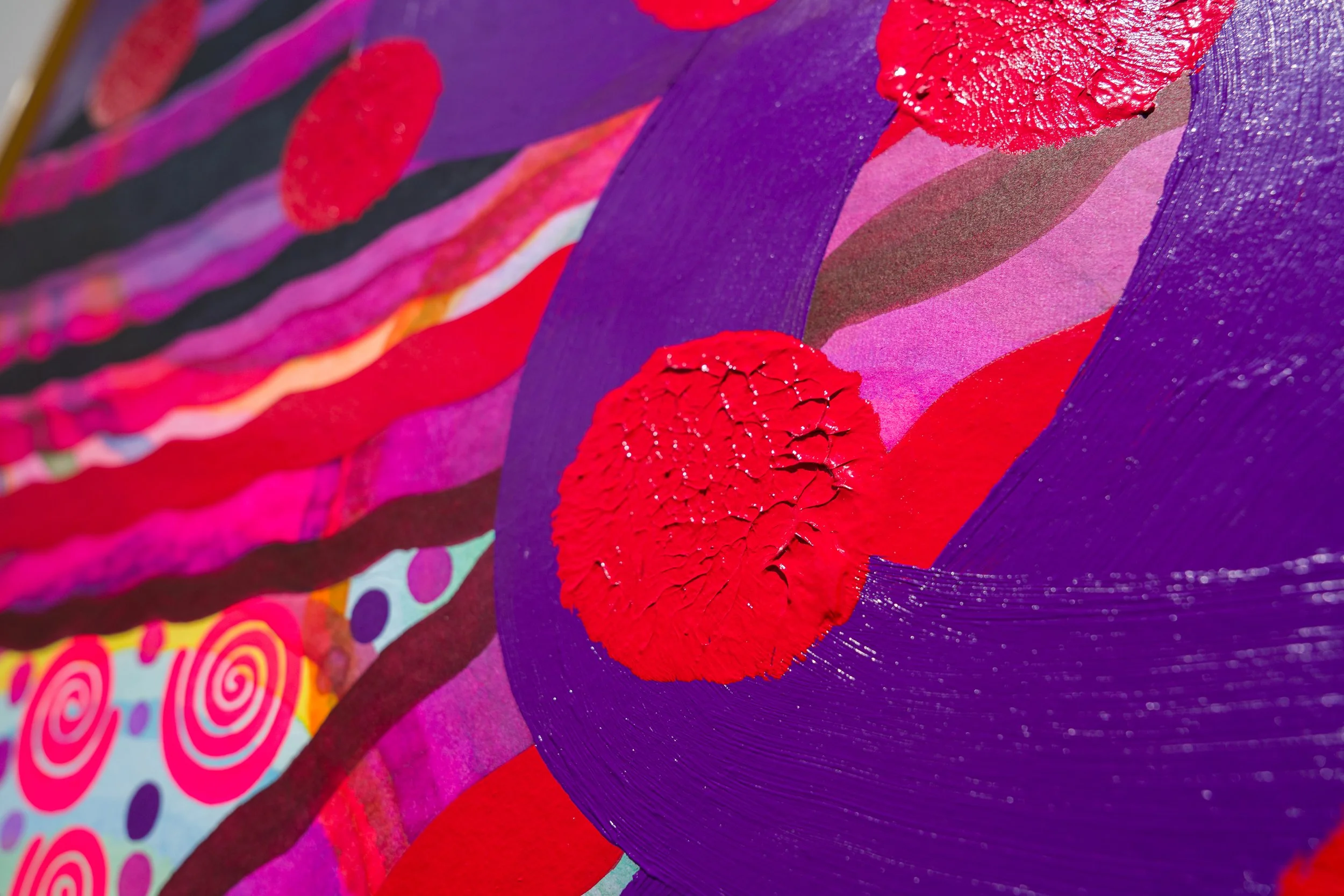
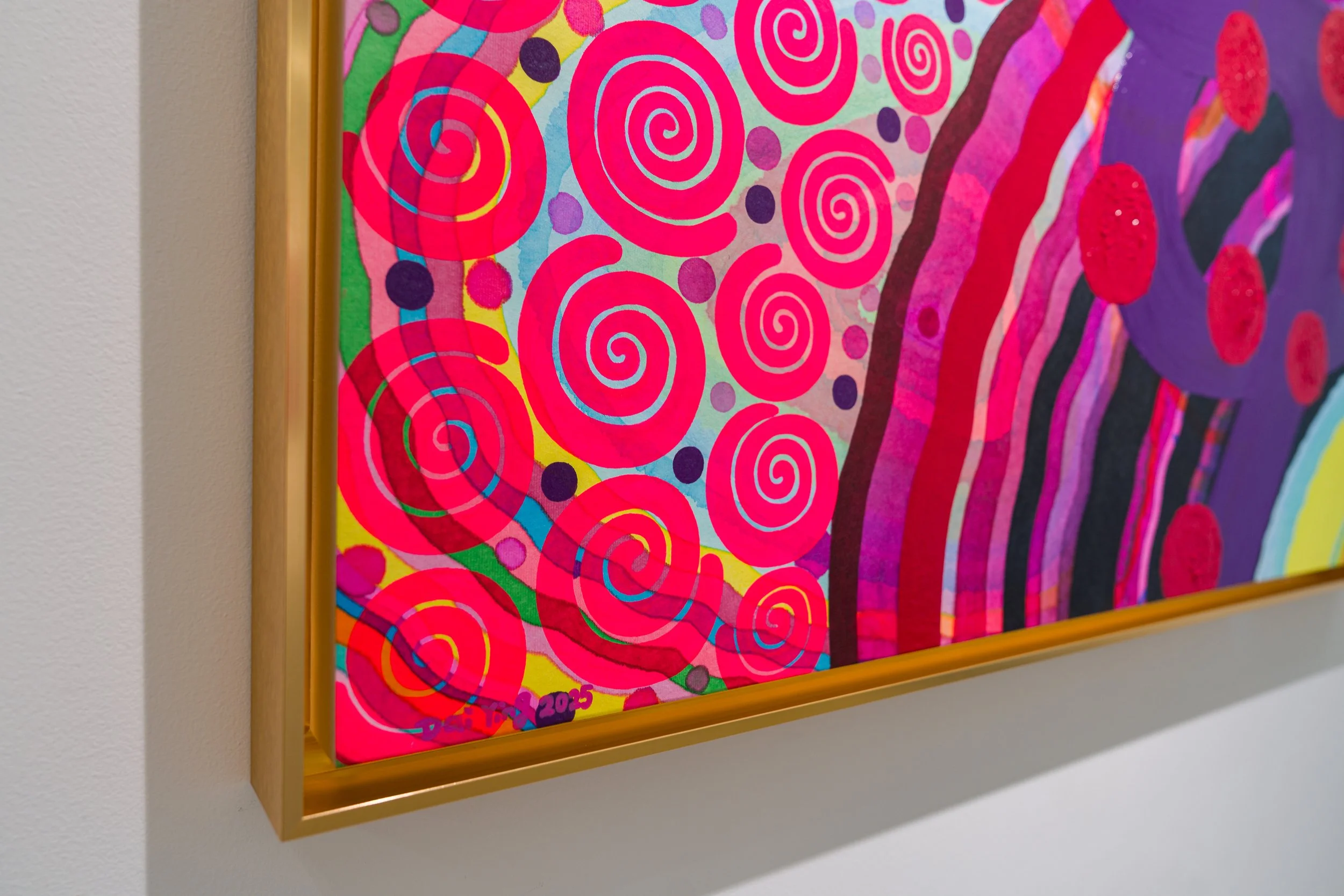
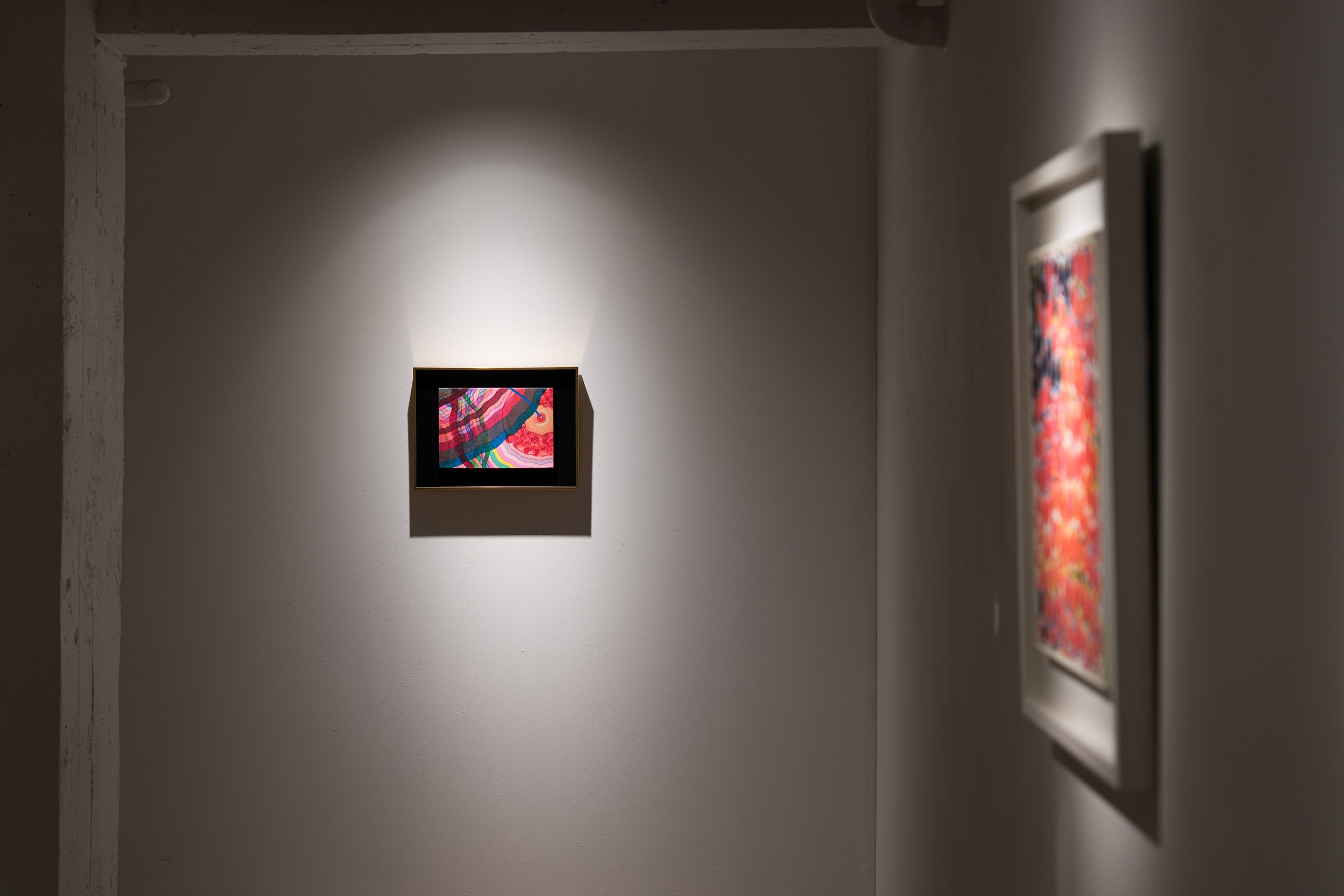
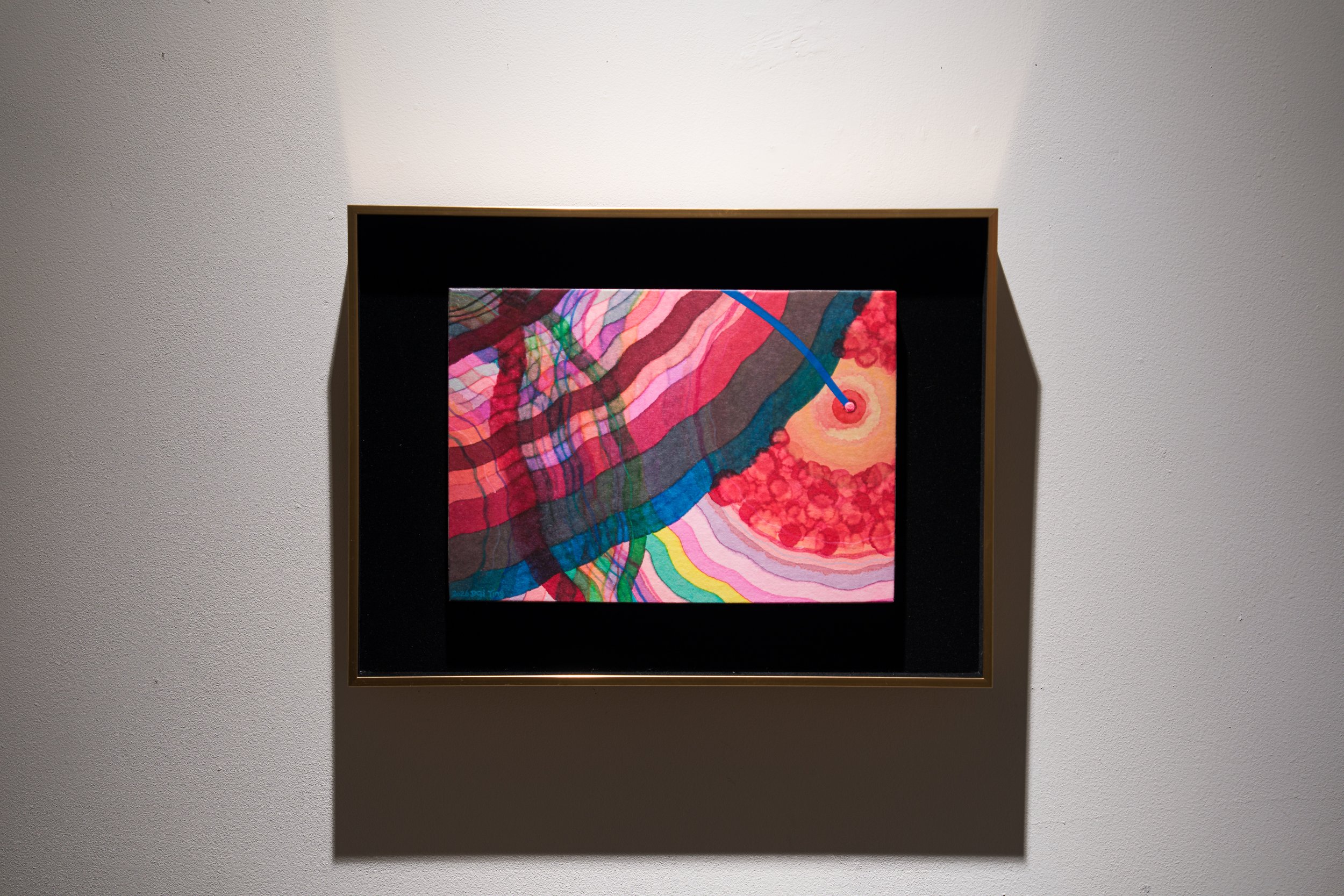
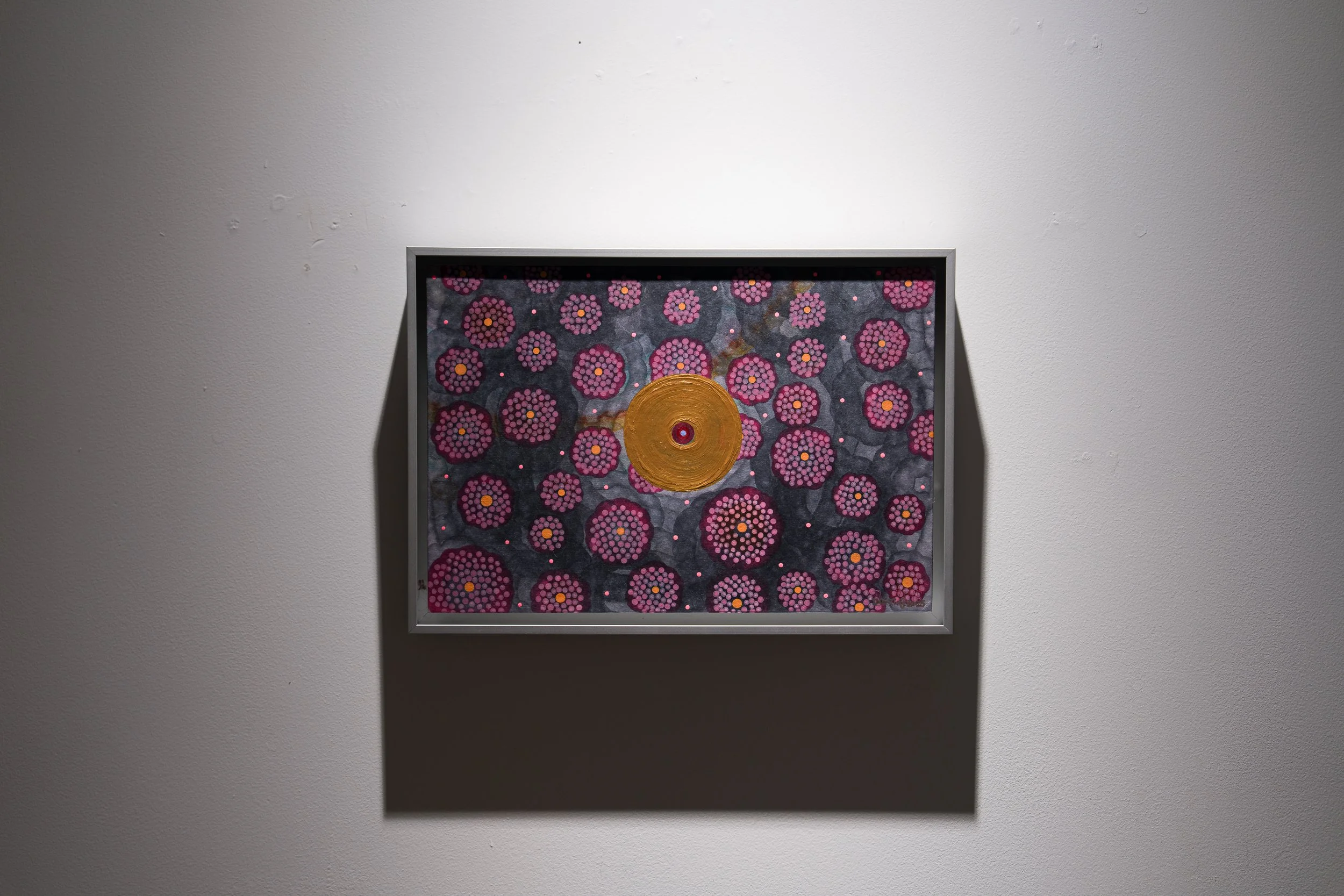
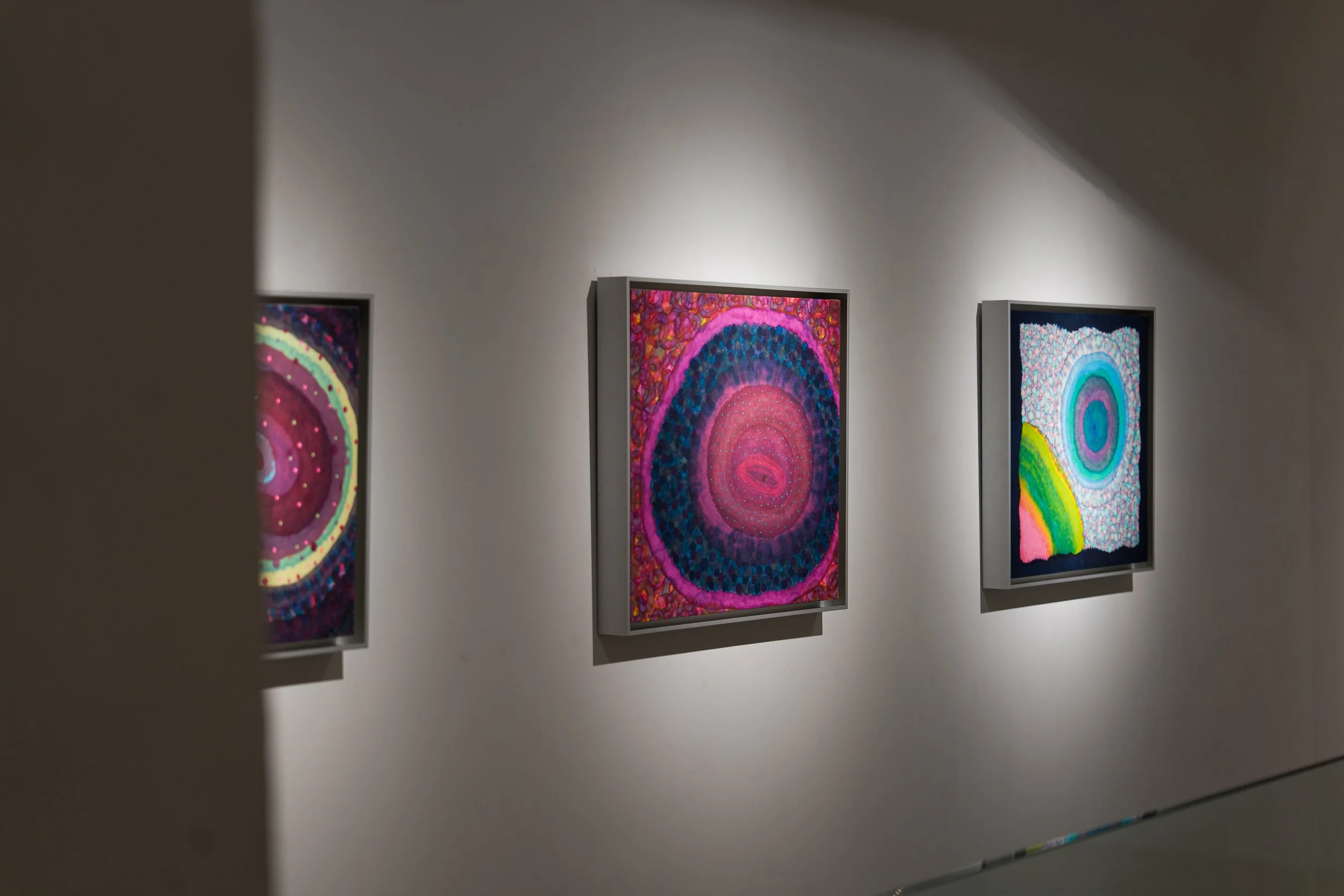
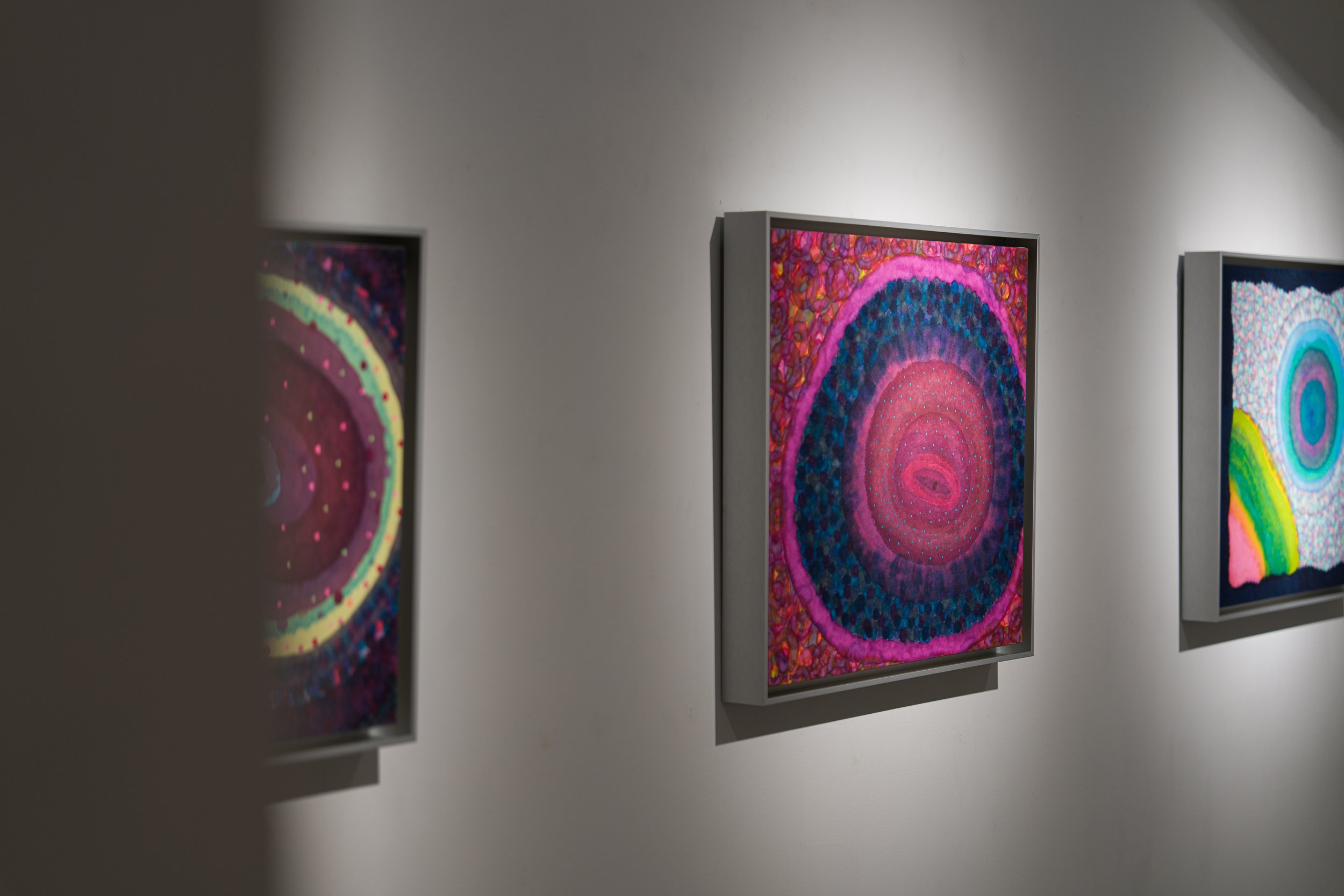
Dai: This piece belongs to a series I have been working on for quite some time called M — which stands for M-theory, or superstring theory. It evokes the kind of web-like interconnectedness you see between quantum particles and celestial bodies, the way stars and galaxies are linked in a network. And yet it is also a human organ — the eye, for instance, or something like it. It is my imagination of a multidimensional universe.
Let me explain why it looks the way it does. With my level of color saturation and density, if a single composition is too densely packed, it can start to feel heavy and suffocating. What I want instead is for the painting to have a sense of breath — to leave room for the viewer to engage their imagination and have their own emotional response.
This actually goes back to my childhood practice of calligraphy, and the structural relationship between the full (solid) and the empty (void).
A Tribute to Yayoi Kusama and Atsuko Tanaka: Following the Same Path and Forging New Ground
Dai: It was actually when I was studying art and learning about Western art history that I first came to truly understand Yayoi Kusama. So in my mind, this artist is not simply an Asian or Japanese artist — she belongs to a much larger world. Her artistic practice and the path she walked had an enormous influence on me during my student years.
It was precisely because of the path she blazed that I chose to go to New York in 2011 — not to study, but to enter directly into a career as a professional artist. So much of what I do — my performance art, my installation art, my cross-disciplinary practice — Yayoi Kusama had a tremendous influence on all of it.
As an Asian woman, women in the art world — especially back then — were still in a position of disadvantage relative to men in what was very much a male-dominated society. Her achievements represent exactly what I want to achieve for myself, and that aspiration was part of why I went to New York.
Hijikata: With your talent, I am sure you will get there.
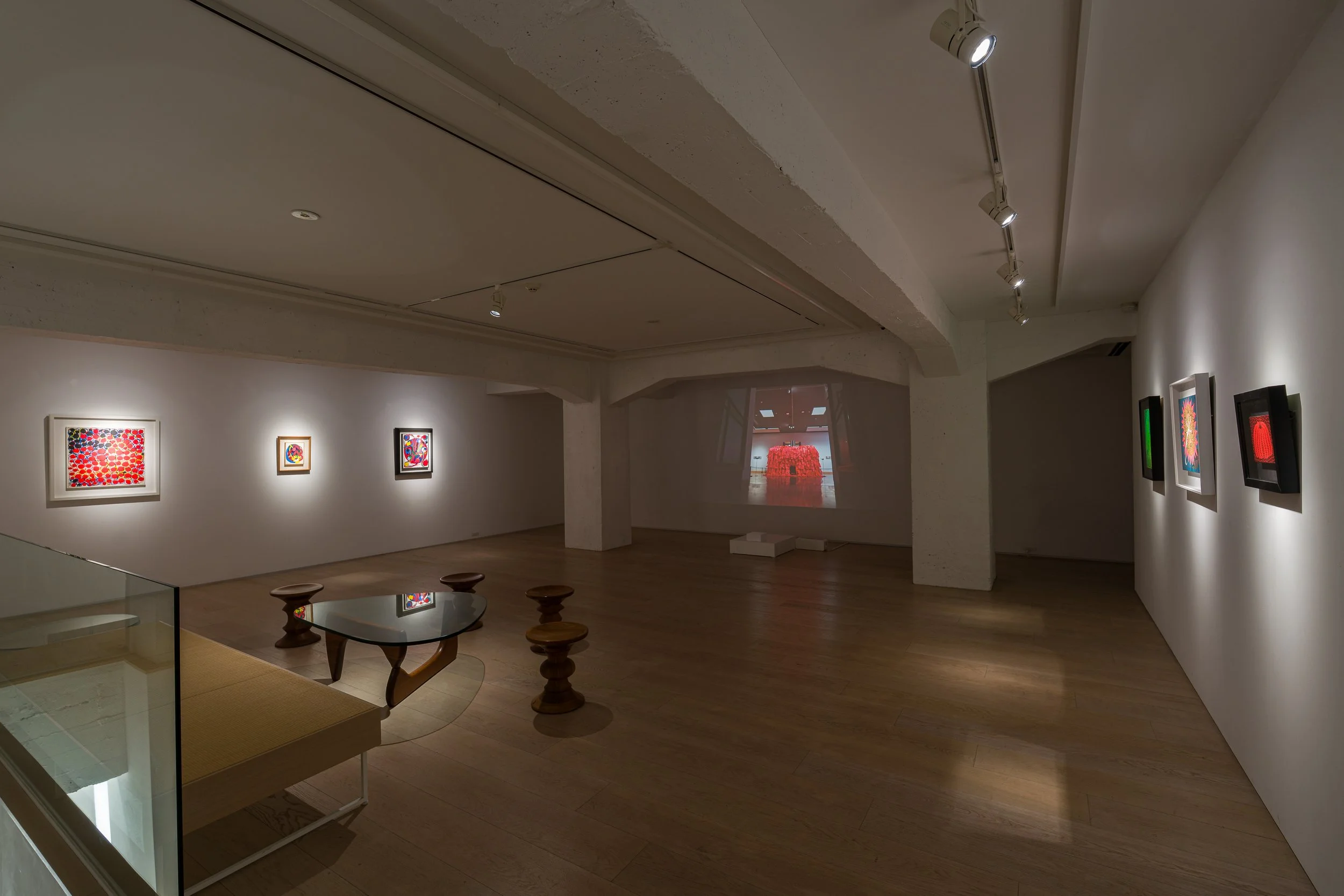
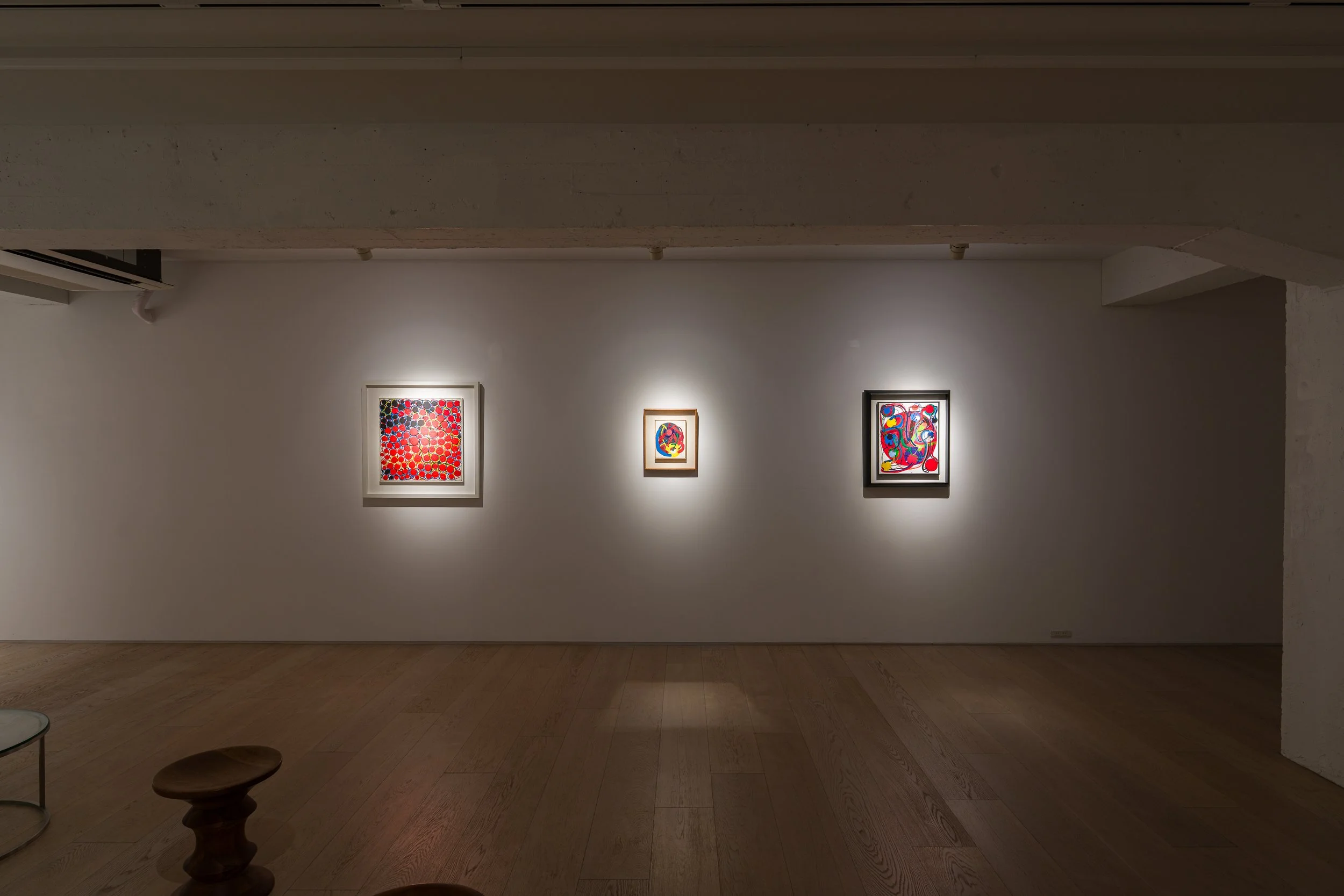
Hijikata: Your work is being exhibited alongside that of Atsuko Tanaka and Yayoi Kusama. Could you tell us about your personal thoughts regarding Yayoi Kusama?
Dai: Just as Yayoi Kusama went to New York and sought out Georgia O'Keeffe — because O'Keeffe was fifty years older than her — I believe there is a force, like a lighthouse, guiding me forward in ways that are beyond coincidence. Kusama's artistic practice emerged from her innermost, most authentic feelings. What she actually painted, or the expressive power of her canvas work — that is not what matters most to me. What matters is her absolute devotion to art, and the total commitment of her entire life.
That is the state I aspire to reach as an artist of the next generation. I am deeply grateful to Whitestone Gallery for giving me this opportunity. For me personally, this is the first time I have exhibited alongside Yayoi Kusama — and that is an embrace. But I also believe that after today, it marks a farewell of sorts, because I am an artist moving forward into the future.
Dai: Atsuko Tanaka is an artist I came to know later in my development — specifically when I was learning about the connections between Japan's Gutai group and the Mono-ha movement. In the global context of contemporary art, both Gutai and Mono-ha are truly exceptional. They emerged in the wake of the most vibrant period of American art — the Pop Art and Fluxus movements of the 1950s and '60s — and went on to produce work that engaged with and responded to those movements in ways that had not been thought through before.
Hijikata: During the era when both of them were active, women were still broadly looked down upon, weren't they?
Dai: Yes. It wasn't just artists who faced discrimination — women as a whole were discriminated against. So their canvas work is only one dimension of their artistic expression. Their greatest achievement lies in the fact that they used their bodies — they continually used their physical presence to create meaningful, experimental art. Their influence on me has been to push me beyond the limits of canvas painting, into many other forms of practice.
Hijikata: I look forward very much to seeing what you present in Japan, and to watching your growth as an artist here.
Dai: Thank you.
Whitestone Ginza New Gallery
Dai Ying's work weaves together a rich array of symbolic elements while giving the surface a fluid, ink-like quality in its color. Her art contains within it the cosmos — conveying the power of the feminine and a deep sense of spirituality in a way that is both dynamic and mysterious. The artistic landscape she is building, while walking in the footsteps of those who came before her, is certain to reach further and further into the future.