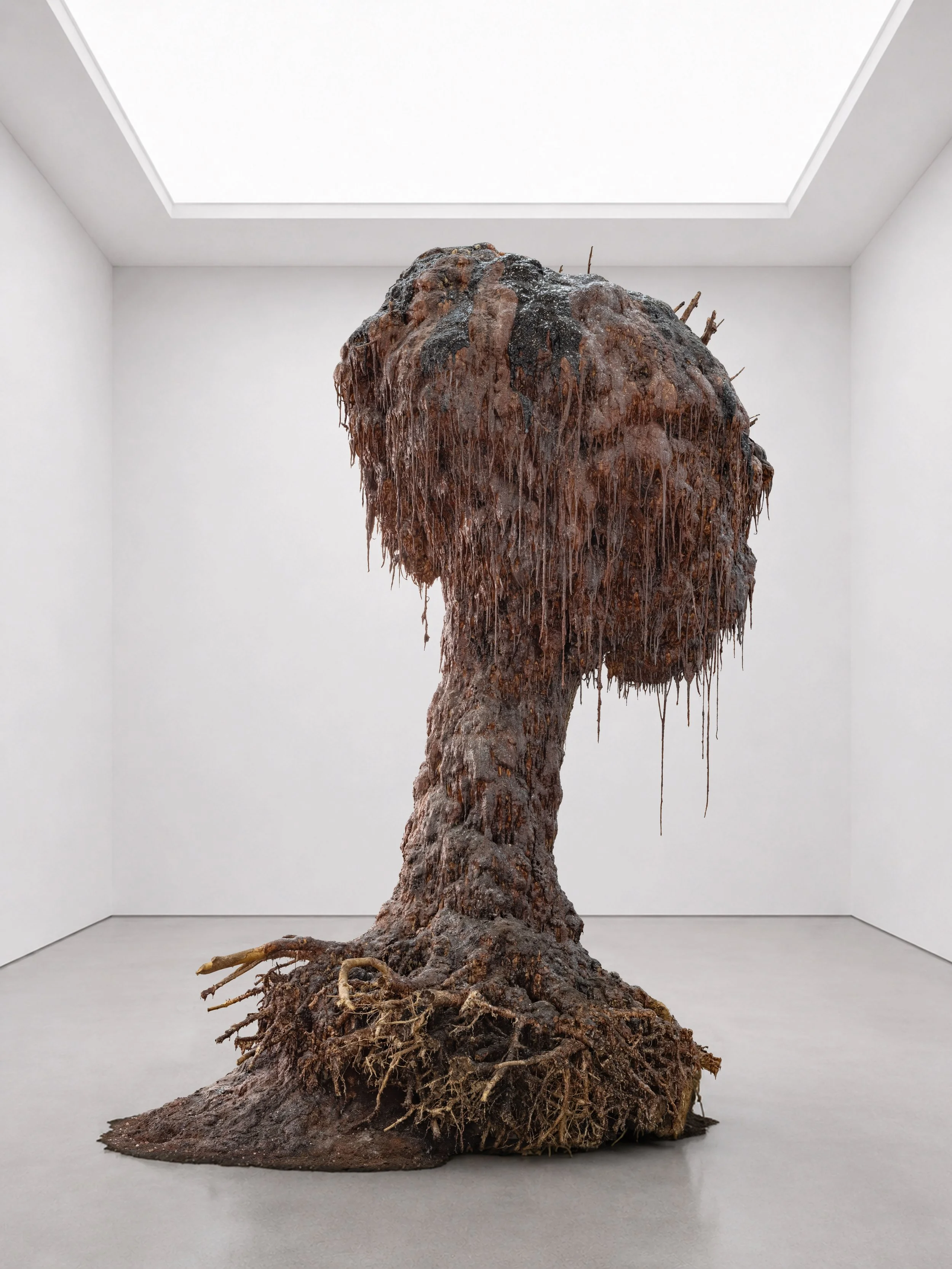
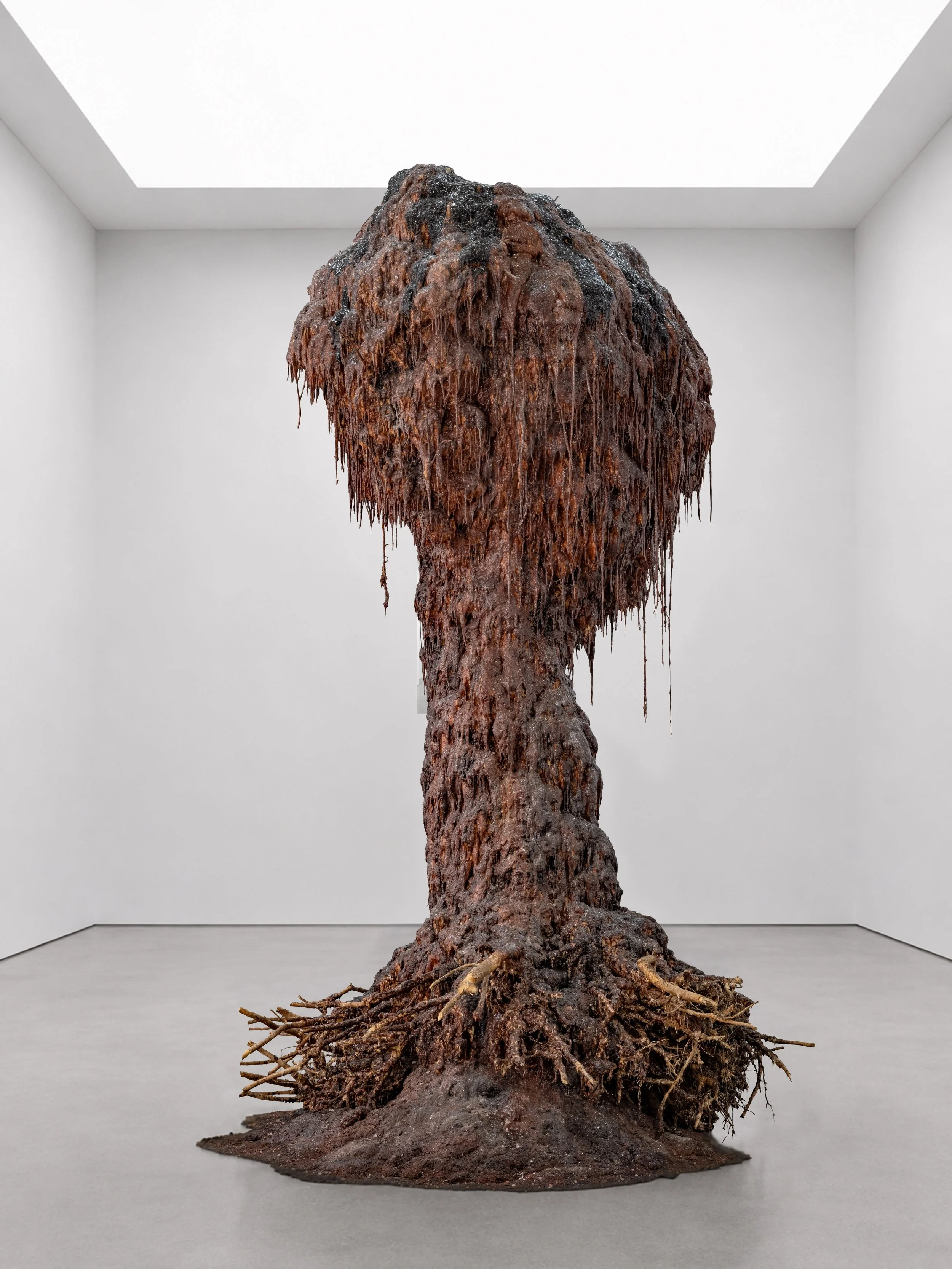
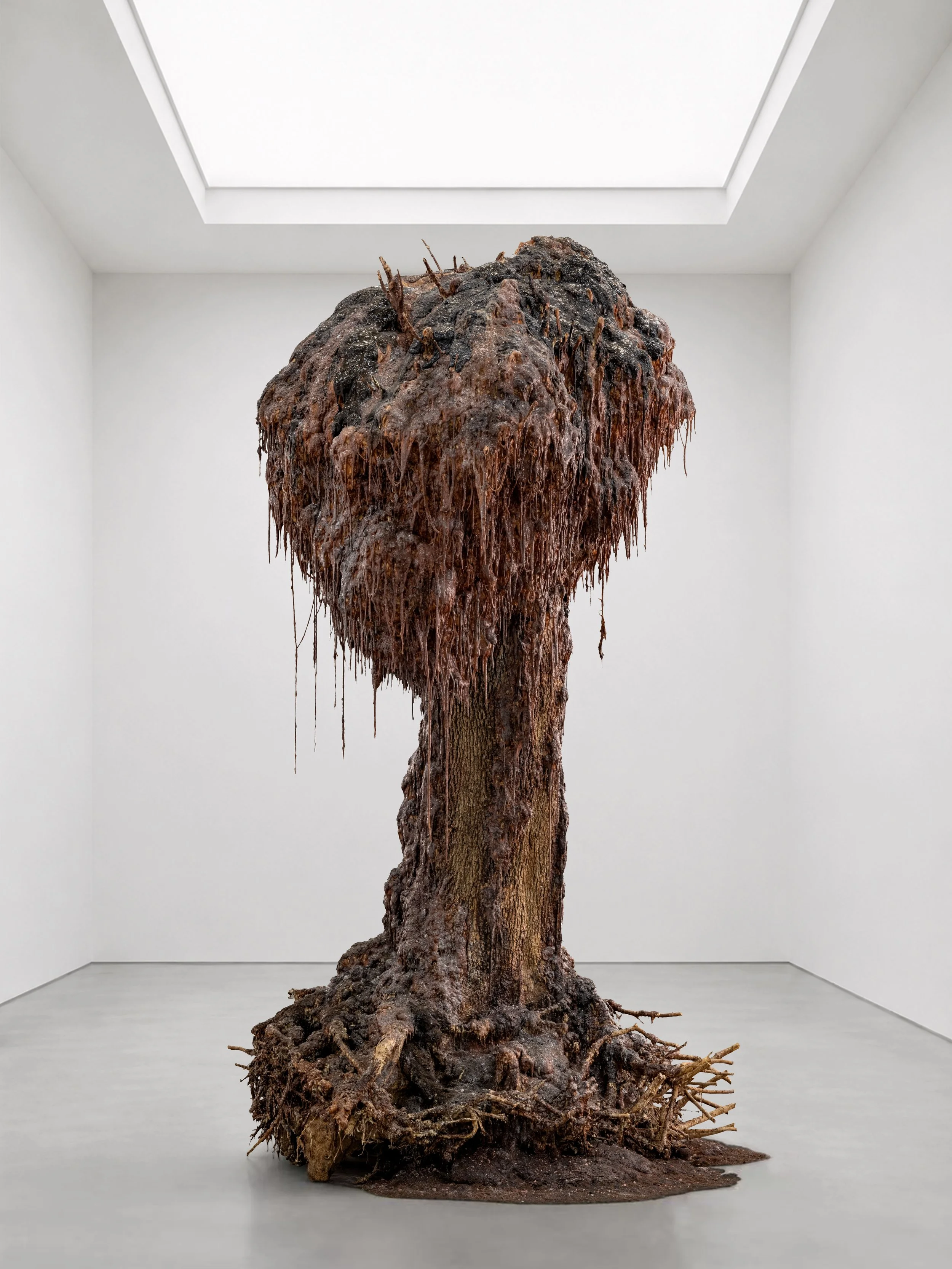
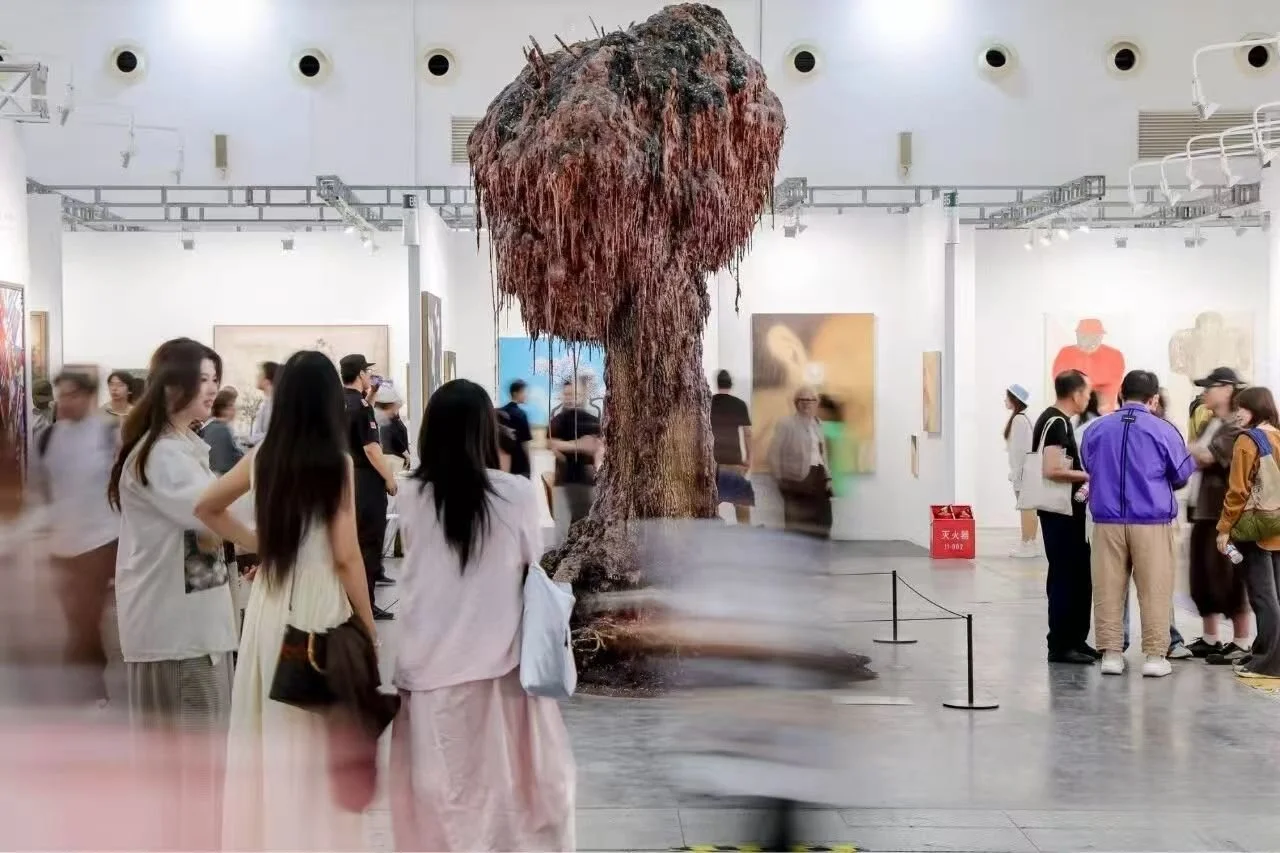
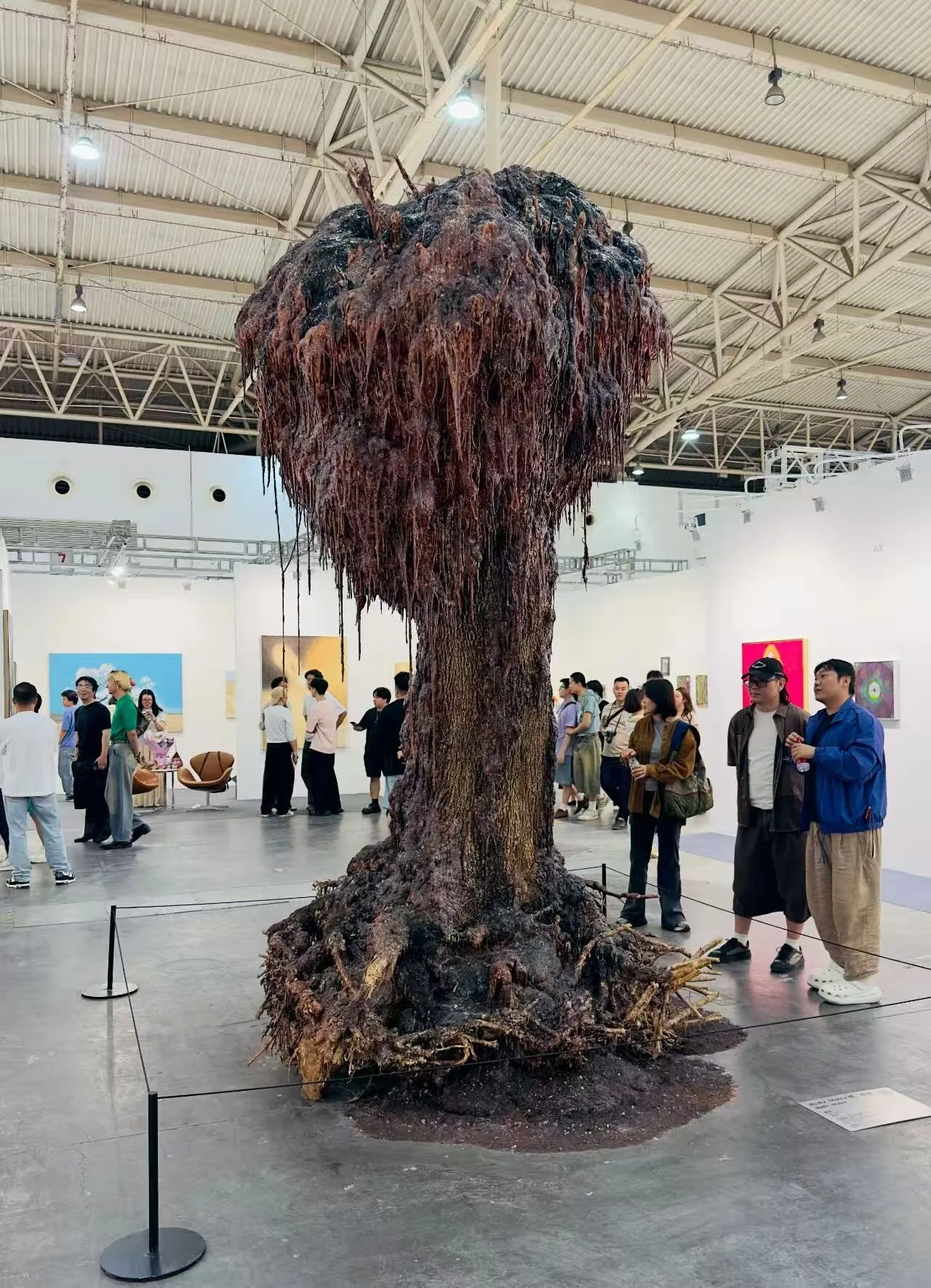
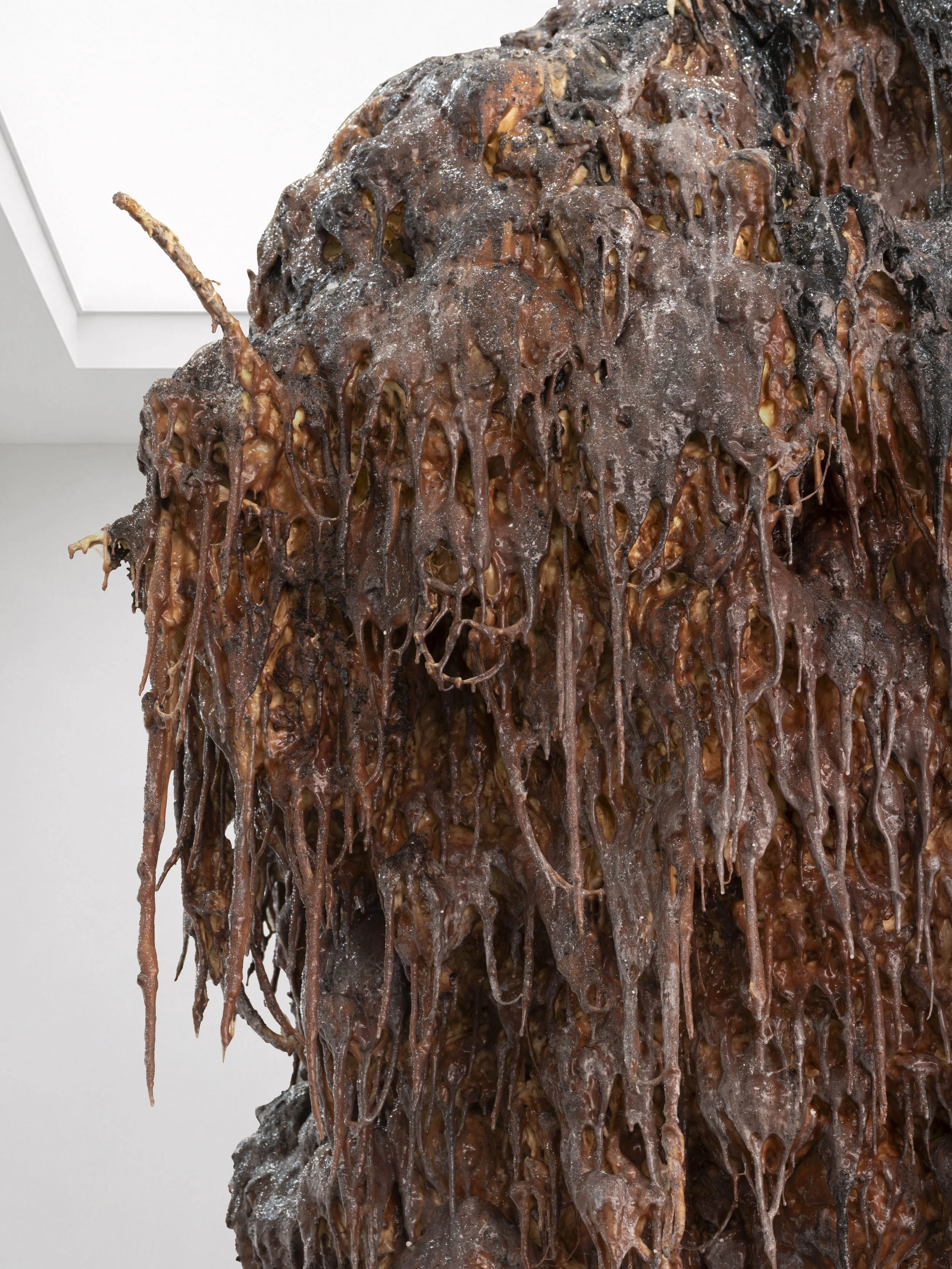
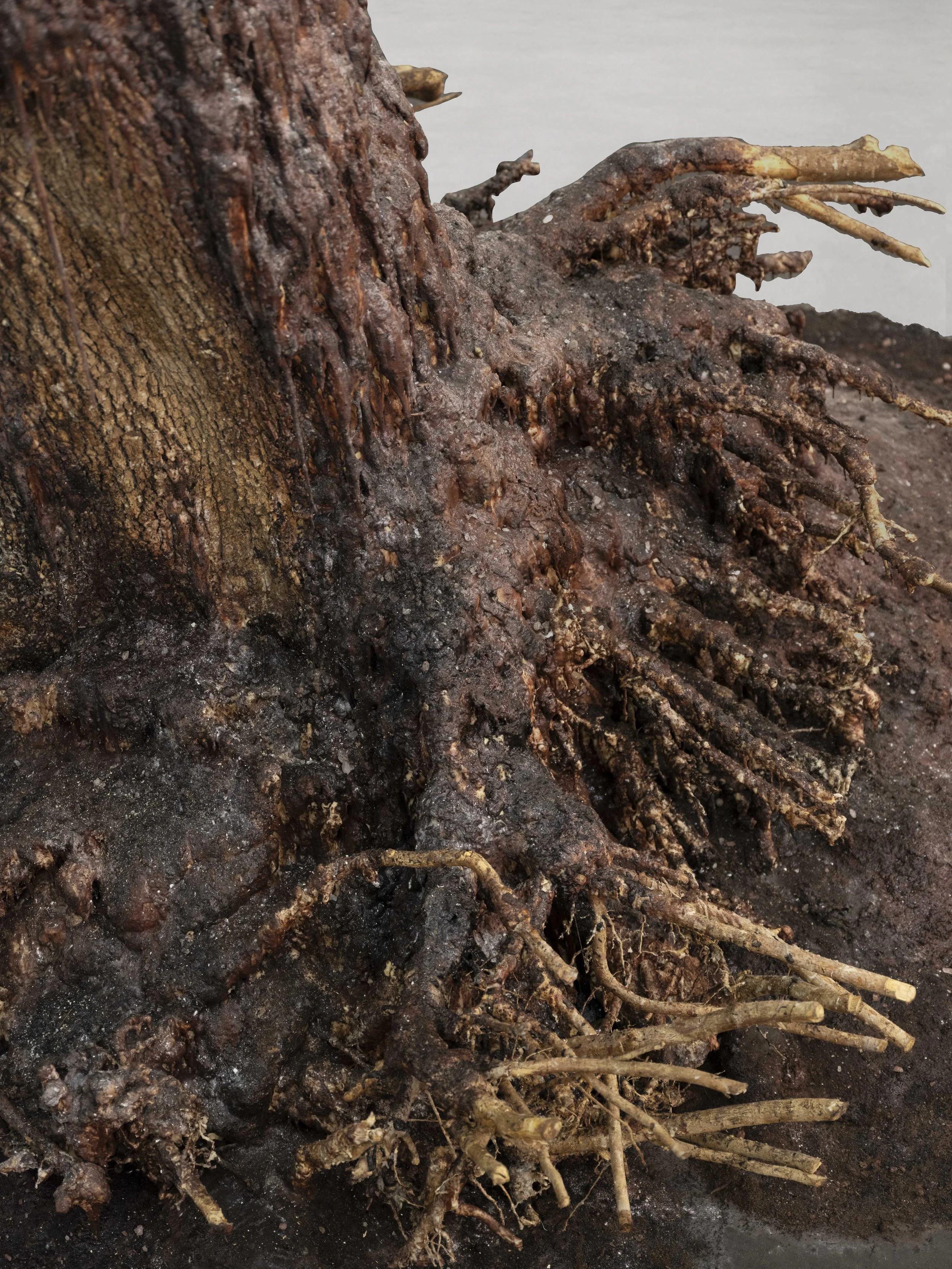
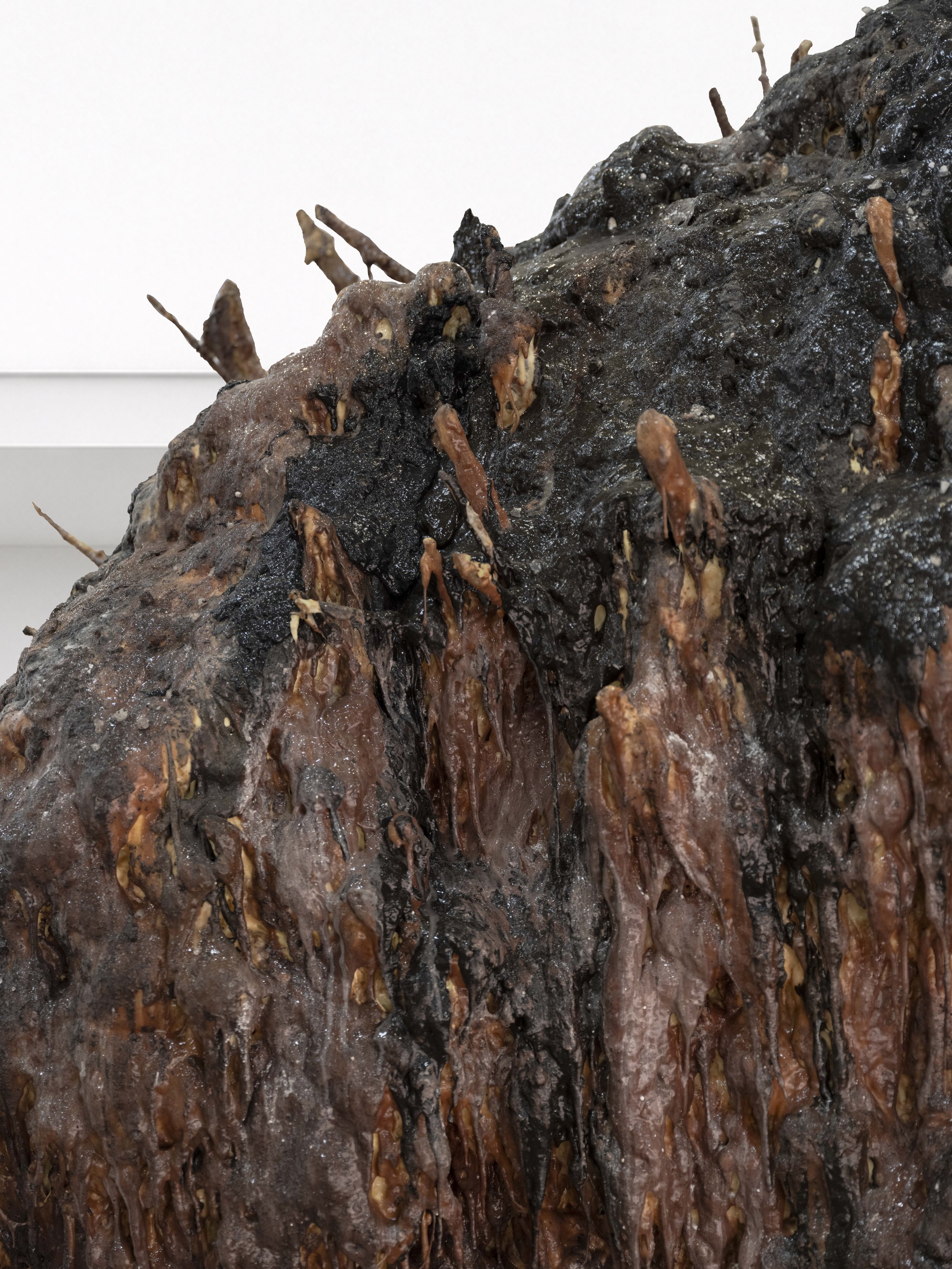
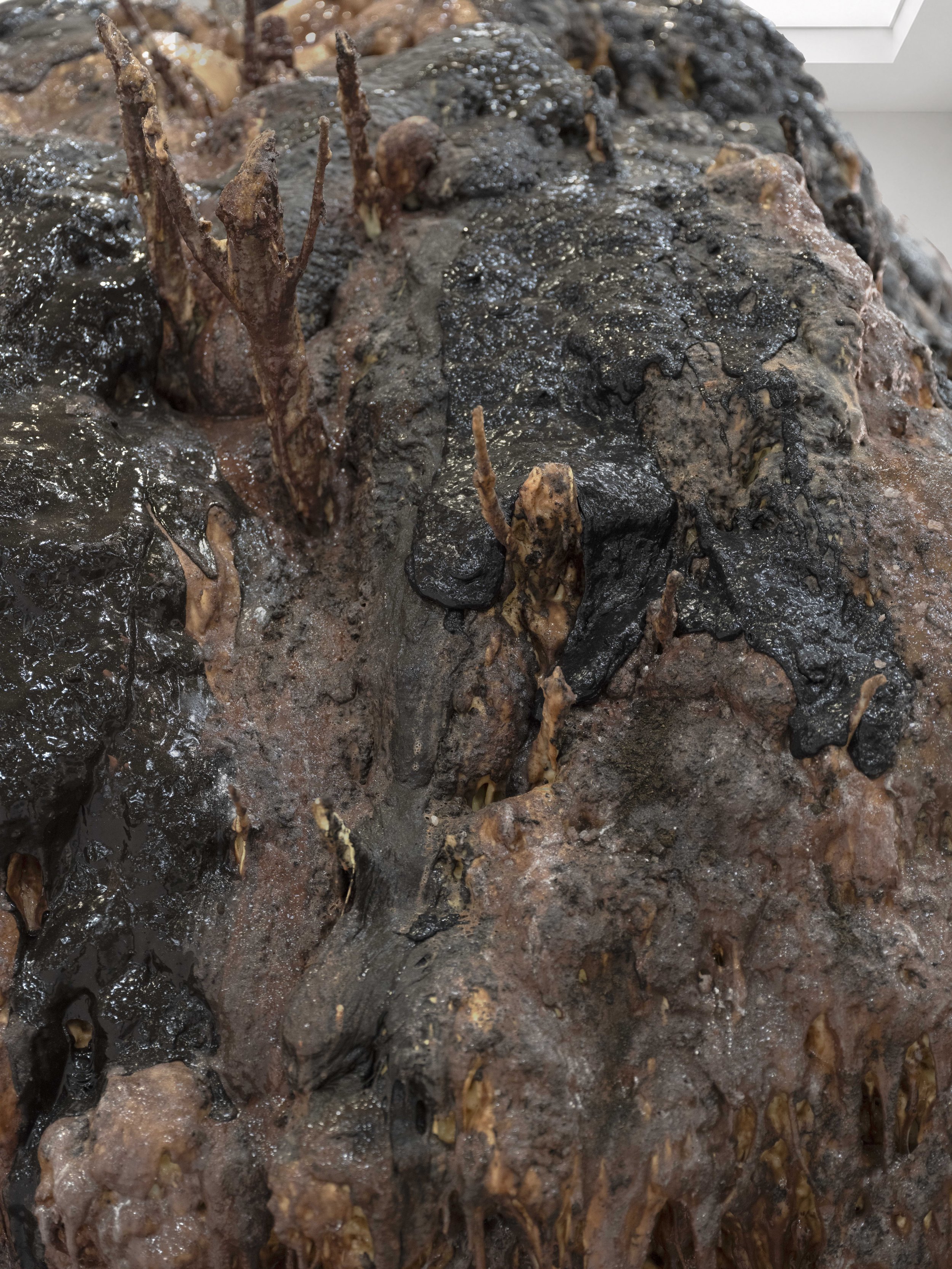
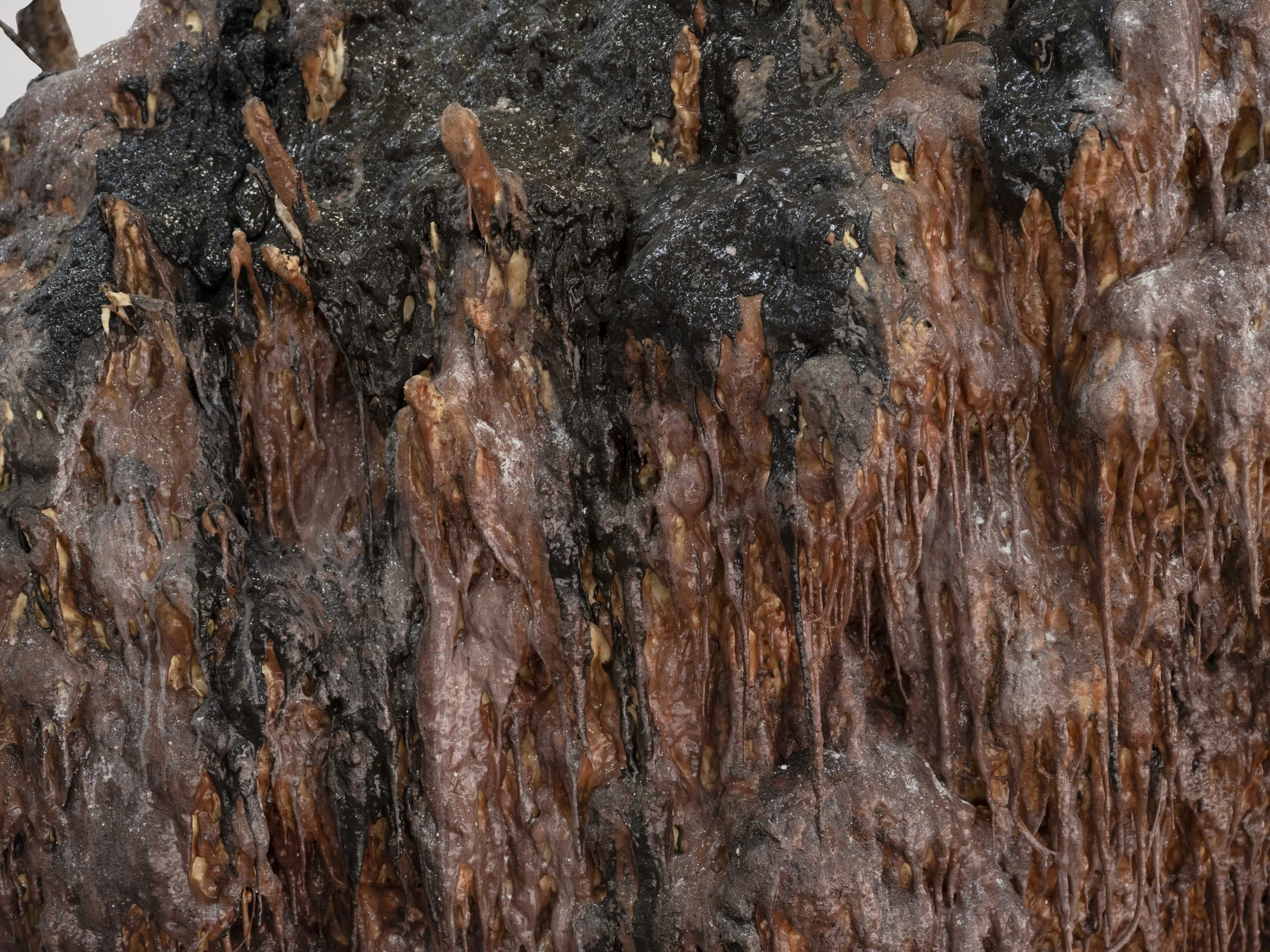
Radix, Matrix (2026)
Radix, Matrix
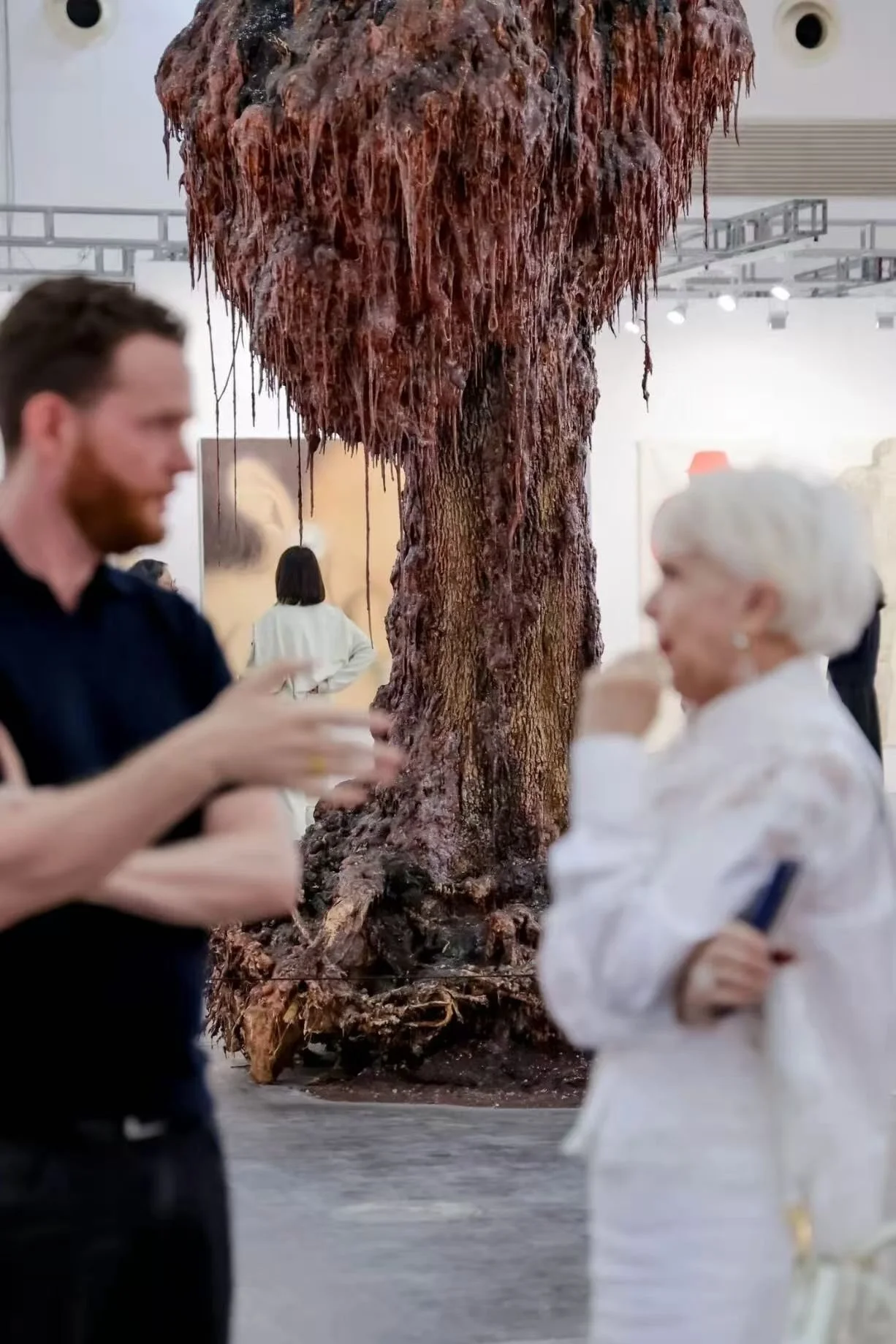
S:250 X 250 x 380 cm
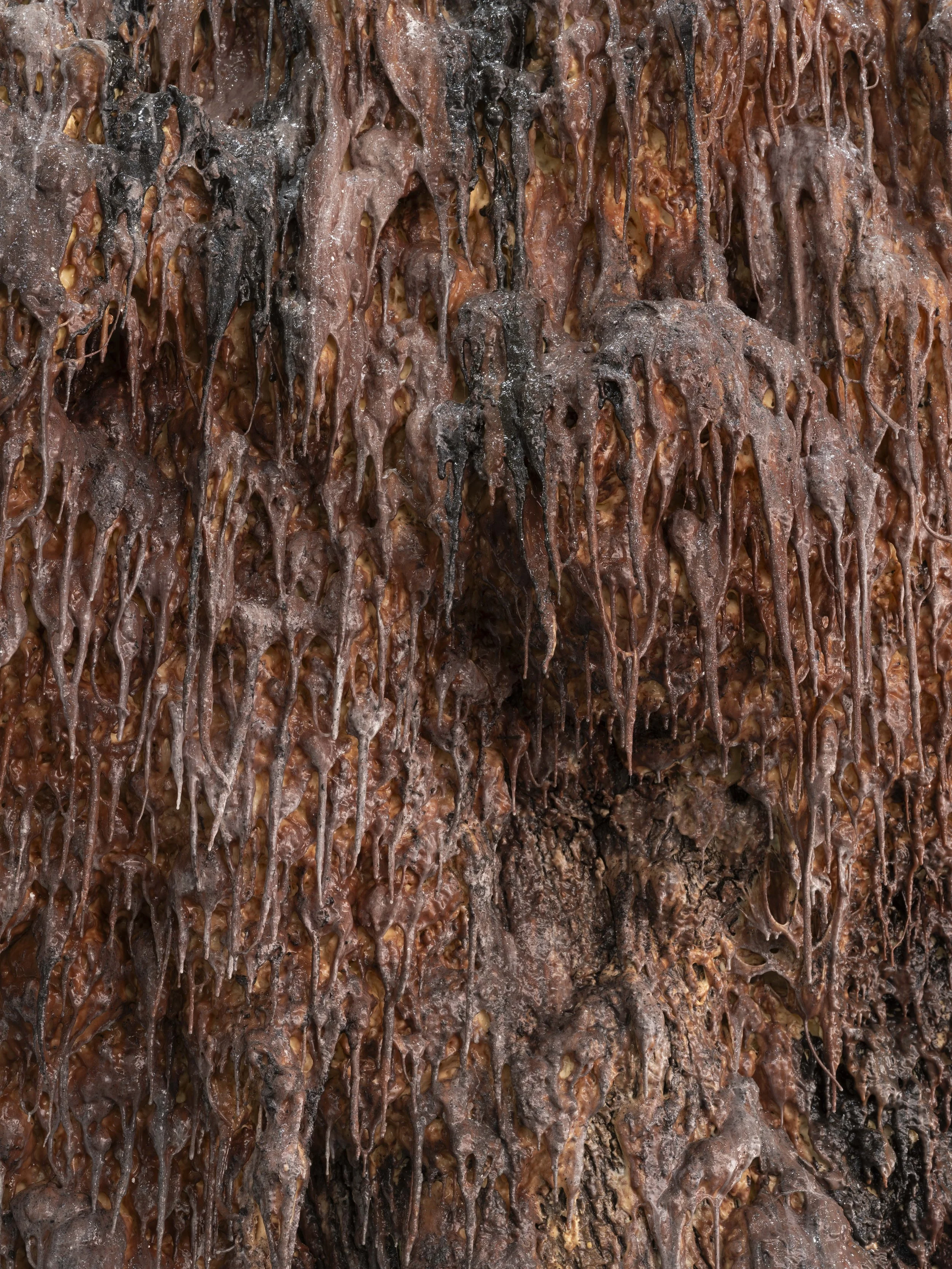
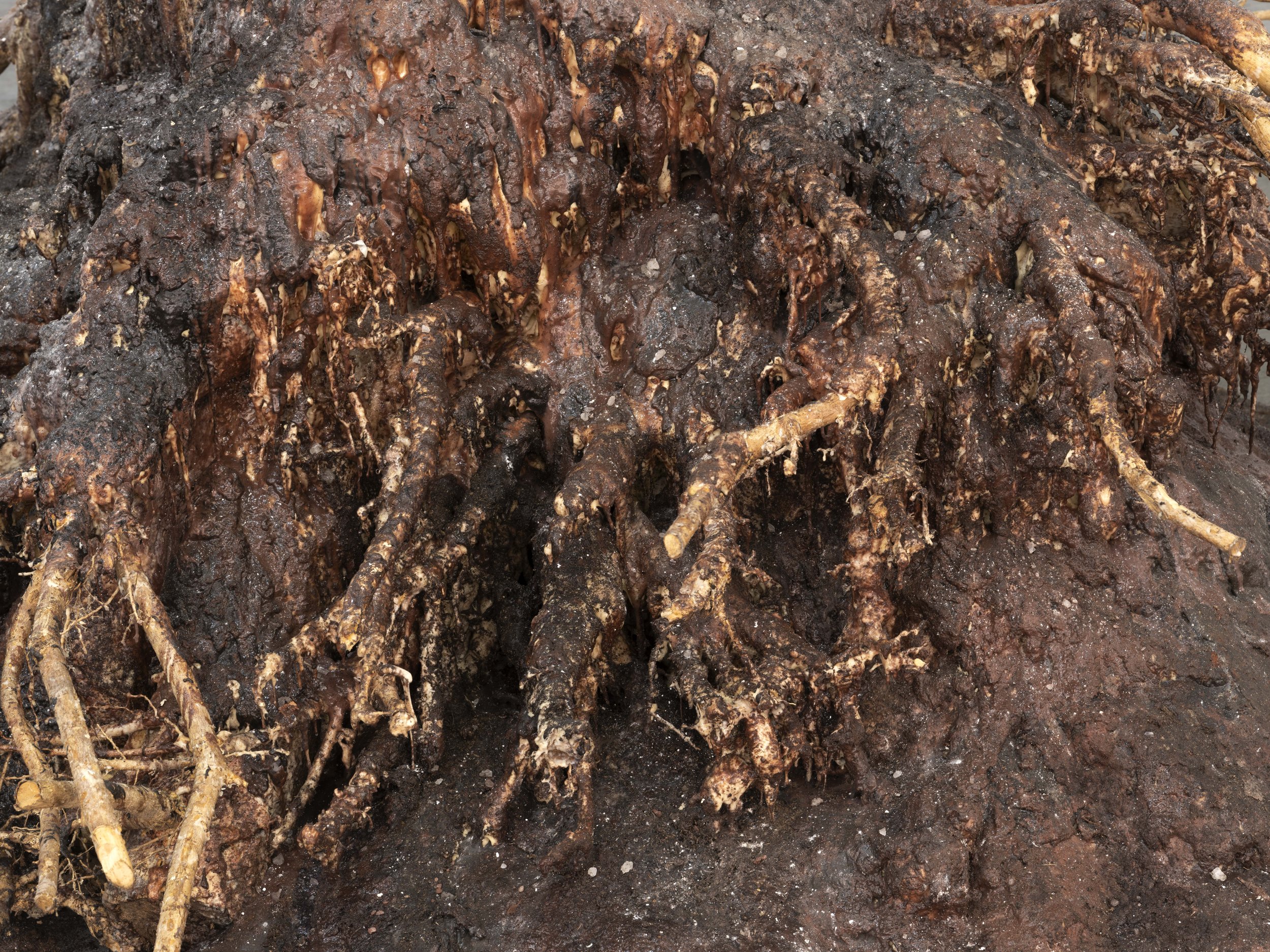
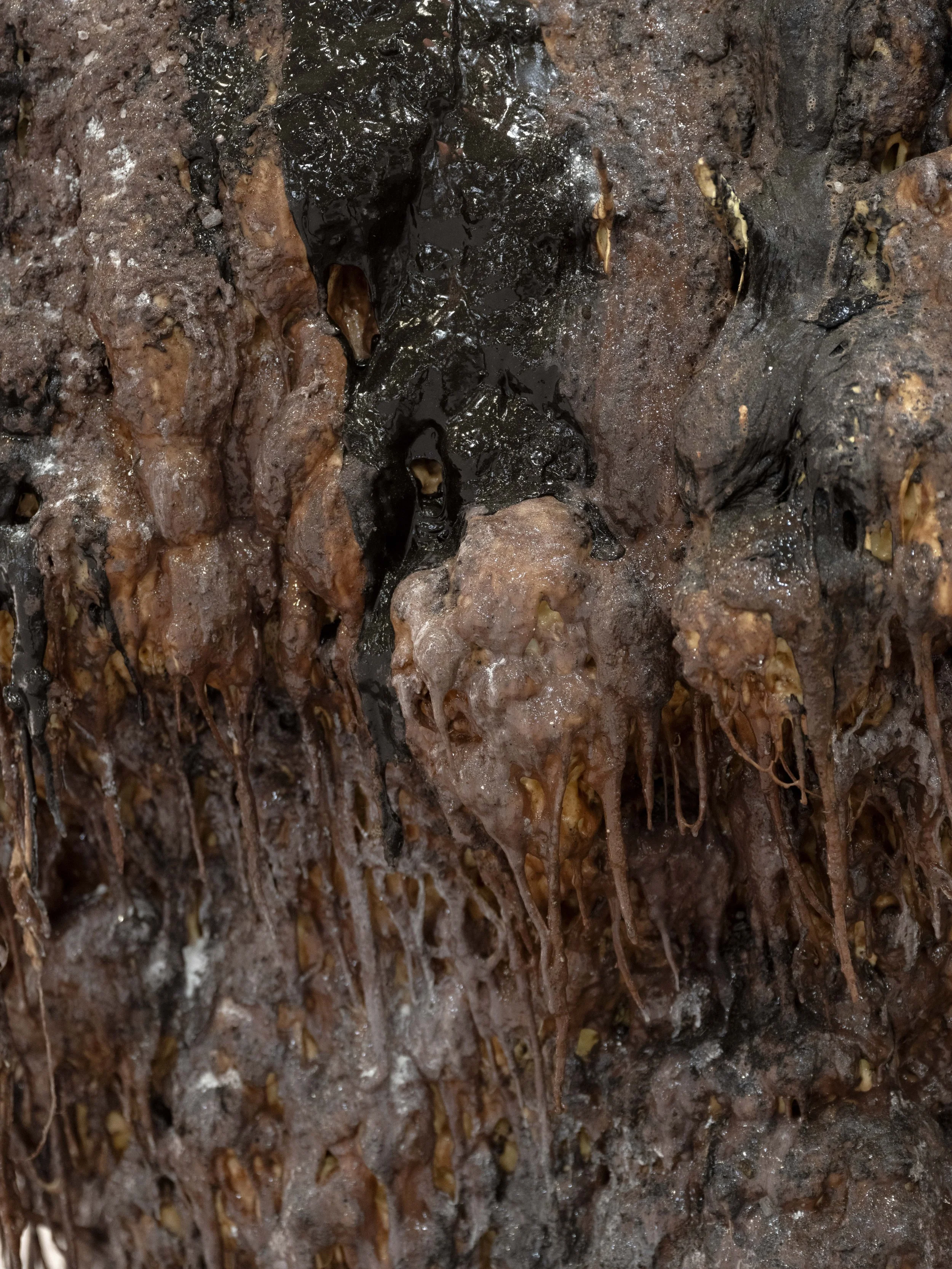
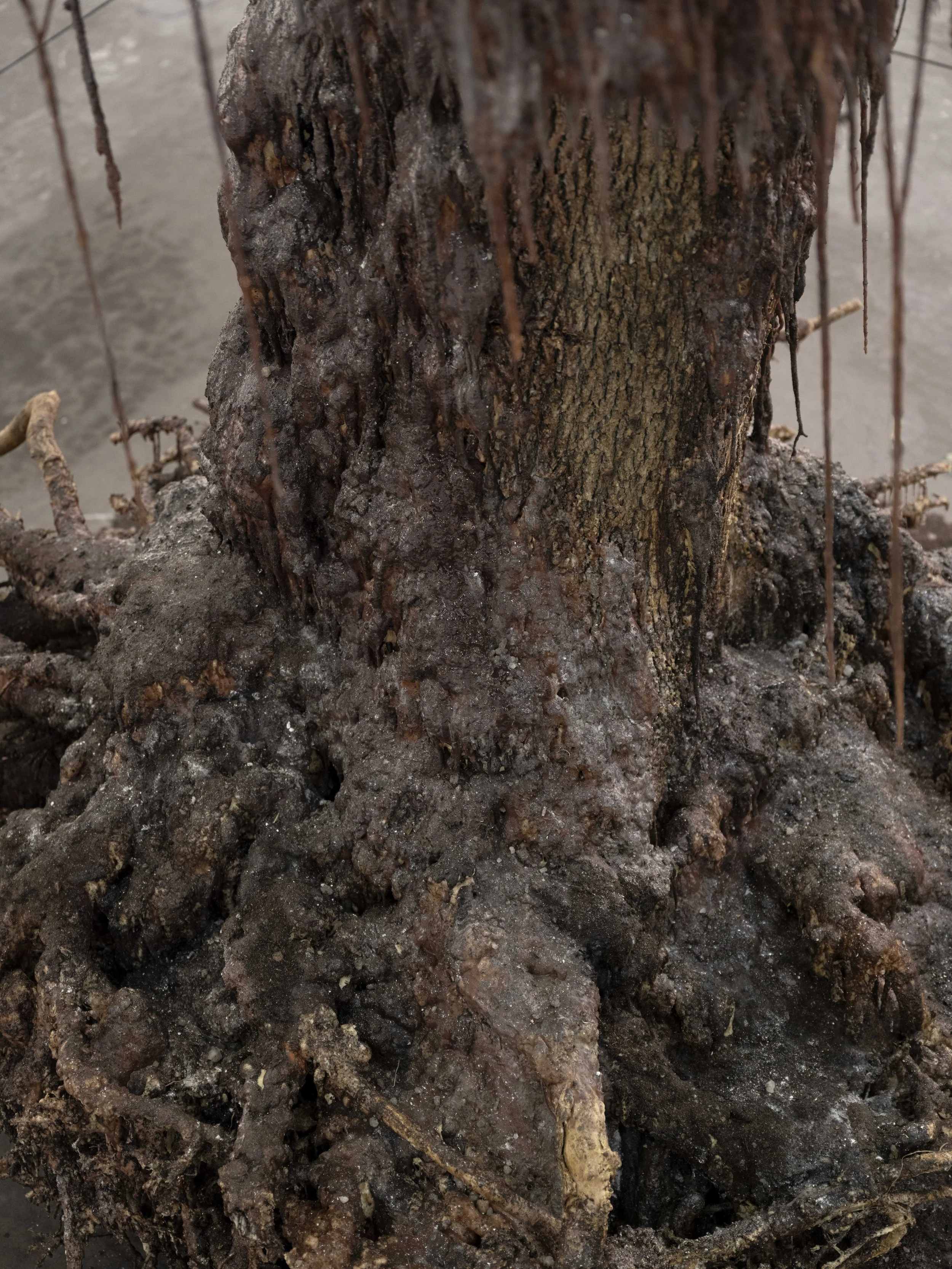
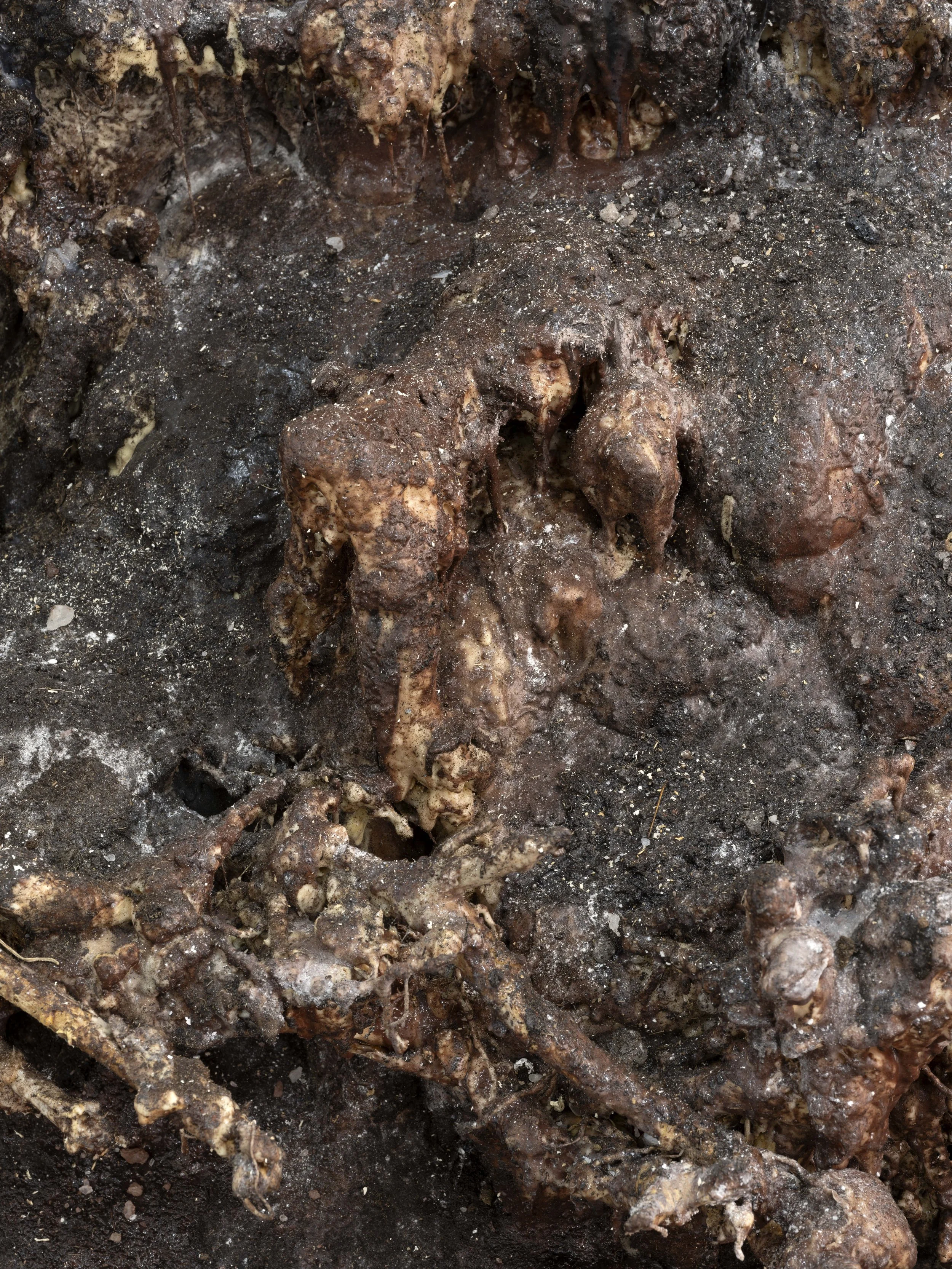
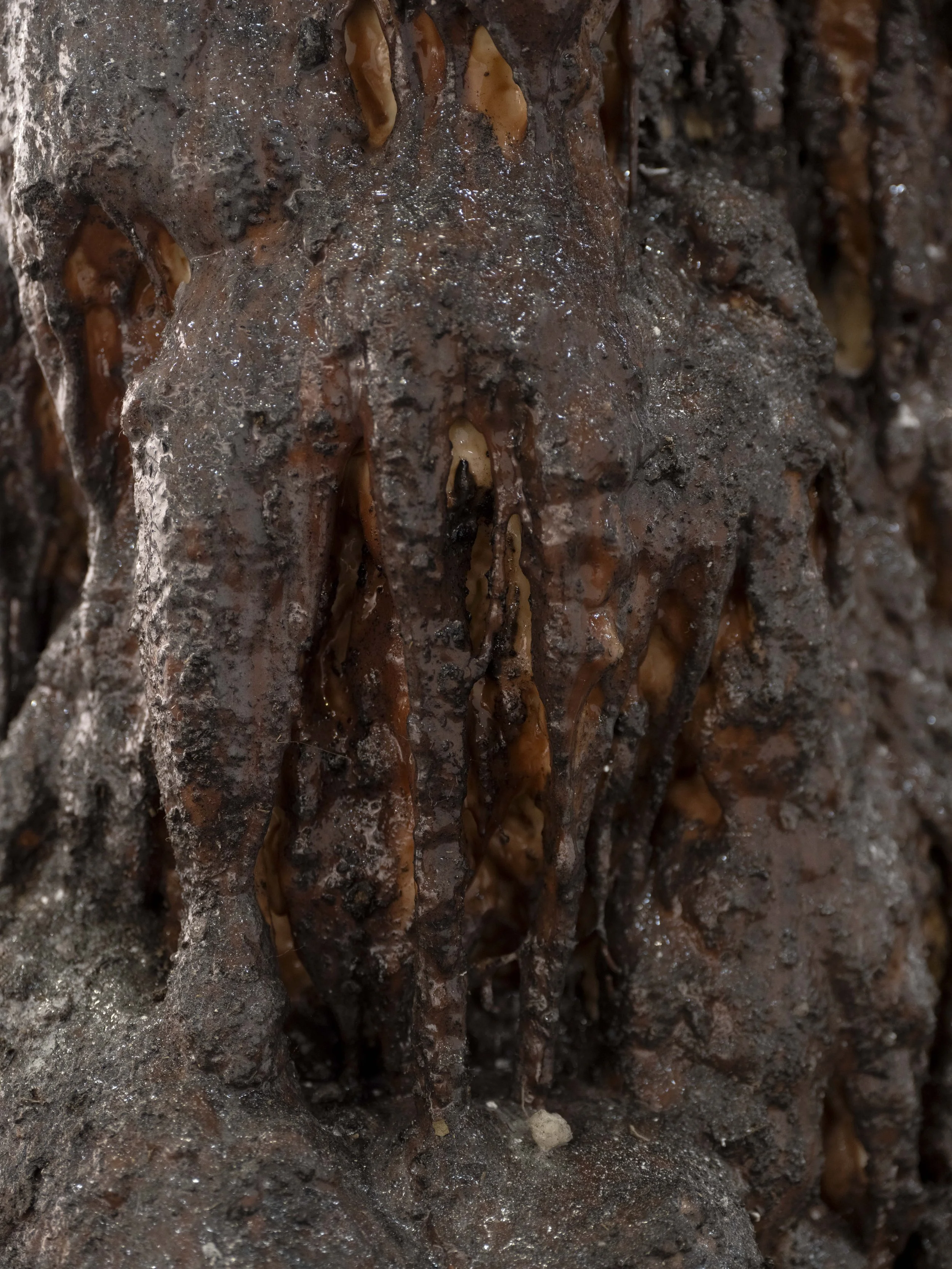
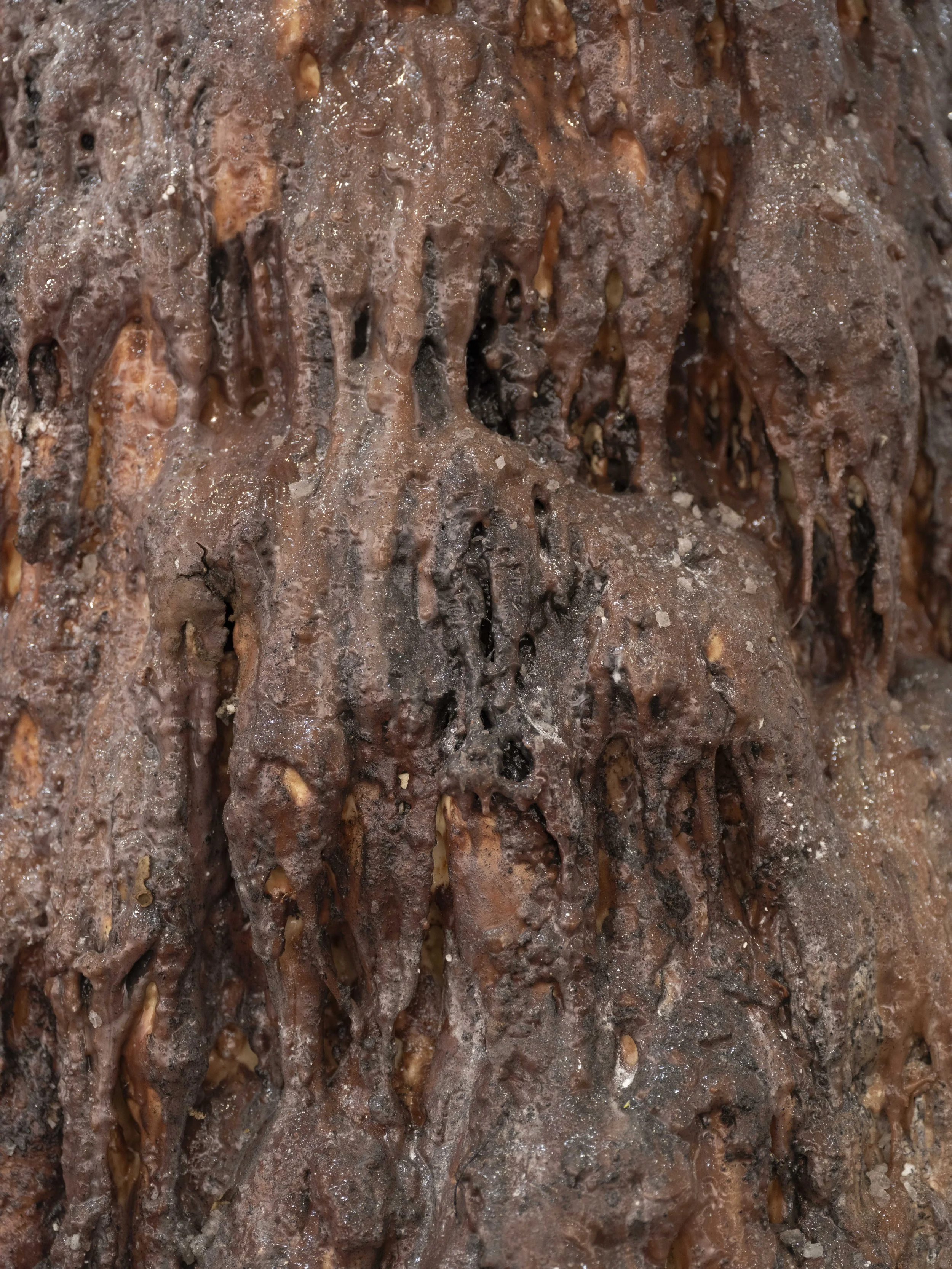
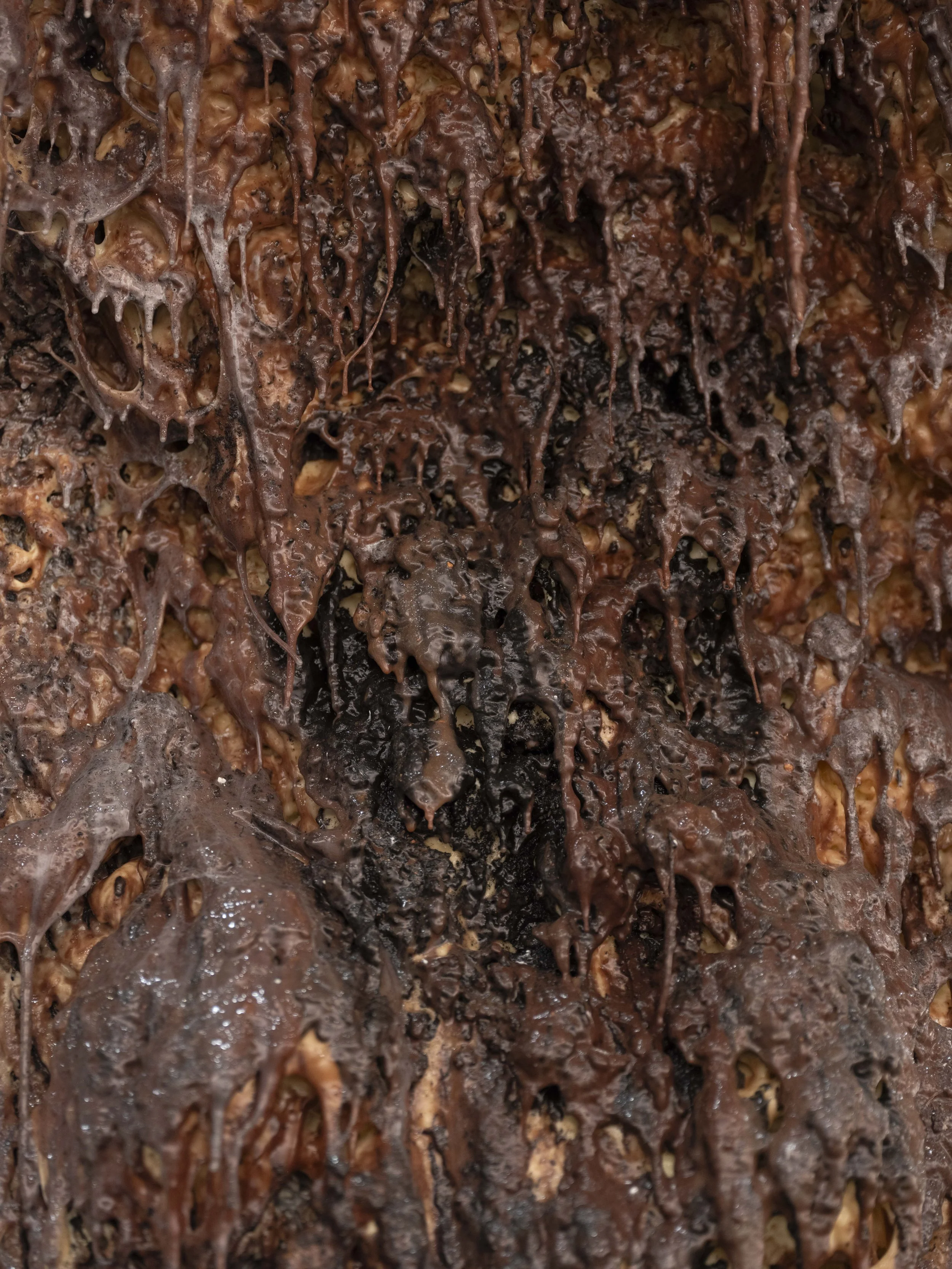
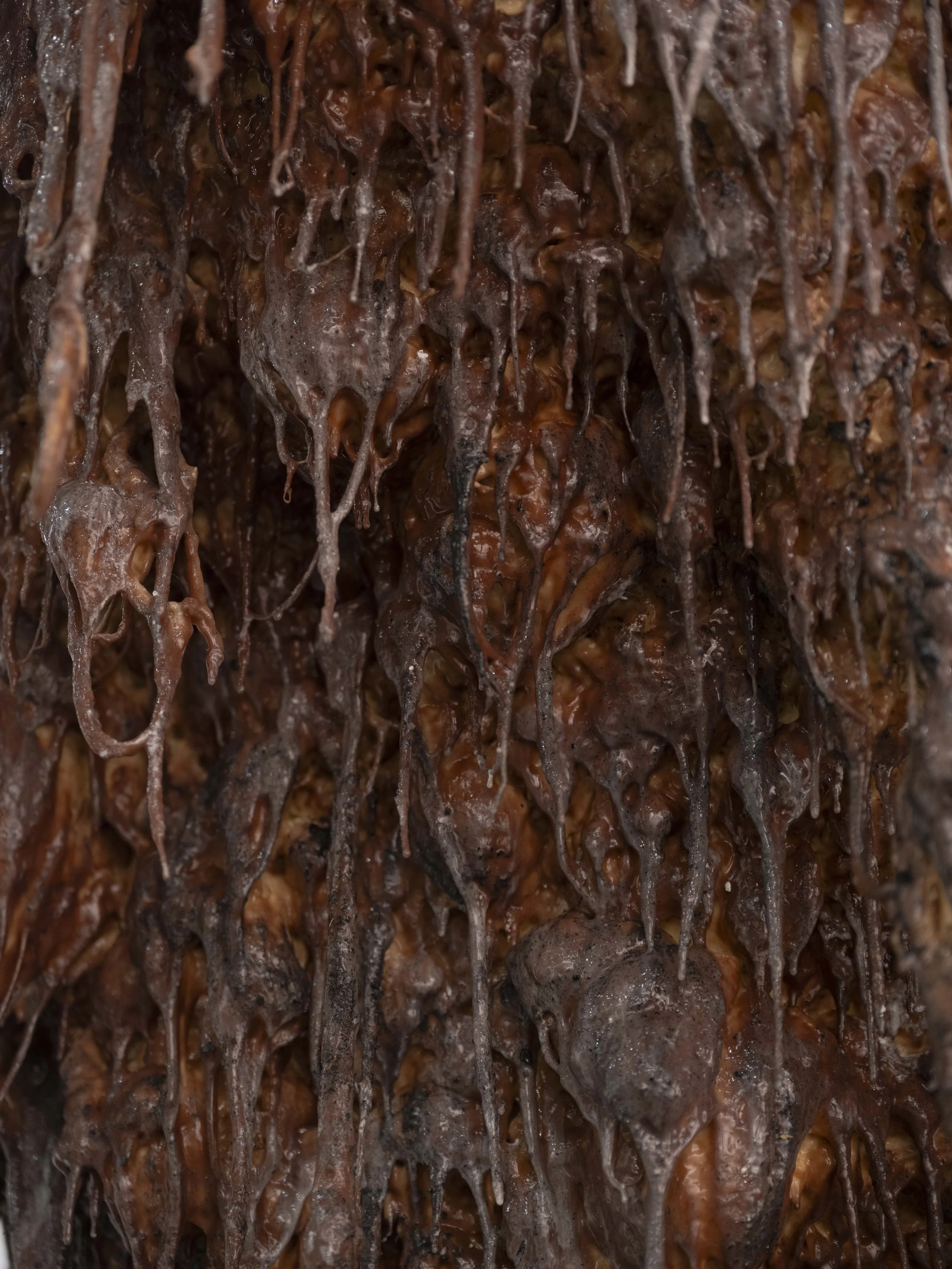
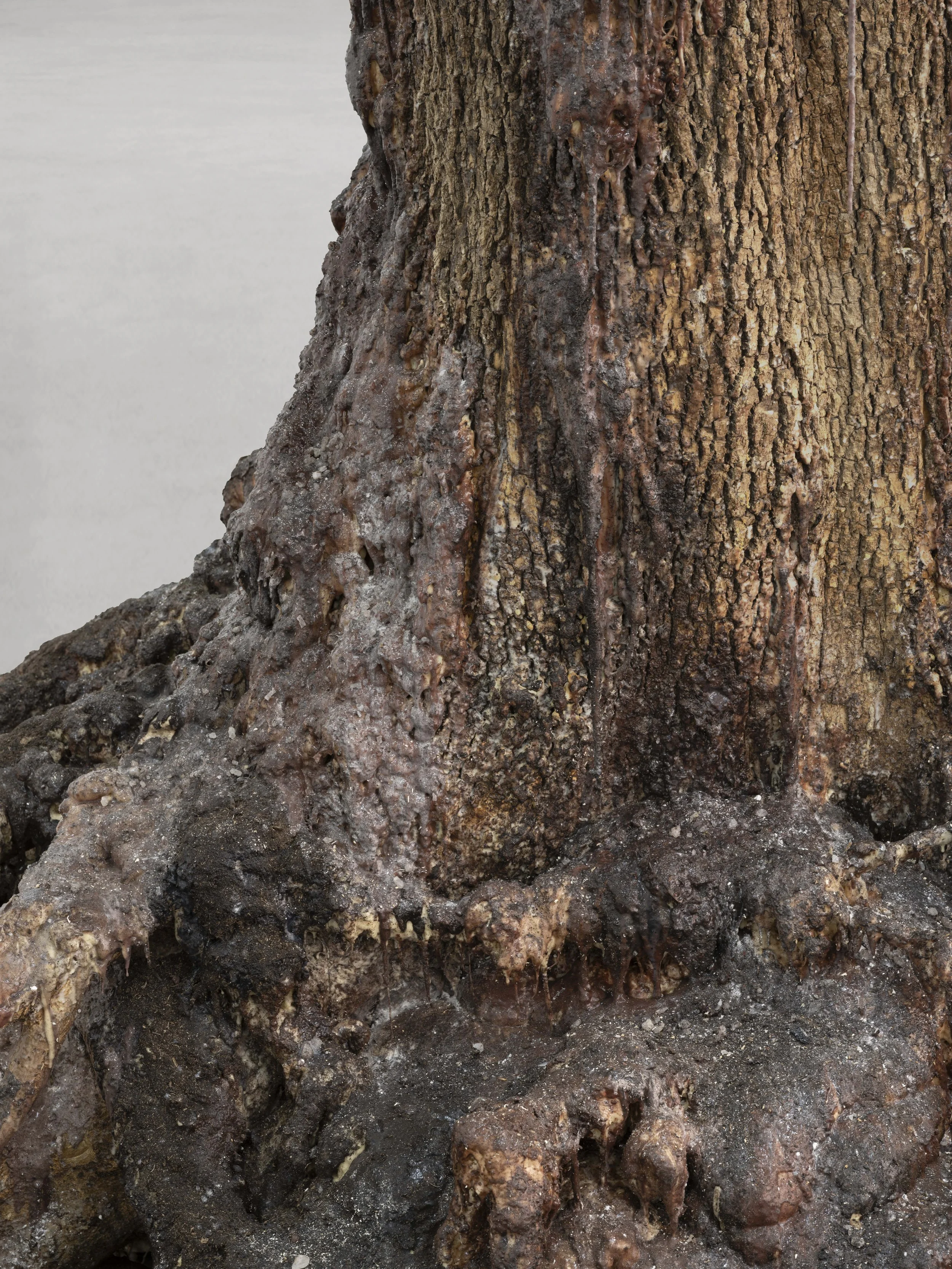
M: Tree, fat, silicone rubber, polyurethane, bitumen, beeswax, mineral salt, copper, cattle bone ash, organic resin, peat, hematite
Y:2026
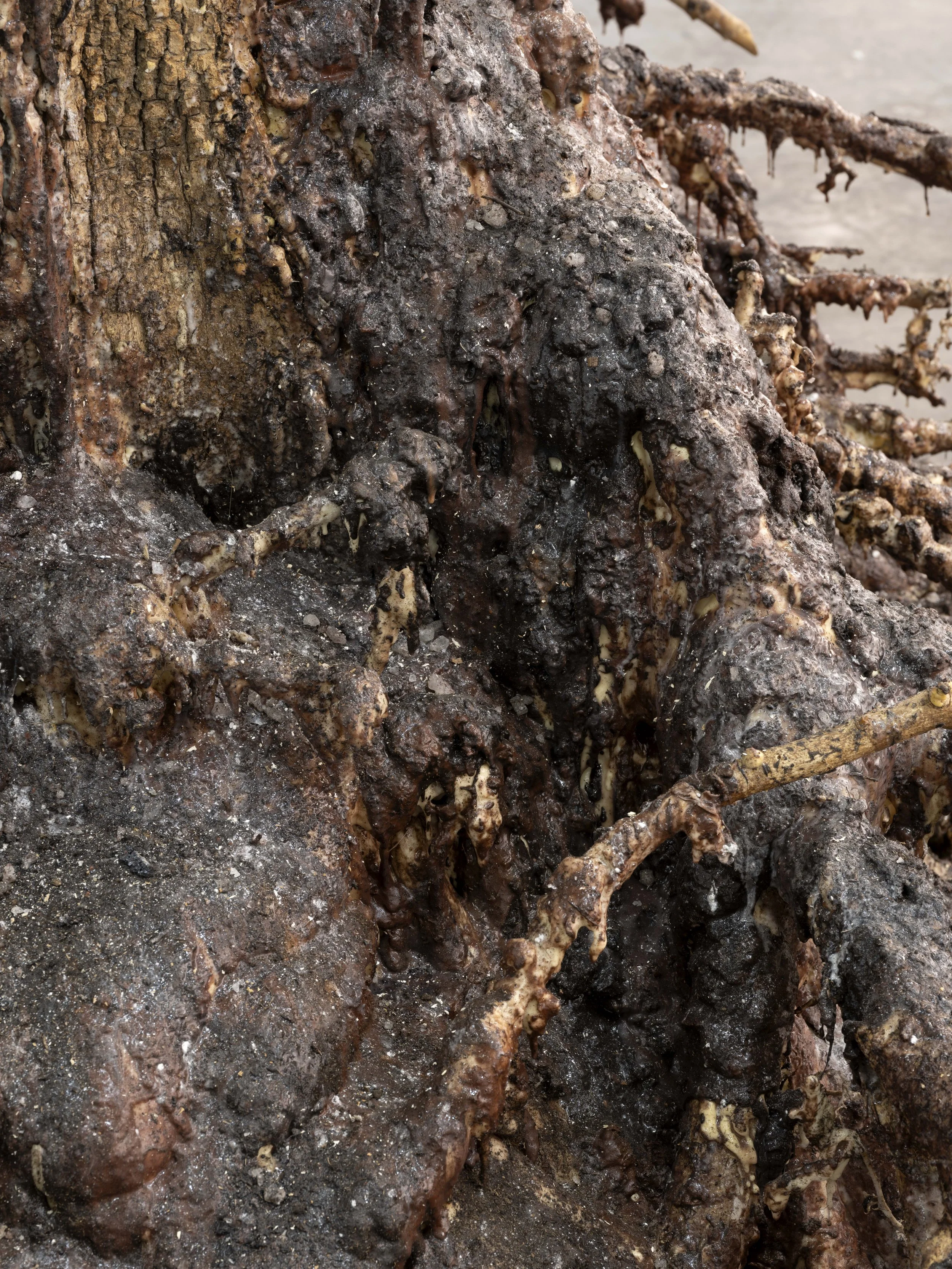
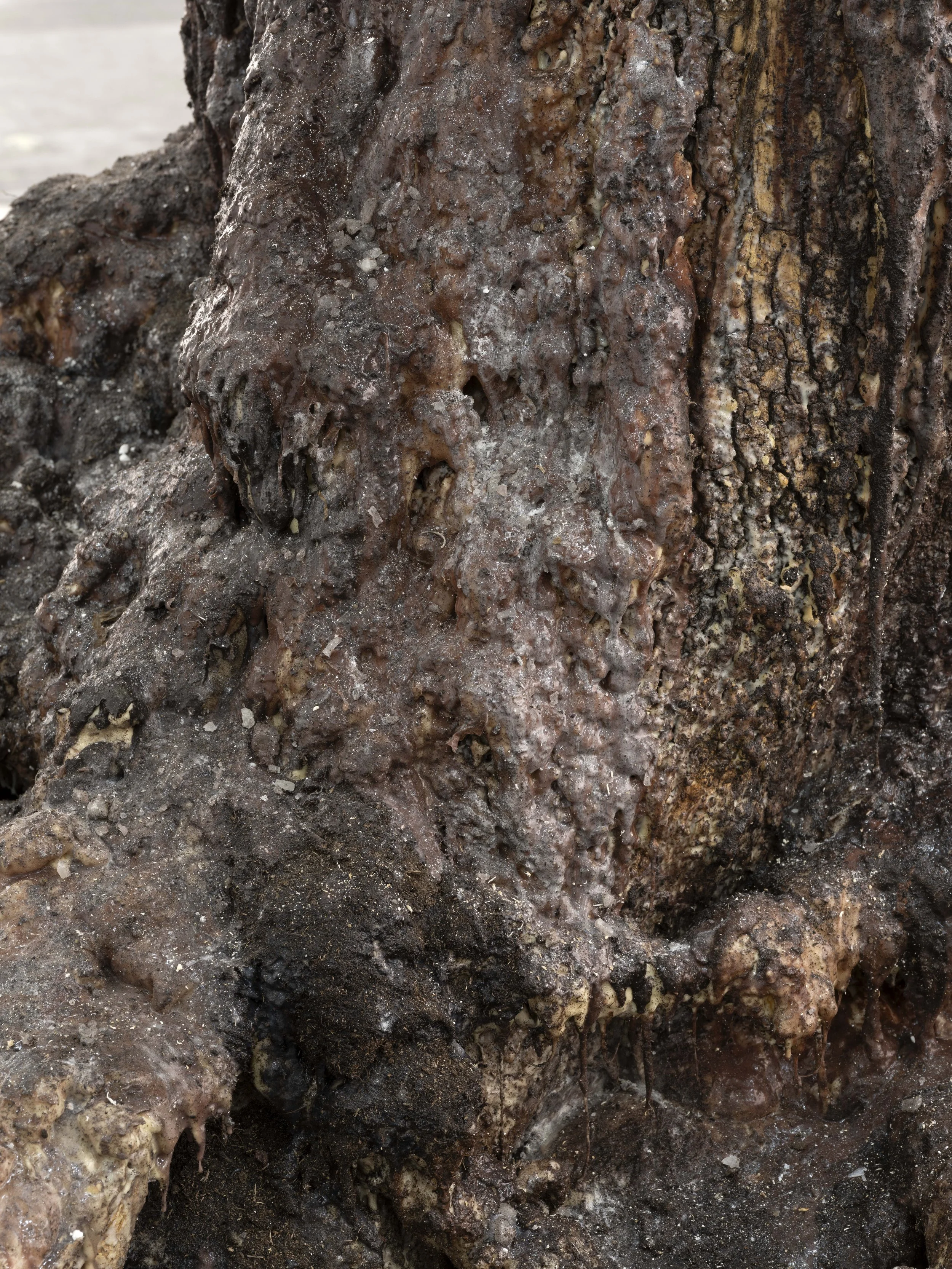
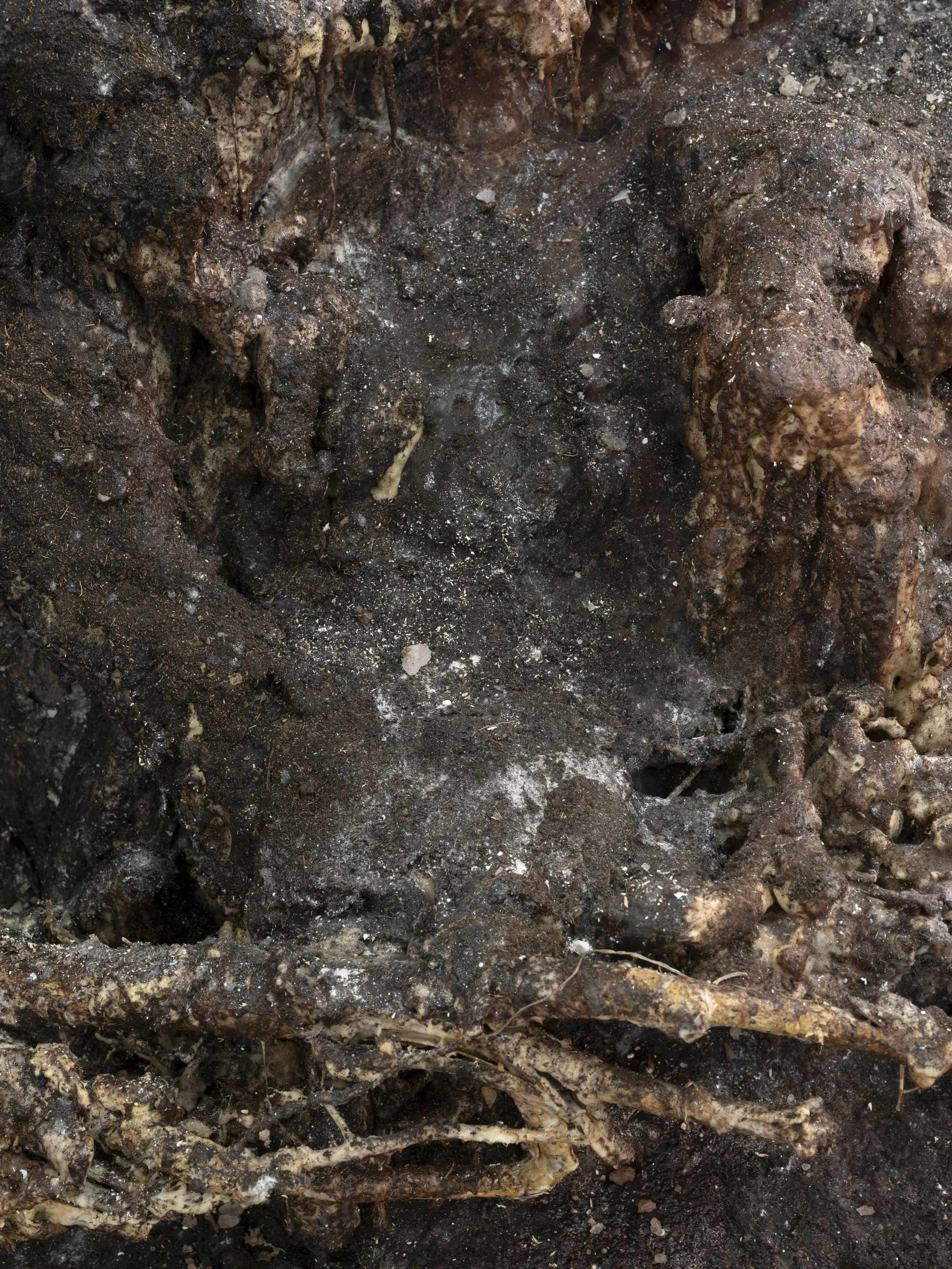
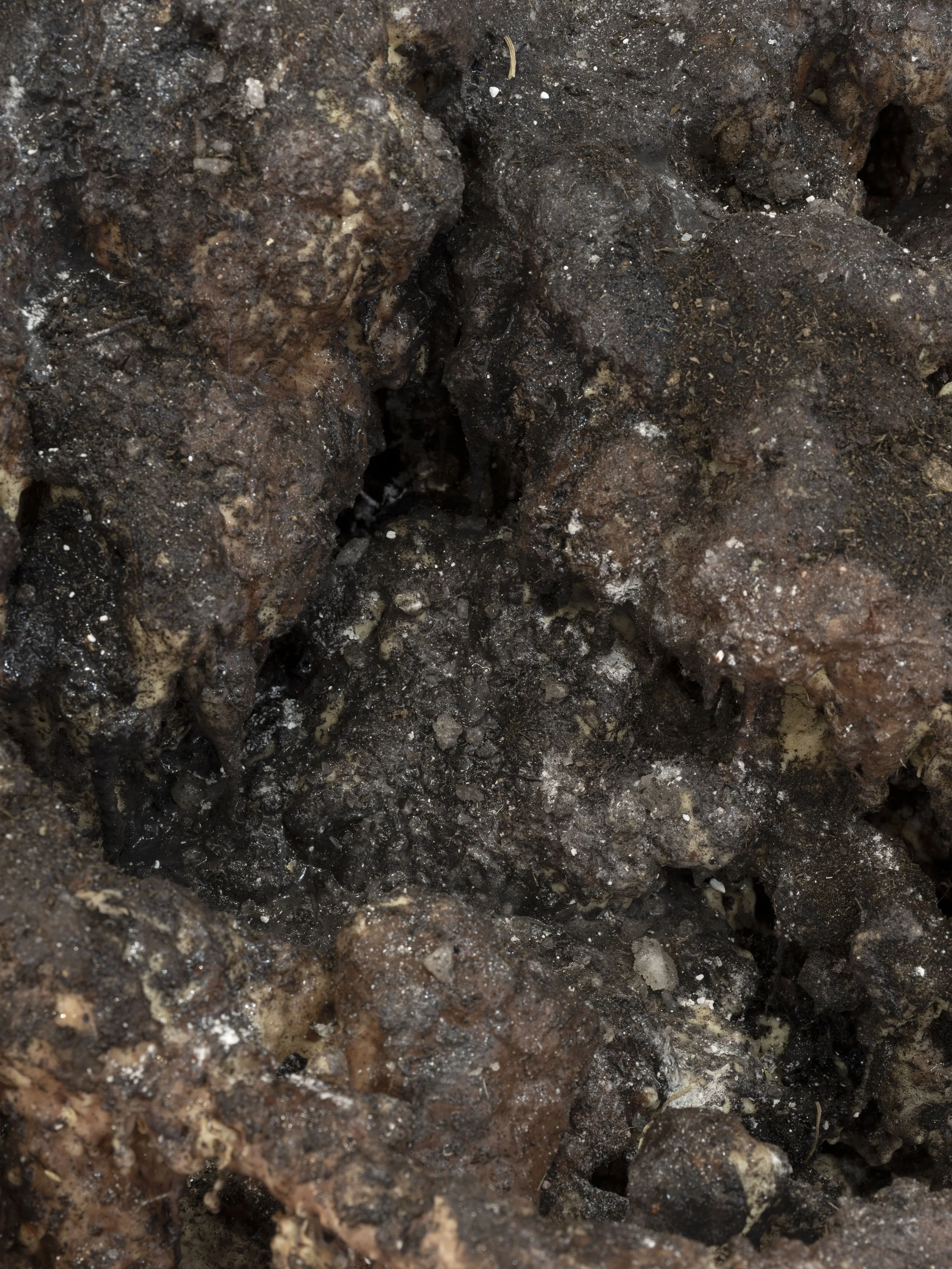
Radix, Matrix does not treat the “tree” or the “body” as objects to be viewed, but rather as an ongoing network of continuously generated relations. The tree form, fat, silicone, polyurethane, asphalt, beeswax, natural salt, copper, bovine bone ash, natural resin, peat, hematite, and other materials within the work are not fixed material categories; instead, they are agents constantly transforming their own properties through contact, penetration, and exchange with one another. Together, they constitute a hybrid entity situated between the organic and the artificial, the natural and the technological, in which the “body” no longer belongs to a singular human category, but becomes a state flowing between materials themselves.
The structures that continuously swell and overflow from the top are not only symbolic bodily metaphors, but also material events formed through the interaction of geological strata, life, and historical pressure. They seem to emerge both from beneath the earth and from within some deep internal system, as though forced upward by a submerged energy. While the roots extend downward, matter from the ground simultaneously erupts outward, creating a continuous yet unstable cycle of growth, covering, and regeneration.
Radix, Matrix continues Dai Ying’s ongoing exploration of the “Geo-Maternal Matrix.” Yet here, the “earth” no longer refers to land in a naturalistic sense, but to a hybrid field composed collectively of humanity, nature, matter, technology, trauma, and time. The work refuses divisions between subject and object, nature and the artificial, and instead attempts to evoke a condition that is at once more primordial and more futuristic: a state in which all materials are continuously shaping one another, entangled within the same ongoing process of becoming.